


Handedness and Laterality in Plastic Surgery and Outcome-A Retrospective, Two-Center, Evaluator-Blinded Study
- PMID: 40295368
- PMCID: PMC12134009
- DOI: 10.1007/s00266-025-04868-y
Handedness and Laterality in Plastic Surgery and Outcome-A Retrospective, Two-Center, Evaluator-Blinded Study
Abstract
Background: Little is known about the influence of handedness on the outcome of operations in plastic surgery. Our study addresses the question of whether there is a difference between the right and left sides in the outcome of plastic surgeries in relation to the handedness of the surgeon.
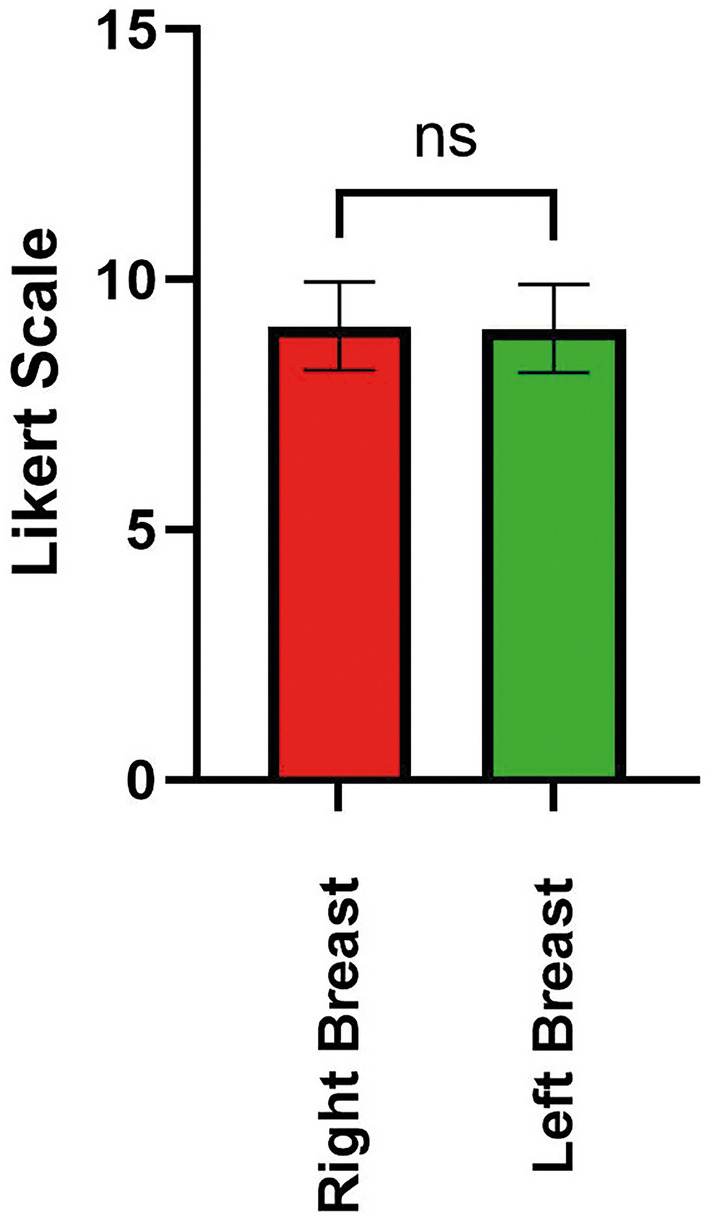
Patients and methods: In this retrospective two-center study, patients undergoing plastic surgery on bilateral locations (breast reduction, mastopexy, augmentation mastopexy, blepharoplasty, mastectomy on gynecomastia, brachioplasty, thigh lift) between January 2020 and December 2023 were included. The outcome was assessed separately by an independent assessor. The Likert scale (1-10) was used as the standardized assessment method for the study data. Additionally, complications were classified as minor or major complications, depending on whether a reoperation was necessary or not.
Results: During the study period, 61 patients (four men and 57 women) were included (mean age 44 years, range 18-83 years) with a mean follow-up of 9.3 months (range 1-28 months). There was no statistically significant difference between both sides (p = 0.60) with a positive trend toward the right side. There were no major complications and 12 minor complications (19.7%) with a tendency to a higher complication rate on the right side.
Conclusion: Our results indicate that handedness may play a minor role in the outcome of plastic surgeries. Nevertheless, ergonomic measurements can be made in order to optimize the outcome. Moreover, it might be necessary to include ambiguity in handedness to improve the overall outcome.
Level of evidence iv: This journal requires that authors assign a level of evidence to each article. For a full description of these Evidence-Based Medicine ratings, please refer to the Table of Contents or the online Instructions to Authors www.springer.com/00266 .
Keywords: Comparative study; Complications; Functional laterality; Patient outcome assessment; Retrospective studies.
© 2025. The Author(s).
Conflict of interest statement
Declaration. Conflict of interest: The authors declare that they have no conflicts of interest to disclose. Ethical Approval: Ethical approval was obtained by the local ethical committee (Ethikkommission Nordwest- und Zentralschweiz (EKNZ), No.: 2024-00364). Informed Consent: Written informed consent was obtained from all patients, and the guidelines of the Declaration of Helsinki were followed accordingly.
Figures


References
-
- Barzaga G. The relationship of surgeon handedness and experience on operative duration and hearing improvement in ipsilateral and contralateral otologic surgeries. Philippine J Otolaryngol Head Neck Surg. 2020;35:17. - DOI
-
- Mehta S, Lotke PA. Impact of surgeon handedness and laterality on outcomes of total knee arthroplasties: should right-handed surgeons do only right TKAs? Am J Orthop (Belle Mead NJ). 2007;36:530–3. - PubMed
Publication types
MeSH terms
LinkOut - more resources
Full Text Sources
Medical
Research Materials
