


An analysis of trends in the burden of ischemic stroke caused by air pollution in China between 1990 and 2021
- PMID: 40296073
- PMCID: PMC12036216
- DOI: 10.1186/s12889-025-22287-1
An analysis of trends in the burden of ischemic stroke caused by air pollution in China between 1990 and 2021
Abstract
Background: This study evaluates the burden of ischemic stroke attributable to air pollution in China from 1990 to 2021, examines gender and age-specific differences, and projects future disease burden trends from 2022 to 2036. By analyzing the impact of air pollution on ischemic stroke, this study aims to provide insights for public health policies and preventive measures.
Methods: Utilizing data from the 2021 Global Burden of Disease (GBD) study, this research examined the ischemic stroke burden associated with air pollution in China. To assess historical trends and project disease burden from 2022 to 2036, Joinpoint regression modeling and decomposition analysis were employed. These methods allow for identifying significant trend changes and disentangling the contributions of various factors.
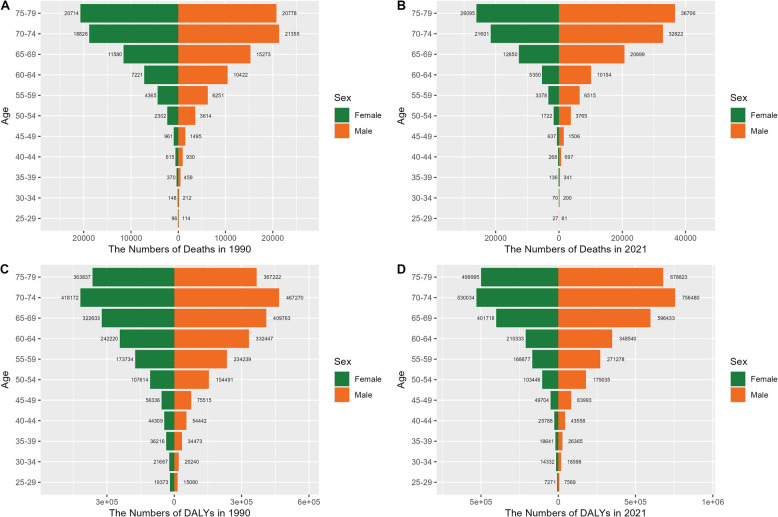
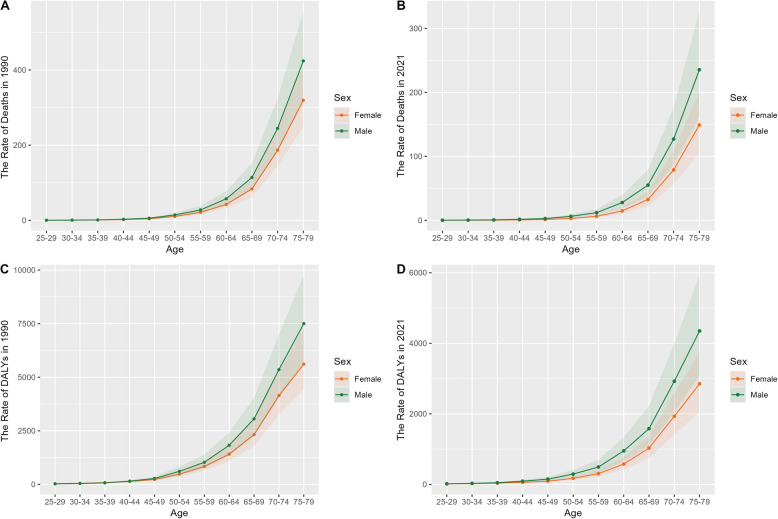
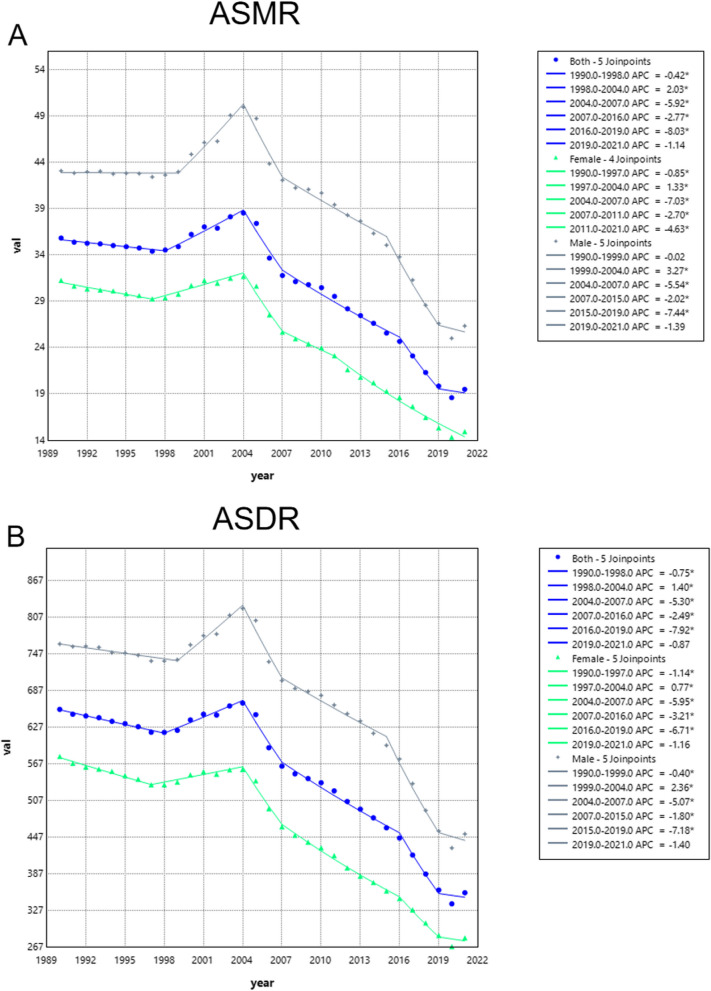
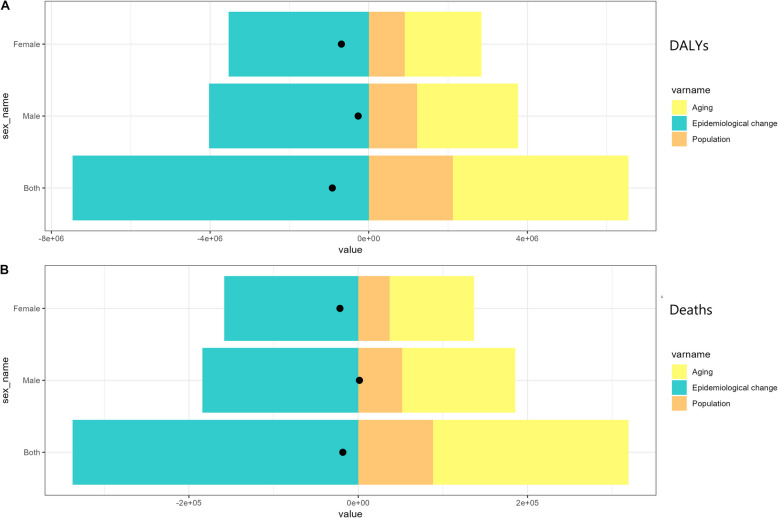
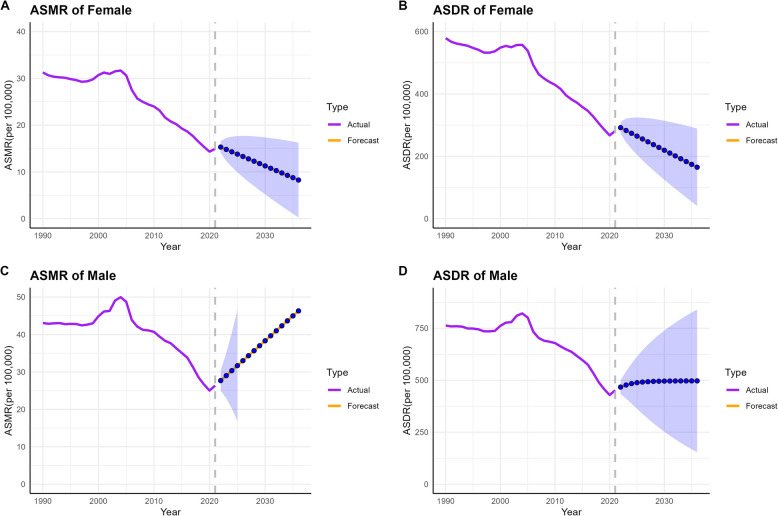
Results: From 1990 to 2021, China observed a decline in both age-standardized mortality rates (ASMR) and age-standardized disability-adjusted life years (DALY) rates for ischemic stroke attributed to air pollution. However, the decline was slower among men than women, with a higher burden observed in elderly males. Epidemiological transitions, including improved healthcare and lifestyle changes, were the main drivers behind the overall reduction in disease burden. Projections indicate that over the next 15 years, ASMR and age-standardized DALY rates (ASDR) for women will continue to decline, while ASMR for men is expected to rise and ASDR for men will gradually increase before stabilizing.
Conclusion: Elderly males are disproportionately affected by ischemic stroke related to air pollution, highlighting a critical public health issue. To mitigate this burden, it is essential for the government to implement targeted, gender- and age-specific policies aimed at improving air quality, enhancing healthcare access, and promoting preventive measures for vulnerable populations, particularly the elderly and men. These findings underscore the need for integrated strategies to reduce health disparities and address the ongoing challenges posed by air pollution.
Keywords: ASDR; ASMR; Air pollution; DALY; Global burden of disease; Ischemic stroke.
© 2025. The Author(s).
Conflict of interest statement
Declarations. Ethics approval and consent to participate: The GBD data used in our analysis was obtained from publicly available websites. No human or animal experiments, observations, or interventions were conducted as part of this study. Consent for publication: Not applicable. Competing interests: The authors declare no competing interests.
Figures
References
MeSH terms
Grants and funding
LinkOut - more resources
Full Text Sources
Medical
