


Very high prevalence of osteosarcopenia in hip fracture patients: risk and protective factors
- PMID: 40296076
- PMCID: PMC12036194
- DOI: 10.1186/s13018-025-05828-7
Very high prevalence of osteosarcopenia in hip fracture patients: risk and protective factors
Abstract
Background: Hip fractures are one of the most serious forms of osteoporotic fractures. Osteosarcopenia is a growing geriatric giant with increased risk of falls, fractures, disability and mortality. The objective of this cross-sectional study was to determine the prevalence and risk factors of osteosarcopenia amongst hip fracture patients.
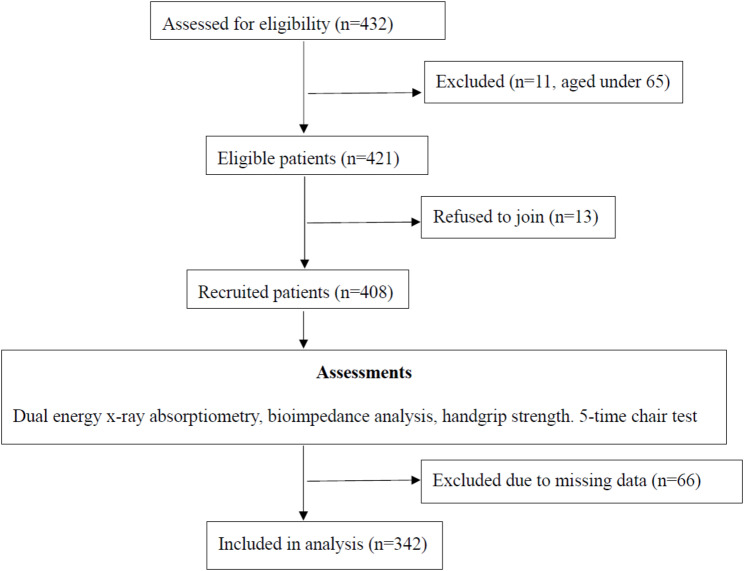
Methods: All patients received a dual energy x-ray absorptiometry (DXA) scan for diagnosis of osteopenia and osteoporosis. For sarcopenia assessment, patients received a bioimpedance analysis (BIA) measurement, handgrip strength and 5-time chair stand test. Osteosarcopenia was defined with the presence of osteopenia/osteoporosis and sarcopenia. Risk factors for osteosarcopenia were analysed using logistic regression.
Results: A total of 342 hip fracture patients (n = 342) were recruited. Sarcopenia was present in 286 hip fracture patients (83.6%). 335 hip fracture patients (97.95%) had osteopenia/osteoporosis. Osteosarcopenia was present in 281 hip fracture patients (82.2%). For osteosarcopenia, patients with body mass index (BMI) < 23 kg/m2 were 4.33 (2.35 to 7.95; p < 0.001) times more likely to have osteosarcopenia regardless of age and gender. Males were 3.24 (1.38 to 7.58; p = 0.007) more likely to have osteosarcopenia regardless of age and BMI group.
Conclusions: Our study had shown a very high prevalence of osteosarcopenia amongst hip fracture patients, especially in male patients, and identified associated risk and protective factors. Given the potential clinical implications, we would recommend that in addition to bone mineral density assessment, routine sarcopenia assessment should also be incorporated into Fracture Liaison Services. Further research should be conducted on optimal body weight and BMI, and as to why male patients have more likelihood of sarcopenia.
Keywords: Fracture liaison service; Hip fracture; Osteoporotic fracture; Osteosarcopenia.
© 2025. The Author(s).
Conflict of interest statement
Declarations. Ethical approval and consent to participate: All procedures performed in studies involving human participants were in accordance with the ethical standards of the Joint Chinese University of Hong Kong – New Territories East Cluster Clinical Research Ethics Committee approved (CRE Ref No.: 2021.384) and with the 1964 Helsinki declaration and its later amendments or comparable ethical standards. Informed consent was obtained from all individual participants for joining this study. Consent for publication: Informed consent was obtained from all individual participants for publication of their data. Competing interests: The authors declare no competing interests.
References
MeSH terms
Grants and funding
LinkOut - more resources
Full Text Sources
Medical
