


Impact of precision nursing intervention based on DCO model on joint function and quality of life of elderly hip arthroplasty patients
- PMID: 40296148
- PMCID: PMC12036256
- DOI: 10.1186/s13018-025-05820-1
Impact of precision nursing intervention based on DCO model on joint function and quality of life of elderly hip arthroplasty patients
Abstract
Background: This study aimed to explore the impact of precision nursing intervention based on Damage Control Orthopedics (DCO) model on joint function and quality of life of elderly hip arthroplasty patients.
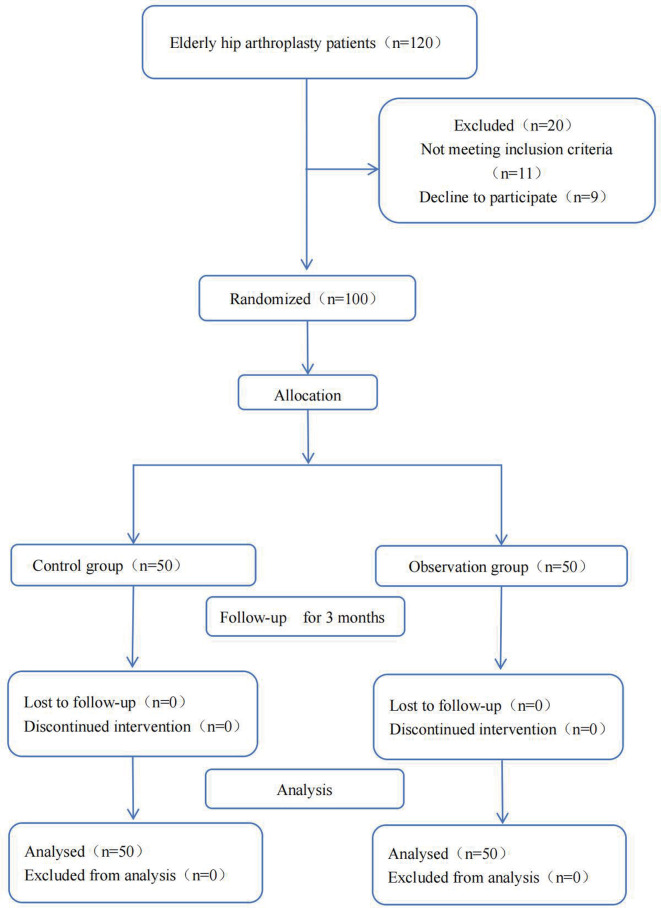
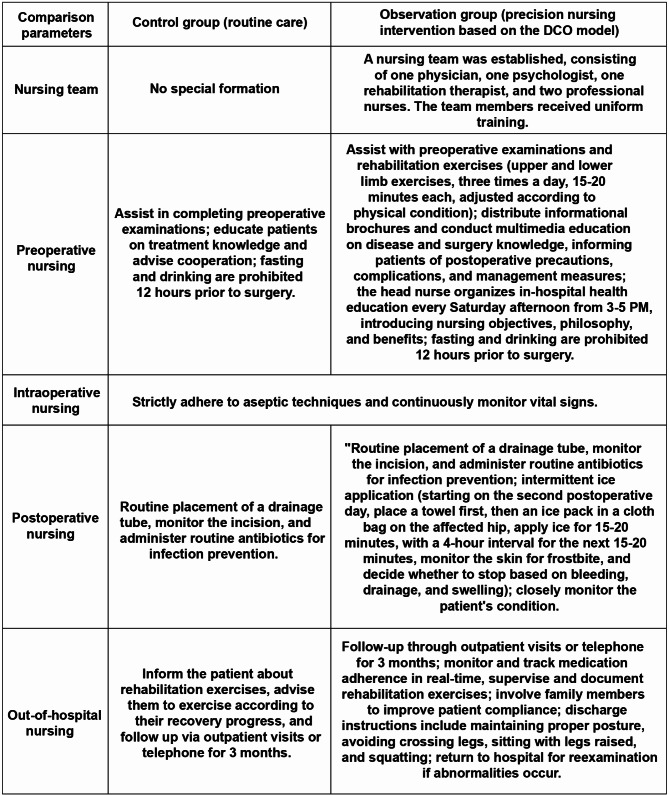
Methods: Elderly hip arthroplasty patients (n = 100) who underwent hip replacement surgery at our hospital from January 2023 to June 2024 were collected and randomly assigned into two groups, with 50 patients in each. The control group received conventional nursing intervention, while the observation group received precision nursing intervention based on the DCO model. The hip joint function (Harris), Self-rating Depression Scale (SDS), Self-rating Anxiety Scale (SAS), Pittsburgh Sleep Quality Index (PSQI), Barthel Index (BI), and SF-36 were employed to assess hip joint function, psychological status, sleep quality, daily living abilities, and quality of life before and after intervention in both groups. Complications in both groups were also recorded.
Results: Compared to pre-intervention, the hip joint function scores and BI scores in both groups significantly improved post-intervention, with the observation group scoring higher than the control group (P < 0.05). After the intervention, SAS, SDS, and PSQI scores decreased in both groups, with the observation group showing lower scores than the control group (P < 0.05). The quality of life scores in the observation group post-intervention were higher than those in the control group (P < 0.05).
Conclusion: Precision nursing intervention based on DCO model can significantly improve joint function and quality of life in elderly patients with hip arthroplasty.
Keywords: Damage control orthopedics model; Elderly; Hip arthroplasty; Joint function; Precision care; Quality of life.
© 2025. The Author(s).
Conflict of interest statement
Declarations. Ethics approval and consent to participate: This study was approved by the Ethics Committee of Gansu Provincial Traditional Chinese Medicine Hospital. Written informed consent was attained from. Informed consent was obtained from all individual participants included in the study. Consent for publication: The participant has consented to the submission of the case report to the journal. Competing interests: The authors declare no competing interests.
Figures
References
Publication types
MeSH terms
LinkOut - more resources
Full Text Sources
Medical
