


Mindful Eating: A Deep Insight Into Fructose Metabolism and Its Effects on Appetite Regulation and Brain Function
- PMID: 40297675
- PMCID: PMC12037248
- DOI: 10.1155/jnme/5571686
Mindful Eating: A Deep Insight Into Fructose Metabolism and Its Effects on Appetite Regulation and Brain Function
Abstract
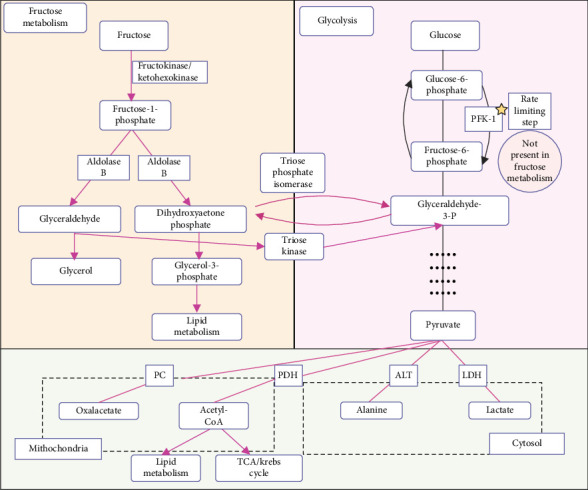
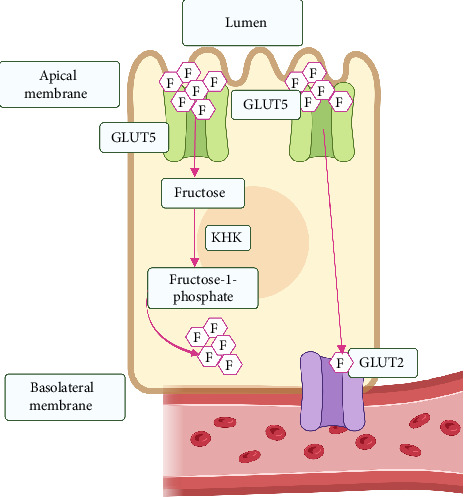
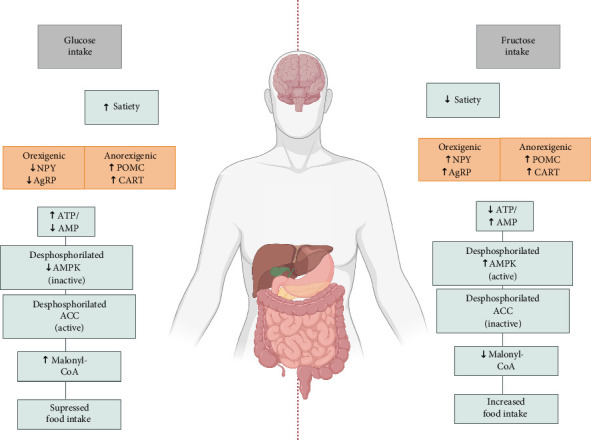
Fructose, a common sweetener in modern diets, has profound effects on both metabolism and brain function, primarily due to its distinct metabolic pathways. Unlike glucose, fructose bypasses critical regulatory steps in metabolism, particularly the phosphofructokinase-1 (PFK-1) feedback inhibition, leading to uncontrolled metabolism and increased fat storage. This review delves into the metabolic consequences of fructose consumption, including its limited role in directly stimulating insulin secretion, which affects satiety signaling and contributes to increased food intake. The small intestine initially helps metabolize ingested fructose, shielding the liver and brain from excessive exposure. However, when consumed in excess, particularly in diets high in processed foods, this protective mechanism becomes overwhelmed, contributing to metabolic disorders such as insulin resistance, obesity, and fatty liver disease. The review also explores fructose's impact on the brain, with a focus on the hippocampus, a key region for memory and learning. Chronic high fructose intake has been linked to mitochondrial dysfunction, increased production of reactive oxygen species (ROS), and neuroinflammation, all of which contribute to cognitive decline and impairments in memory and learning. Additionally, fructose-induced alterations in insulin signaling in the brain are associated with increased risk for neurodegenerative diseases. These findings underscore the potential long-term neurological consequences of excessive fructose intake and highlight the need for further human studies to assess the full spectrum of its effects on brain health. Addressing the rising consumption of fructose, particularly in processed foods, is essential for developing targeted strategies to mitigate its adverse metabolic and cognitive outcomes.
Keywords: appetite; brain; fructose; fructose metabolism; high-fructose diet; hypothalamus; neuroinflammation.
Copyright © 2025 Gabriela Vanessa Flores Monar et al. Journal of Nutrition and Metabolism published by John Wiley & Sons Ltd.
Conflict of interest statement
The authors declare no conflicts of interest.
Figures
References
-
- Shapiro A., Mu W., Roncal C., Cheng K. Y., Johnson R. J., Scarpace P. J. Fructose-induced Leptin Resistance Exacerbates Weight Gain in Response to Subsequent High-Fat Feeding. American Journal of Physiology: Regulatory, Integrative and Comparative Physiology . 2008;295(5):R1370–R1375. doi: 10.1152/ajpregu.00195.2008. - DOI - PMC - PubMed
-
- Johnson R. J., Wilson W. L., Bland S. T., Lanaspa M. A. Fructose and Uric Acid as Drivers of a Hyperactive Foraging Response: A Clue to Behavioral Disorders Associated with Impulsivity or Mania? Evolution and Human Behavior . 2021;42(3):194–203. doi: 10.1016/j.evolhumbehav.2020.09.006. - DOI - PMC - PubMed
Publication types
LinkOut - more resources
Full Text Sources
