


Does ankylosing spondylitis exert a bidirectional influence on hypertension? A two-sample Mendelian randomization study
- PMID: 40297789
- PMCID: PMC12034965
- DOI: 10.1177/20503121251335513
Does ankylosing spondylitis exert a bidirectional influence on hypertension? A two-sample Mendelian randomization study
Abstract
Objective: Previous observational studies reported that ankylosing spondylitis is closely related to hypertension. However, it is still controversial whether the association between ankylosing spondylitis and hypertension is causal. The effects of ankylosing spondylitis on diastolic and systolic blood pressure deserve further investigation. The objective of our study is to explore whether ankylosing spondylitis is causally associated with blood pressure.
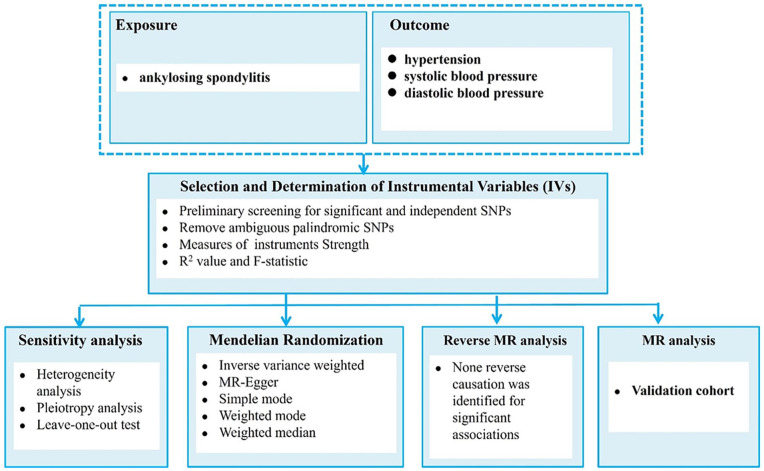
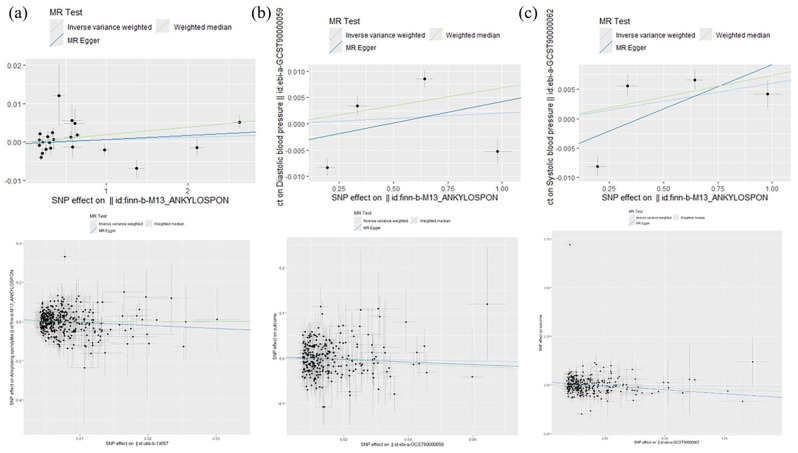
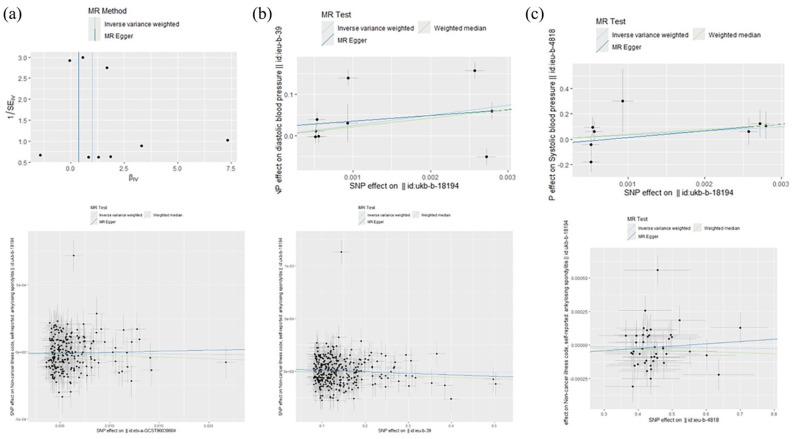
Methods: A bidirectional two-sample Mendelian randomization (MR) analysis was performed by employing five Mendelian randomization analysis methods. MR Egger regression, weighted median, inverse variance weighted, and weight mode methods were performed in the two-sample Mendelian randomization analysis. We performed Mendelian randomization to investigate the association between ankylosing spondylitis (finn-b-M13_ANKYLOSPON) and hypertension (ukb-b-14057), diastolic blood pressure (ebi-a-GCST90000062) and systolic blood pressure (ebi-a-GCST90000059). We also performed reverse Mendelian randomization between exposures and outcomes. Another new validation cohort (ukb-b-18194) was also performed. The heterogeneity, horizontal pleiotropy, and possible outliers were examined in the MR analysis results.
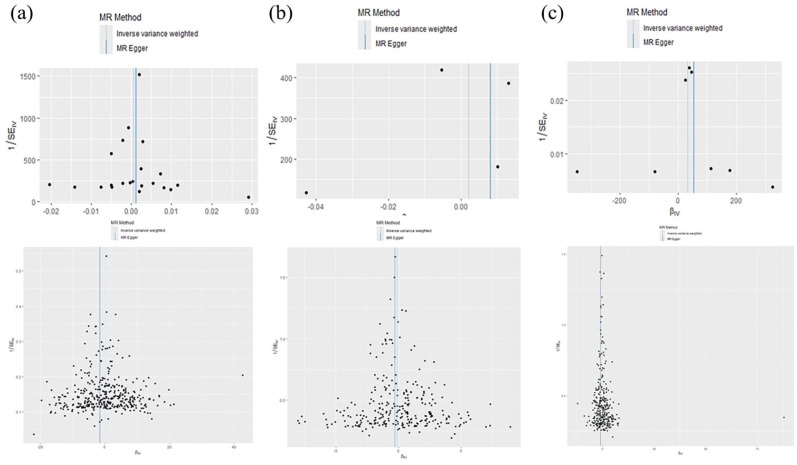
Results: The inverse variance weighted results showed that ankylosing spondylitis has no genetic causal relationship with hypertension (p = 0.441, OR = 1.001, 95% CI: 0.999-1.002). The inverse variance weighted results showed that ankylosing spondylitis has no genetic causal relationship with systolic blood pressure (p = 0.301, OR = 1.006, 95% CI: 0.995-1.018). The inverse variance weighted results showed that ankylosing spondylitis has no genetic causal relationship with diastolic blood pressure (p = 0.778, OR = 1.002, 95% CI: 0.988-1.016). The reverse Mendelian randomization between exposures and outcomes is negative. Another new validation cohort also confirmed the results. No heterogeneity was observed by the MR-pleiotropy residual sum and outlier test. The "leave-one-out" analysis indicated that the results of MR analysis were not affected by a single nucleotide polymorphism.
Conclusion: This study represents the first two-sample Mendelian randomization analysis aimed at investigating the causal genetic relationship between ankylosing spondylitis and blood pressure. Our Mendelian randomization analysis results revealed a lack of causal association between ankylosing spondylitis and hypertension, diastolic blood pressure, as well as systolic blood pressure.
Keywords: Ankylosing spondylitis; Mendelian randomization; hypertension.
© The Author(s) 2025.
Conflict of interest statement
The author(s) declared no potential conflicts of interest with respect to the research, authorship, and/or publication of this article.
Figures
References
-
- Taurog J, Chhabra A, Colbert R. Ankylosing spondylitis and axial spondyloarthritis. N Engl J Med 2016; 374(26): 2563–2574. - PubMed
-
- Ranganathan V, Gracey E, Brown M, et al. Pathogenesis of ankylosing spondylitis—recent advances and future directions. Nat Rev Rheumatol 2017; 13(6): 359–367. - PubMed
-
- Chen C, Chen H, Liu C, et al. Association of obesity with inflammation, disease severity and cardiovascular risk factors among patients with ankylosing spondylitis. Int J Rheum Dis 2020; 23(9): 1165–1174. - PubMed
LinkOut - more resources
Full Text Sources
Research Materials
