


BDNF coexpresses with MTOR and is associated with muscle fiber size, lean mass and power-related traits
- PMID: 40299026
- PMCID: PMC12479623
- DOI: 10.1007/s00421-025-05804-3
BDNF coexpresses with MTOR and is associated with muscle fiber size, lean mass and power-related traits
Abstract
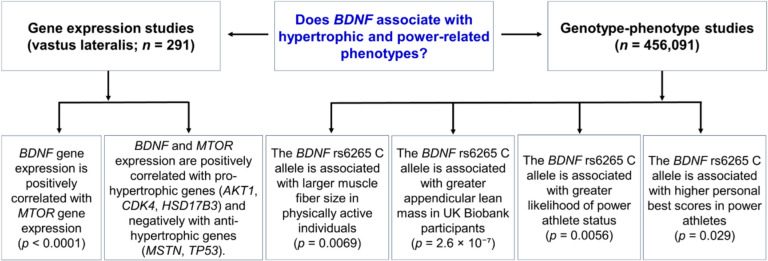
Purpose: Recent research suggests a link between brain-derived neurotrophic factor (BDNF) and the mTOR signaling pathway, a key regulator of protein synthesis and muscle growth. However, it remains unclear whether BDNF influences muscle growth and power performance. Our study aimed to investigate the relationship between the expression of BDNF and MTOR genes in human skeletal muscle and examine the association between genetically predicted higher expression of the BDNF gene and muscle fiber size, lean mass, power performance, and power athlete status.
Methods: The study involved 456,382 subjects, including 285 athletes, 112 physically active individuals with muscle fiber composition data, 291 sedentary individuals with gene expression data, 5451 controls, and 450,243 UK Biobank participants. The muscle fiber composition was evaluated using immunohistochemistry, while gene expression analysis was performed using RNA sequencing. BDNF genotyping was carried out using real-time PCR or microarrays.
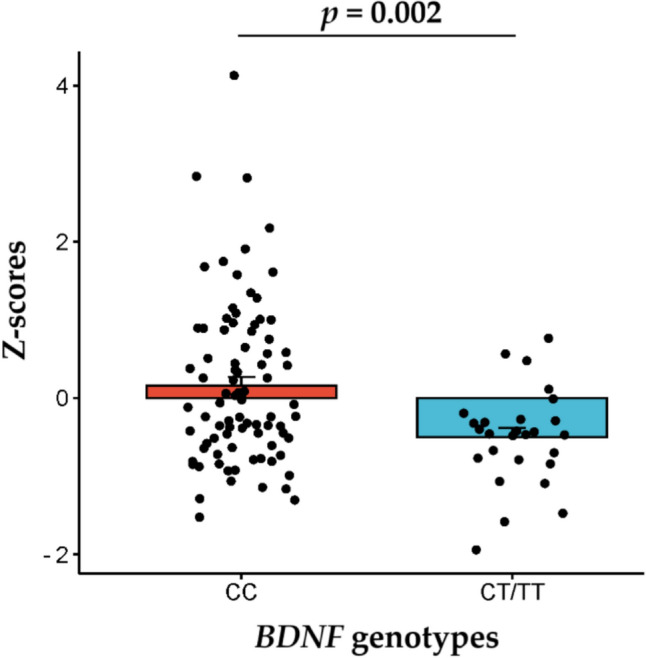
Results: We found that BDNF gene expression was positively associated with MTOR gene expression in the vastus lateralis (p < 0.0001). Furthermore, genetically predicted higher BDNF expression (i.e., carriage of the C allele of the rs6265 (Val66Met) BDNF polymorphism) was positively associated with the cross-sectional area of fast-twitch muscle fibers in athletes (p = 0.0069), appendicular lean mass (p = 2.6 × 10⁻⁷), personal best scores of power athletes (p = 0.029), and power athlete status (p = 0.0056).
Conclusion: Our study demonstrates a positive correlation between BDNF and MTOR gene expression in human skeletal muscle, with genetically predicted higher BDNF expression associated with greater muscle fiber size, lean mass, enhanced power performance, and power athlete status.
Keywords: DNA; Gene expression; Polymorphism; SNP; Sports; Sprint.
© 2025. The Author(s).
Conflict of interest statement
Declarations. Conflict of interest: The authors declare that there are no conflicts of interest.
Figures

References
-
- Andreska T, Rauskolb S, Schukraft N, Lüningschrör P, Sasi M, Signoret-Genest J, Behringer M, Blum R, Sauer M, Tovote P, Sendtner M (2020) Induction of BDNF expression in layer II/III and layer V neurons of the motor cortex is essential for motor learning. J Neurosci 40:6289–6308. 10.1523/JNEUROSCI.0288-20.2020 - DOI - PMC - PubMed
MeSH terms
Substances
Grants and funding
LinkOut - more resources
Full Text Sources
Miscellaneous
