Genetic and Antigenic Variability in VP4 and VP7 of Group A Human Rotavirus in Yunnan, China, from 2015 to 2020
- PMID: 40300562
- PMCID: PMC12237282
- DOI: 10.1159/000546065
Genetic and Antigenic Variability in VP4 and VP7 of Group A Human Rotavirus in Yunnan, China, from 2015 to 2020
Abstract
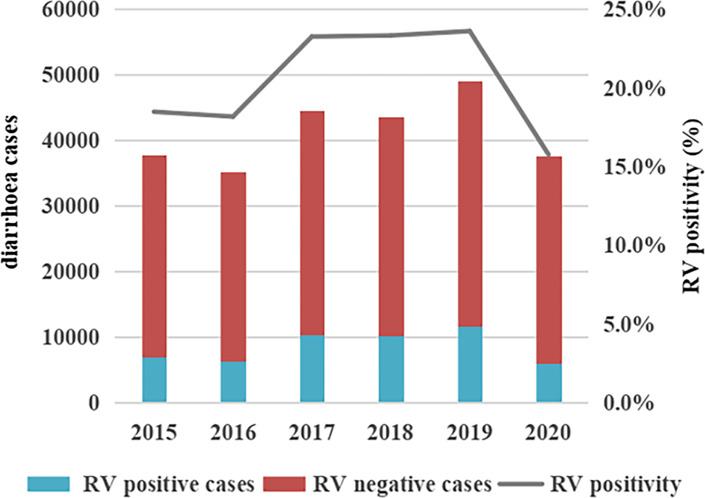
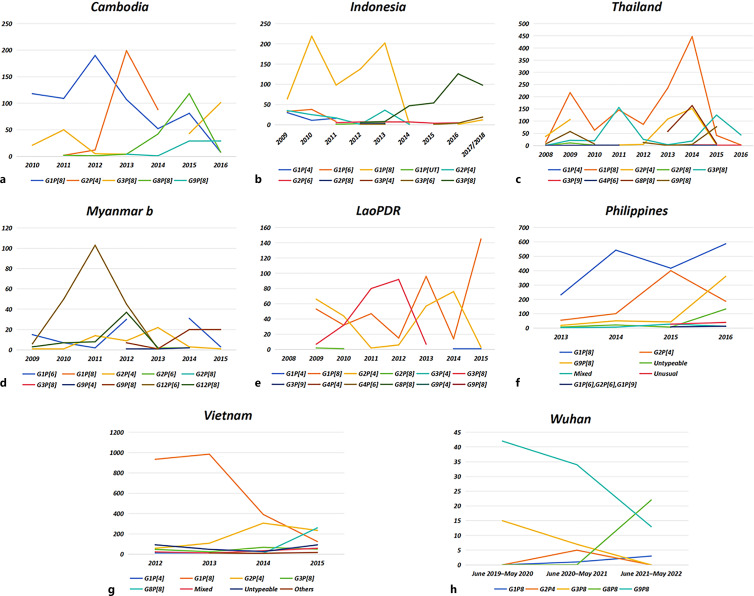
Background: Rotavirus (RV) A is one of the major reasons which causes acute dehydration and diarrhea. It is also one of the highest morbid diseases in children. There are only a few reports about the changes in prevalence and VP4/VP7 genotype of RVs in southwest China. Here is the report about the prevalence of RVs from 2015 to 2020 in Yunnan, southwest China.
Methods: The virus genes were extracted from RV positive samples, then VP4/VP7 genes were amplified, followed by sequencing and gene typing, phylogenetic analysis, antigenic epitope variation analysis, and selective pressure analysis were also performed.
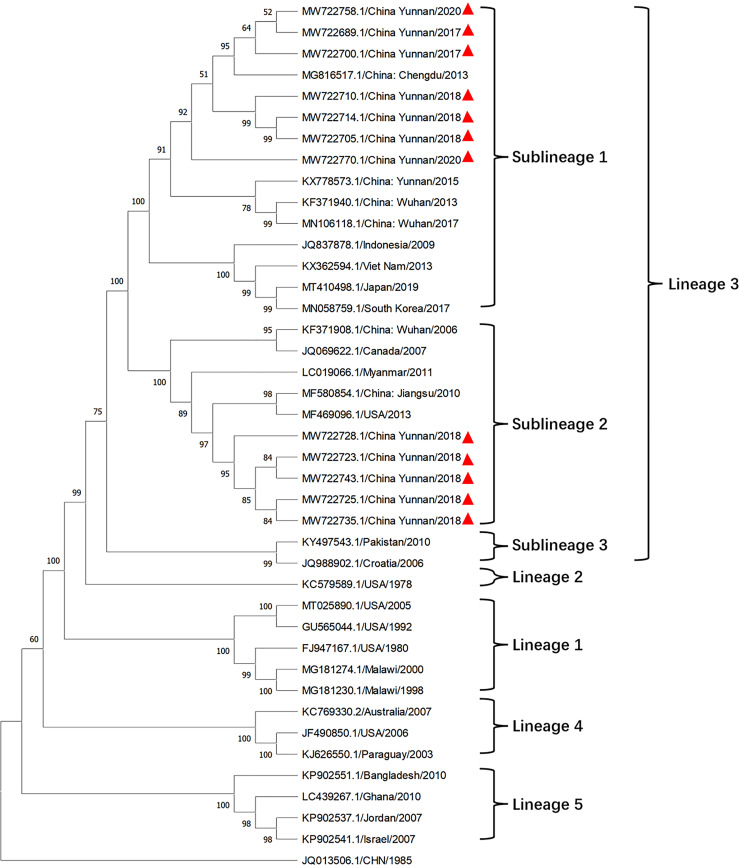
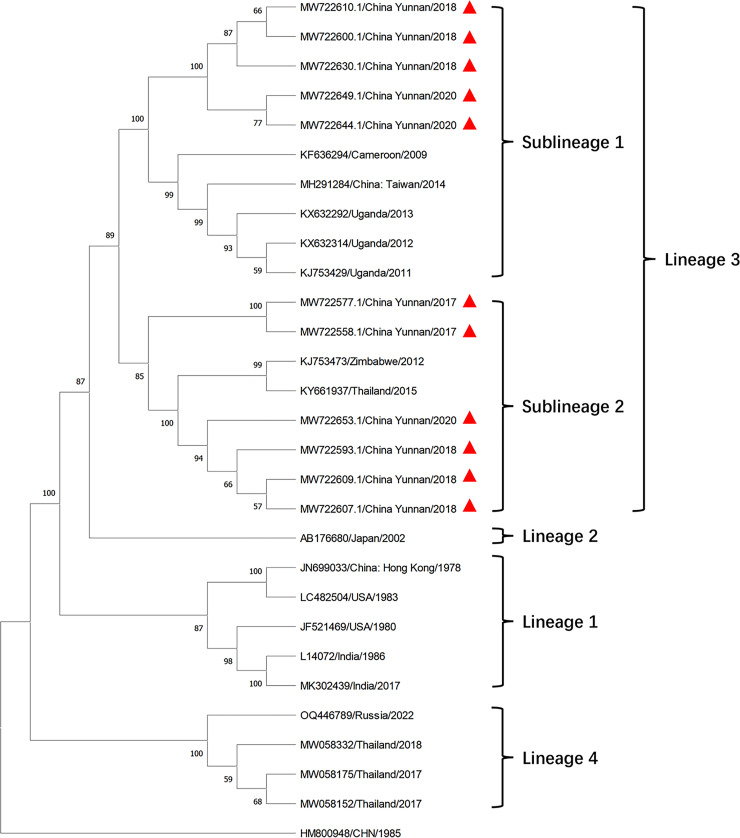
Results: A total of 135 VP4 gene sequences and 143 VP7 gene sequences were obtained from stool samples during 2015-2020. Of them, P[8] genotype accounted for 97.0% of the total, while the P[4] genotype accounted for 3.0%. As for the VP7 genotype, G9 genotype accounted for 86.0% of the total, the G3 genotype accounted for 9.1%, and the G2 genotype accounted for 4.9%. G9P[8] was identified as the predominant RV strain during the epidemic season in Yunnan during 2015-2020. Phylogenetic analysis showed that G9 genotype sequences were primarily similar to African strains (KJ753473, KY661937), while P[8] genotype sequences were close to Southeast Asian strains (JQ837878, KX362594). In antigenic epitope variation analysis, among 37 epitopes of P[8] genotype, the RotaTeq™ vaccine strain covers 31 amino acid positions, Rotarix™ covers 28 amino acid positions, while LLR covers only 9. In the representative sequence of the G9 genotype, RotaTeq™ vaccine strains cover 27 out of 29 amino acid positions, Rotarix™ covers 16 positions, and LLR covers 16 positions. The results of the selective pressure analysis indicated potential positive sites for the G9P[8] genotype located at vp7-44, vp7-100, vp7-221, vp7-278, vp4-3, and vp4-4.
Conclusions: Our study shows that G9P[8] is the most dominant RV genotype in Yunnan, China. Consistent with the recent epidemic trend of RV strains in China, this study could provide new perspectives on vaccine research.
Keywords: Antigen epitope variation; Phylogenetic analysis; Prevalence; Rotavirus A.
© 2025 The Author(s). Published by S. Karger AG, Basel.
Conflict of interest statement
The authors declare that they have no known competing financial interests or personal relationships that could have appeared to influence the work reported in this paper.
Figures
References
-
- Santos VS, Berezin EN, Gurgel RQ. Rotavirus in Latin America: current situation and perspectives. J Pediatric Infect Dis Soc. 2017;6(1):1–2. - PubMed
-
- Scott-Jupp R. Preventing rotavirus in Africa. Arch Dis Child. 2017;102(6):486. - PubMed
-
- Almeida TNV, Fiaccadori FS, Souza M, Borges AMT, Cardoso DDP. Molecular characterization of group A rotavirus before and after the introduction of vaccines in Brazil. Rev Soc Bras Med Trop. 2015;48(5):599–602. - PubMed
MeSH terms
Substances
LinkOut - more resources
Full Text Sources
Medical
Research Materials