


Association of advanced lung cancer inflammation index with all-cause and cardiovascular mortality in metabolic dysfunction associated steatotic liver disease
- PMID: 40301487
- PMCID: PMC12041350
- DOI: 10.1038/s41598-025-99311-2
Association of advanced lung cancer inflammation index with all-cause and cardiovascular mortality in metabolic dysfunction associated steatotic liver disease
Abstract
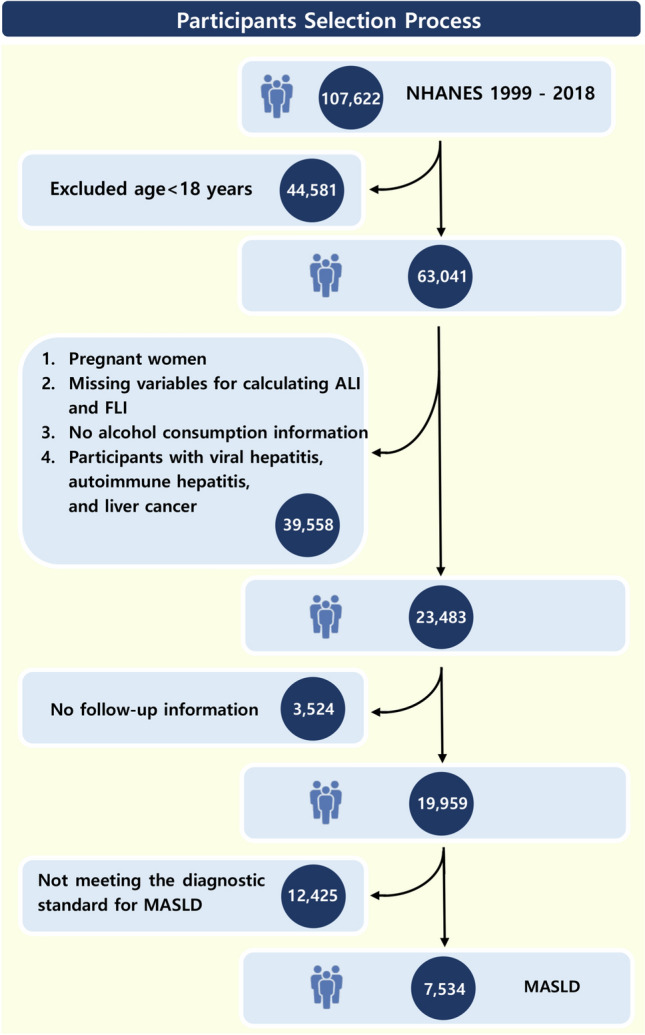
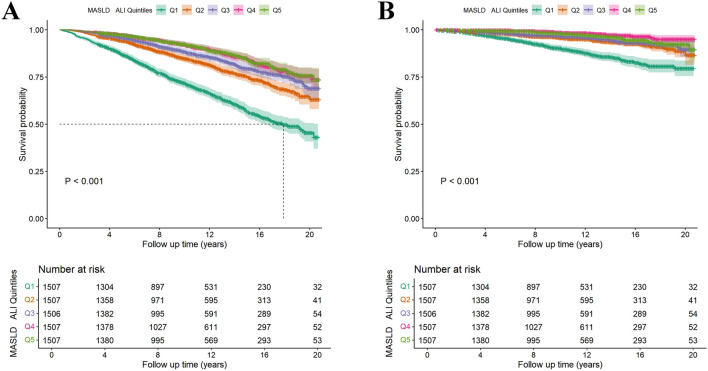
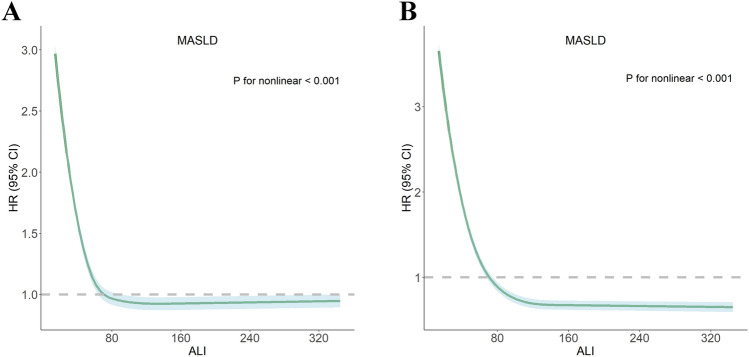
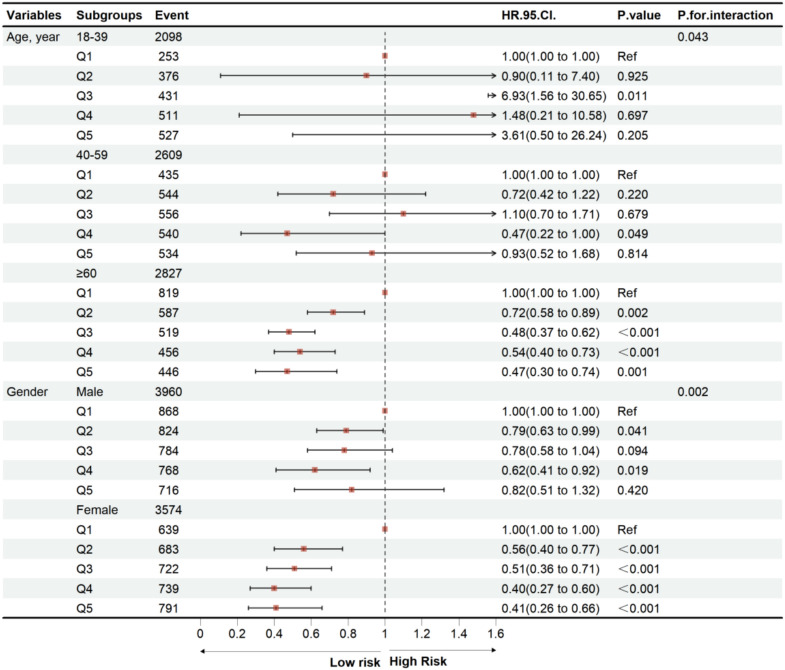
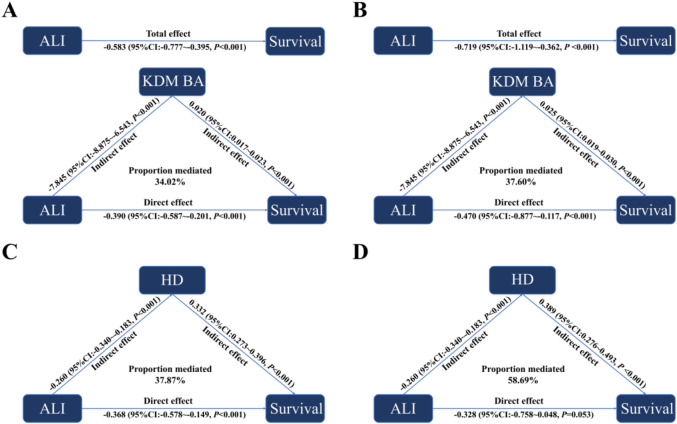
Metabolic dysfunction-associated steatotic liver disease (MASLD), formerly known as non-alcoholic fatty liver disease (NAFLD), is a growing global health concern due to its rising prevalence and association with hepatic and cardiovascular diseases. This study aimed to assess the prognostic value of the Advanced Lung Cancer Inflammation Index (ALI)-a combined indicator of nutritional and inflammatory status-in predicting all-cause and cardiovascular mortality in MASLD patients.Data were drawn from MASLD-diagnosed adults (≥ 18 years) in the National Health and Nutrition Examination Survey (NHANES) from 1999 to 2018, with mortality tracked until December 31, 2019. ALI was calculated for each participant, and its relationship with long-term mortality was analyzed using multivariable Cox regression, restricted cubic spline (RCS) regression, and subgroup analyses. Additionally, the mediating role of biological age, including Klemera-Doubal method biological age (KDM BA) and homeostatic model assessment (HD), was assessed in this relationship through mediation analysis. Among 7,534 MASLD patients, higher ALI quintiles were significantly associated with reduced all-cause (aHR = 0.591, P = 0.004) and cardiovascular mortality (aHR = 0.393, P = 0.026). A nonlinear relationship was observed between ALI and mortality outcomes (P < 0.001). Subgroup analysis indicated ALI's stronger predictive value in older adults (≥ 60), females, and lifelong non-smokers. Mediation analysis showed that KDM BA and HD partially mediated the ALI-mortality relationship (34.02% and 37.87% for all-cause mortality; 37.60% and 58.69% for cardiovascular mortality, respectively). Higher values of the ALI are associated with reduced all-cause and cardiovascular mortality in patients with MASLD, with biological age serving as a partial mediator. Improved nutritional and inflammatory status enhances the prognosis of MASLD patients.
Keywords: Advanced lung cancer inflammation index (ALI); All-cause mortality; Biological age; Cardiovascular mortality; Inflammation; Metabolic dysfunction associated steatotic liver disease (MASLD); Nutrition.
© 2025. The Author(s).
Conflict of interest statement
Declarations. Competing interests: The authors declare no competing interests. Ethics approval and consent to participate: The study’s ethical framework received approval from the Ethics Review Board at the National Center for Health Statistics (NCHS). All participants have been provided informed consent.
Figures
References
MeSH terms
Grants and funding
LinkOut - more resources
Full Text Sources
Medical
