


Metabolites profiling of Mimusops caffra leaf via multiplex GC-MS and UPLC-MS/MS approaches in relation to its antioxidant and anti-inflammatory activities
- PMID: 40301498
- PMCID: PMC12041594
- DOI: 10.1038/s41598-025-97161-6
Metabolites profiling of Mimusops caffra leaf via multiplex GC-MS and UPLC-MS/MS approaches in relation to its antioxidant and anti-inflammatory activities
Abstract
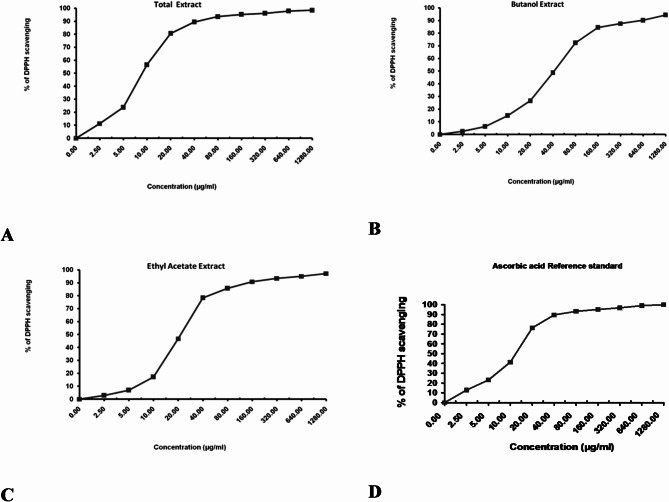
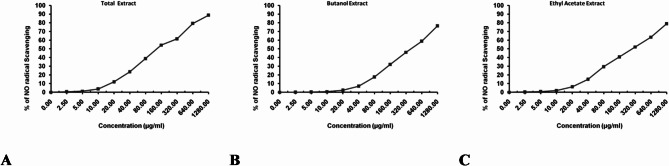
Mimusops caffra is a small to medium-sized fruit-producing tree belonging to the Sapotaceae family with potential commercial, medicinal, and nutritional value. The main goal of the current study is to profile the phytochemical composition of M. caffra leaf targeting both volatile and non-volatile metabolites using gas chromatography and mass spectrometry (GC-MS) and ultrahigh performance liquid chromatograpy coupled with mass spectrometry (UPLC-MS/MS), respectively. A total of 62 secondary metabolites were annotated via UPLC-MS/MS belonging to organic acids, phenolic acids, flavonoids, triterpenes, fatty acids and their derivatives, and sphingolipids. Moreover, 50 volatile compounds were detected by using GC-MS classified as monoterpene, aliphatic and aromatic hydrocarbons, alcohols, phenols, fatty acids/esters, and triterpenes. The antioxidant and anti-inflammatory activities of the crude methanol extract, ethyl acetate, n-butanol fractions were evaluated using DPPH radical scavenging capacity and nitric oxide inhibition activity, respectively. The crude methanol extract exhibited the strongest antioxidant activity as compared to ethyl acetate, n-butanol fractions and ascorbic acid (used as a reference antioxidant). The IC50 values of the crude methanol extract, ethyl acetate, n-butanol fractions in DPPH assay were 9 ± 0.37 µg/ml, 22.1 ± 0.79 µg/ml and 42.2 ± 1.65 µg/ml, respectively, compared to 12.5 ± 0.7 µg/ml for ascorbic acid. Furthermore, NO inhibition assay revealed that most of tested extracts exhibited marked inhibition (78-88%) at a dose of 1280 µg/mL, the crude methanol extract showed the most potent anti-inflammatory activity with IC50 of 137 µg/ml. Overall, these findings suggest that the crude methanol extract, n-butanol and ethyl acetate fractions of M. caffra contain potential antioxidant compounds highlighting their therapeutic potential.
Keywords: Mimusops caffra; Anti-inflammatory; Antioxidant activity; GC-MS; Sapotaceae; UHPLC-MS.
© 2025. The Author(s).
Conflict of interest statement
Declarations. Competing interests: The authors declare no competing interests.
Figures
References
-
- Fayek, N. M. et al. Metabolome classification of Olive by-products from different oil presses providing insights into its potential health benefits and valorization as analyzed via multiplex MS‐based techniques coupled to chemometrics. Phytochem. Anal.1, 1 (2024). - PubMed
-
- Baky, M. H., Kamal, A. M., Elgindi, M. R. & Haggag, E. G. A review on phenolic compounds from family sapotaceae. J. Pharmacogn. Phytochem.5, 280–287 (2016).
-
- Abdelmohsen, G., Dawoud, G. T. & Mohamed, M. S. Investigation of the biochemical and ultrastructural mechanisms underlying the antimicrobial activity of Mimusops spp. Extracts. Baghdad Sci. J.17, 452–462 (2020). - DOI
-
- Mariyam Roqaiya, M. R., Begum, W., Majeedi, W. B. & Amrin Saiyed, A. S. F. S. A Review on Traditional Uses and Phytochemical Properties of Mimusops elengi Linn (2015).
MeSH terms
Substances
LinkOut - more resources
Full Text Sources
Medical
Miscellaneous
