


Advances in 3D-printed scaffold technologies for bone defect repair: materials, biomechanics, and clinical prospects
- PMID: 40301861
- PMCID: PMC12042599
- DOI: 10.1186/s12938-025-01381-w
Advances in 3D-printed scaffold technologies for bone defect repair: materials, biomechanics, and clinical prospects
Abstract
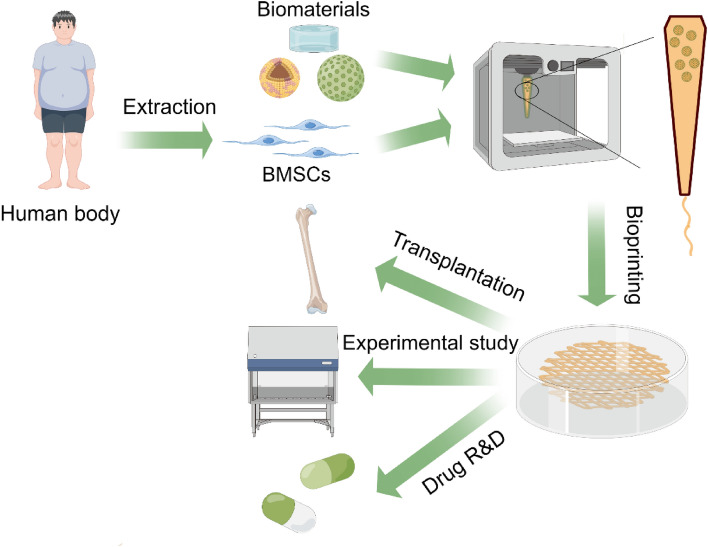
The treatment of large bone defects remains a significant clinical challenge due to the limitations of current grafting techniques, including donor site morbidity, restricted availability, and suboptimal integration. Recent advances in 3D bioprinting technology have enabled the fabrication of structurally and functionally optimized scaffolds that closely mimic native bone tissue architecture. This review comprehensively examines the latest developments in 3D-printed scaffolds for bone regeneration, focusing on three critical aspects: (1) material selection and composite design encompassing metallic; (2) structural optimization with hierarchical porosity (macro/micro/nano-scale) and biomechanical properties tailored; (3) biological functionalization through growth factor delivery, cell seeding strategies and surface modifications. We critically analyze scaffold performance metrics from different research applications, while discussing current translational barriers, including vascular network establishment, mechanical stability under load-bearing conditions, and manufacturing scalability. The review concludes with a forward-looking perspective on innovative approaches such as 4D dynamic scaffolds, smart biomaterials with stimuli-responsive properties, and the integration of artificial intelligence for patient-specific design optimization. These technological advancements collectively offer unprecedented opportunities to address unmet clinical needs in complex bone reconstruction.
Keywords: 3D printing; Biomaterials; Bone defect; Bone regeneration; Bone tissue engineering; Scaffold.
© 2025. The Author(s).
Conflict of interest statement
Declarations. Ethics approval and consent to participate: Not applicable. Competing interests: The authors declare no competing interests.
Figures

References
Publication types
MeSH terms
Substances
Grants and funding
LinkOut - more resources
Full Text Sources
