


Work addiction in nurses: a cross-sectional correlational study of latent profile analysis and burnout
- PMID: 40301890
- PMCID: PMC12039281
- DOI: 10.1186/s12912-025-03102-z
Work addiction in nurses: a cross-sectional correlational study of latent profile analysis and burnout
Abstract
Background: The nursing profession is known for its high intensity and high pressure, and burnout is prevalent among nurses.In recent years, work addiction has attracted attention as an emerging occupational psychological problem.However, there is a relative lack of research on nurses' work addiction, especially in the case of its underlying features and its relationship with burnout.Identifying the underlying characteristics of nurses' work addiction is of great significance for formulating targeted interventions to prevent and alleviate nurses' burnout and improve the quality of nursing services.
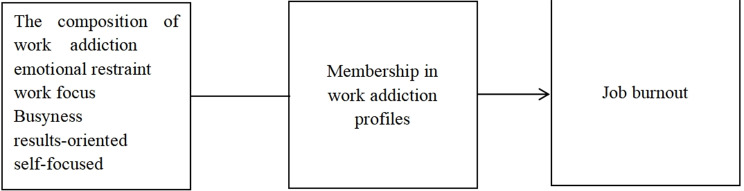
Aim: To identify the distinct profiles of work addiction among clinical nurses, examine the demographic factors associated with profile memberships, and then explore the relationship between latent categories of work addiction and job burnout.
Methods: A cross-sectional study was conducted in nurses in Northwest China using convenience sampling from January to March 2024.The clinical nurse completed the online completion of the General Information Questionnaire, the Work Addiction Scale, and the Burnout Scale.Latent profile analysis, analysis of variance, chi-square test, binary logistic regression and multiple regression analysis were used to analyze the data.
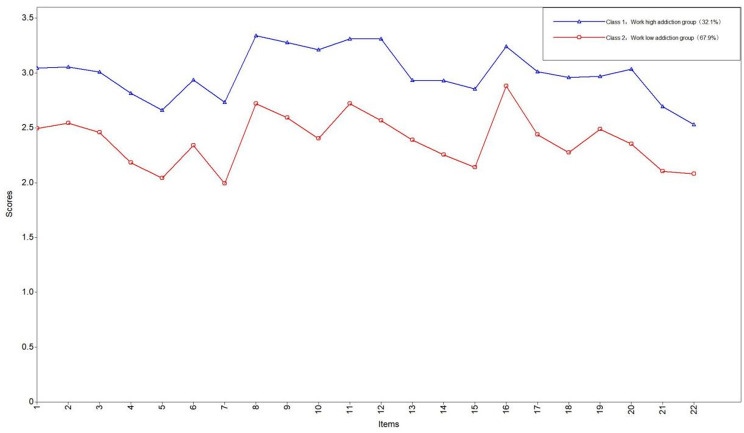
Results: In this study, 550 questionnaires were distributed and 524 questionnaires were effectively recovered, with an effective recovery rate of 95.27%.The detection rate of work addiction was 60.50%.The study identified two possible attributes of nurse work addiction: the low addiction group (level 1) and the high addiction group (level 2).These two groups comprised 67.9% and 32.1% respectively of the entire sample of nurses.The work addiction categories of clinical nurses were found to be influenced by nurses' job titles, employment type, Education background and emotional exhaustion. The dimension of emotional exhaustion in burnout explains 18.70% of the variation in work addiction on its own.
Conclusions: There are obvious categorical characteristics of clinical nurses' work addiction, and more than half of clinical nurses' work addiction is at a low level.Identifying demographic" characteristics"and internal and external predictors' of different types' of work addiction can help inform interventions.hospital administrators should actively monitor nurses who exhibit a high degree of work addiction and implement focused interventions to reduce the degree of burnout of nurses and ensure the quality of nursing work.
Keywords: Burnout; Latent profile analysis; Nurses; Work addiction.
© 2025. The Author(s).
Conflict of interest statement
Declarations. Ethics approval and consent to participate: This study is in line with the ethical principles required by the Declaration of Helsinki, and the study has been approved by the Ethics Committee of Tangdu Hospital.All subjects were informed of the study prior to the survey and they had the right to withdraw at any time during the study.Signed informed consent was obtained from all participants. Consent for publication: Not applicable. Competing interests: The authors declare no competing interests.
Figures
References
-
- Ślusarz R, Cwiekala-Lewis K, Wysokiński M, Filipska-Blejder K, Fidecki W, Biercewicz M. Characteristics of occupational burnout among nurses of various specialties and in the time of the COVID-19 Pandemic-Review. Int J Environ Res Public Health. 2022;19(21):13775. 10.3390/ijerph192113775. - DOI - PMC - PubMed
LinkOut - more resources
Full Text Sources
