


Efficacy of repetitive transcranial magnetic stimulation for subjective chronic tinnitus: a randomized controlled trial meta-analysis
- PMID: 40303608
- PMCID: PMC12037475
- DOI: 10.3389/fnins.2025.1579846
Efficacy of repetitive transcranial magnetic stimulation for subjective chronic tinnitus: a randomized controlled trial meta-analysis
Abstract
Objectives: Chronic tinnitus affects approximately 10%-15% of the population. The long-term presence of severe tinnitus significantly impacts affected individuals' quality of life and emotional state. Repetitive transcranial magnetic stimulation (rTMS) is a non-invasive technique that employs pulsed magnetic fields to modulate neural activity. rTMS is considered a promising treatment strategy for chronic tinnitus. However, the therapeutic effect of rTMS on subjective chronic tinnitus remains inconclusive, and its validity is still a subject of debate among researchers.
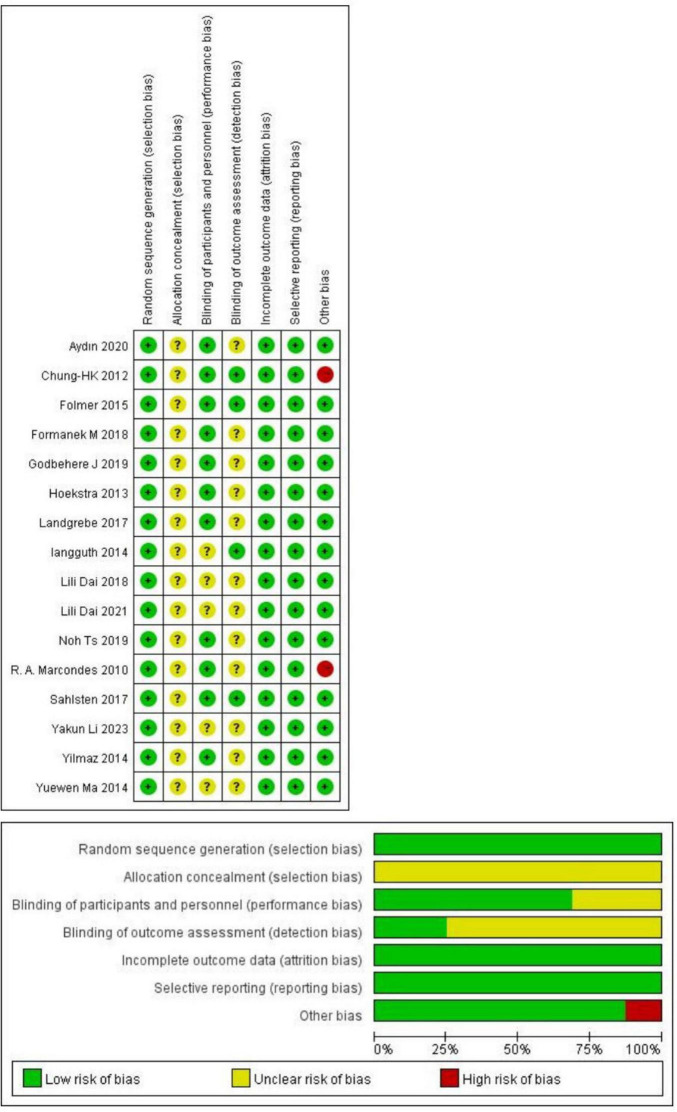
Methods: To identify RCTs investigating rTMS for subjective chronic tinnitus, a comprehensive computerized search was conducted across multiple databases, including PubMed, The Cochrane Library, Embase, Web of Science, China Knowledge, WIPO, Wanfang, and the China Biomedical Literature Database (CBM). The search timeframe spanned from the inception of each database to 2 June 2024. Two independent investigators performed literature screening, data extraction, and quality assessment using the Cochrane Risk of Bias Assessment Tool. Meta-analysis was conducted using RevMan 5.4 software.
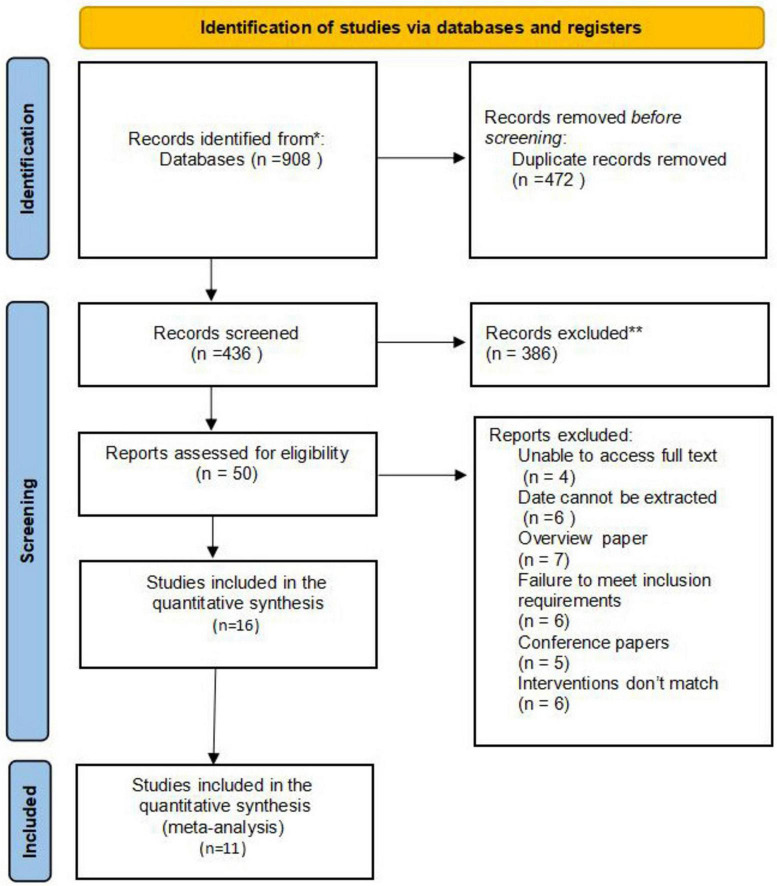
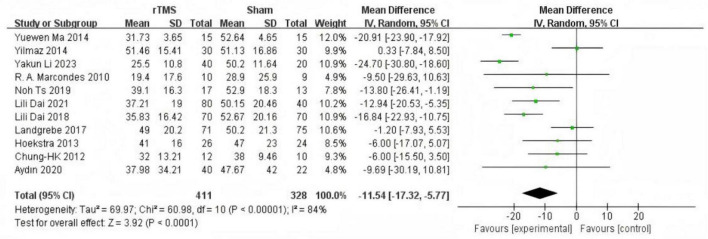
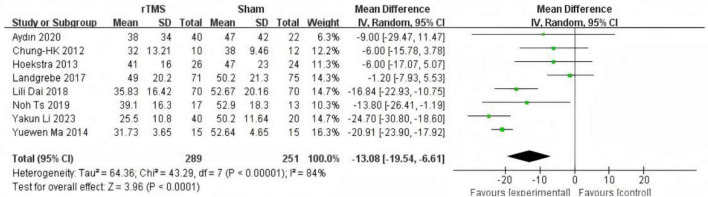
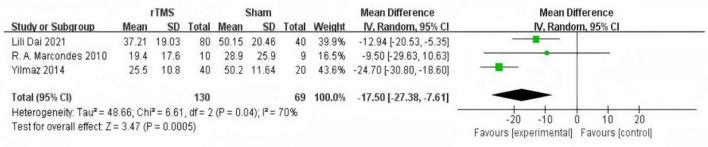
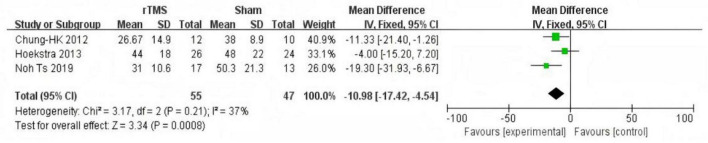
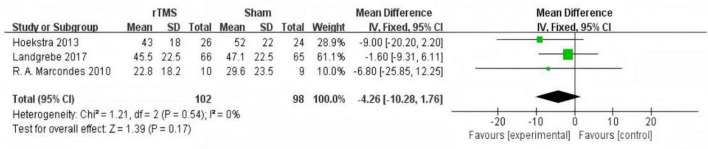
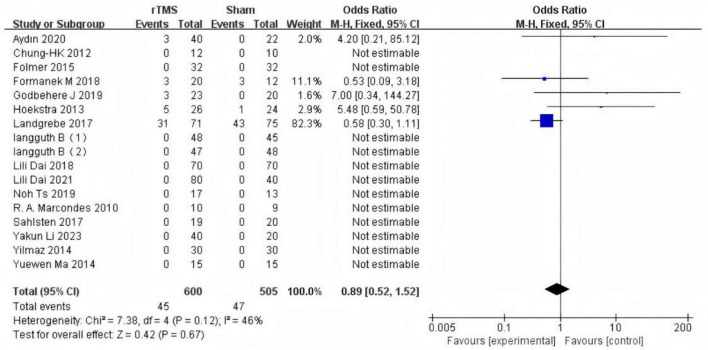
Results: Sixteen randomized controlled trials (RCTs) involving 1,105 chronic tinnitus patients were included. RTMS was superior to Sham rTMS in THI and VAS and had a positive effect on the short-term impact of THI (1 month), Still, this meta-analysis did not observe a positive effect of rTMS on the long-term implications of tinnitus (6 months). rTMS had no significant immediate effect on TQ and LM scores on tinnitus questionnaires.
Conclusion: This meta-analysis demonstrated that rTMS has some efficacy in chronic tinnitus. However, more RCTs are needed to validate its effectiveness, to support the effectiveness of repetitive transcranial magnetic stimulation for tinnitus with larger sample sizes and more follow-up data, and to explore the potential benefits of rTMS in chronic tinnitus.
Systematic review registration: https://www.crd.york.ac.uk/PROSPERO/, identifier CRD42024569403.
Keywords: chronic tinnitus; meta-analysis; rTMS; randomized controlled trial; repetitive transcranial magnetic stimulation.
Copyright © 2025 He, Liao, Ji, Yan and Ai.
Conflict of interest statement
The authors declare that the research was conducted in the absence of any commercial or financial relationships that could be construed as a potential conflict of interest.
Figures
References
-
- Dai L., Chen Z., Wu H., Xu Y. (2018). Clinical efficacy of low-frequency repetitive transcranial magnetic stimulation in the treatment of chronic subjective tinnitus in the elderly. Chin. J. Gerontol. 38 2950–2952. 10.3969/j.issn.1005-9202.2018.12.054 - DOI
-
- Dai L., Tang W., Shuang G., Wu H., Chen Z. (2021). Continuous θ burst stimulation combined low frequency heavy. Clinical analysis of stimulation therapy for subjective tinnitus. Clin. Educ. General Pract. 19 432–435. 10.13558/j.cnki.issn1672-3686.2021.005.014 - DOI
Publication types
LinkOut - more resources
Full Text Sources
