


Parasites and lameness in domestic animals
- PMID: 40304835
- PMCID: PMC12043529
- DOI: 10.1007/s11259-025-10754-4
Parasites and lameness in domestic animals
Abstract
Lameness is a significant welfare issue in domestic animals, and it may also result in productivity losses in farm animals. While traumatic injuries are the primary cause of lameness in animals, parasitic infections may be a potential factor in cases where the underlying cause of lameness remains unclear. Parasites may cause lameness in animals by inflicting extensive pathological damage to various organs and tissues, inducing severe anemia, producing endo- and exotoxins that act on the host, and more. However, the mechanisms by which many parasites induce lameness remain unknown. This review summarizes the literature on parasitic-induced lameness, which is classified as direct or indirect. Direct lameness occurs when parasites damage tissues such as muscles, bones, joints, tendons, and nerves, leading to a loss of function in these structures and subsequent lameness. Neurotoxins produced by some parasites may also cause coordination disorders, paralysis, and lameness in animals. Indirect lameness is caused by Égaré parasites-misplaced parasites that reside in tissues unrelated to their typical target location. These parasites may be found in the central nervous system, muscles, nerves, tendons, interdigital region, or femoral artery. Some endoparasites may cause tissue damage during migration, while others may induce lameness by affecting the circulatory system through blood parasites.
Keywords: Cat; Dog; Equidae; Lameness; Parasites; Ruminant.
© 2025. The Author(s).
Conflict of interest statement
Declarations. Ethics approval: Not applicable. Competing interests: The authors declare no competing interests.
Figures
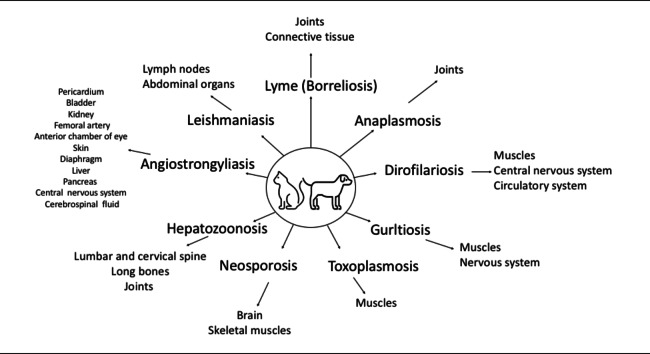
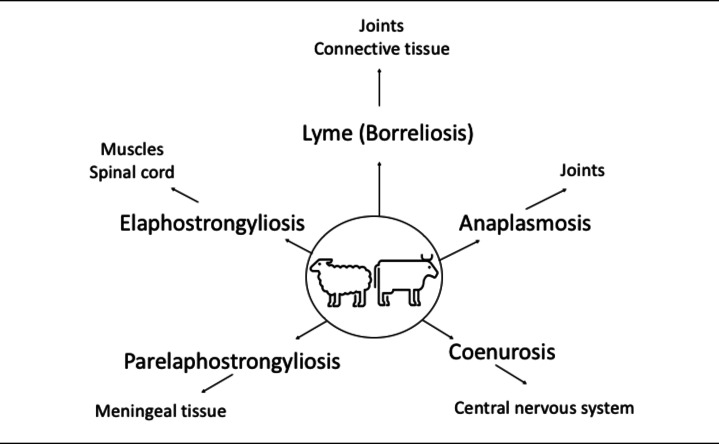
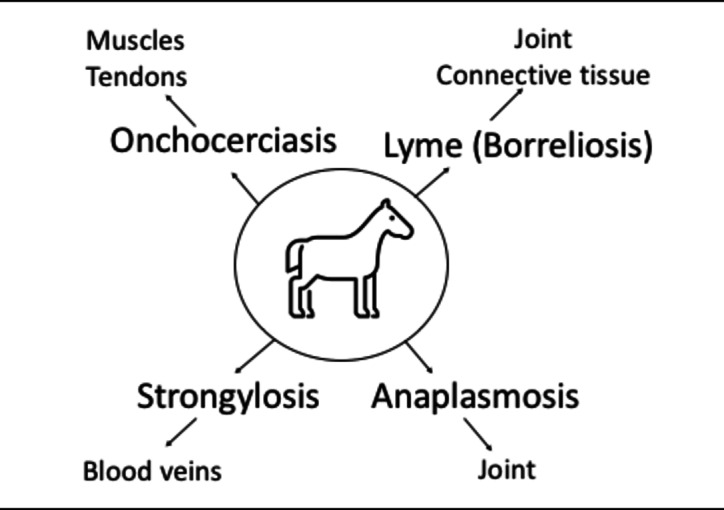
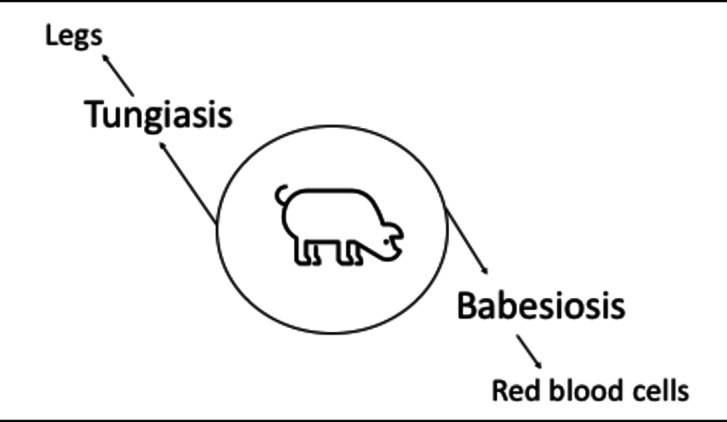
References
-
- Akin I, Akin T (2018) Economic impact of digital dermatitis treatment on a dairy farm: an application of the break-even analysis. Ciênc Rural 48(8):e20170791. 10.1590/0103-8478cr20170791 - DOI
-
- Alberti E, Gioia G, Sironi G, Zanzani S, Riccaboni P, Magrini M, Manfredi M (2011) Elaphostrongylus cervi in a population of red deer (Cervus elaphus) and evidence of cerebrospinal nematodiasis in small ruminants in the Province of Varese, Italy. J Helminthol 85(3):313–318. 10.1017/S0022149X10000647 - DOI - PubMed
-
- Altay K, Şahin ÖF (2020) Kene Felci (Etiyoloji, epidemiyoloji, Patofizyoloji, klinik Tablo, Teşhis, Tedavi ve Korunma). Turk Vet J 2(1):17–23
-
- Anderson RC (1999) Order Enoplida-suborder dioctophymina. In: Anderson R (ed) Nematode parasites of vertebrates: their development and transmission. CABI, Wallingford, pp 593–603
Publication types
MeSH terms
LinkOut - more resources
Full Text Sources
Medical
Miscellaneous
