


Randomized Controlled Clinical Trial of Pediatric Pneumococcus and Hepatitis A Vaccinations With or Without a High-Dose Oral Vitamin A Supplement
- PMID: 40305237
- PMCID: PMC12024622
- DOI: 10.3390/biom15040540
Randomized Controlled Clinical Trial of Pediatric Pneumococcus and Hepatitis A Vaccinations With or Without a High-Dose Oral Vitamin A Supplement
Abstract
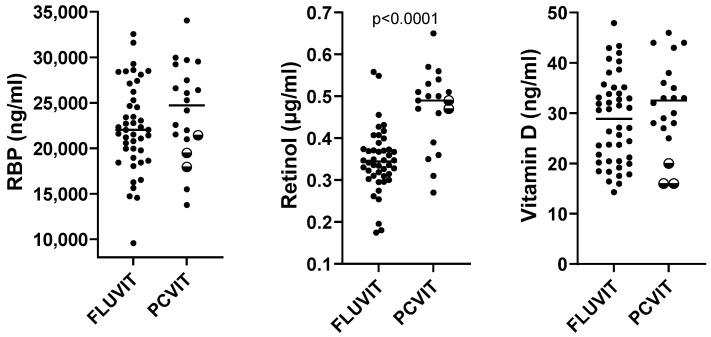
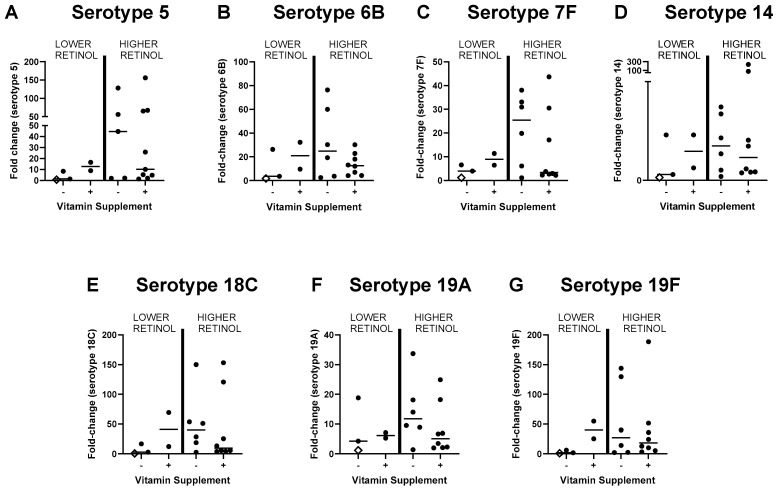
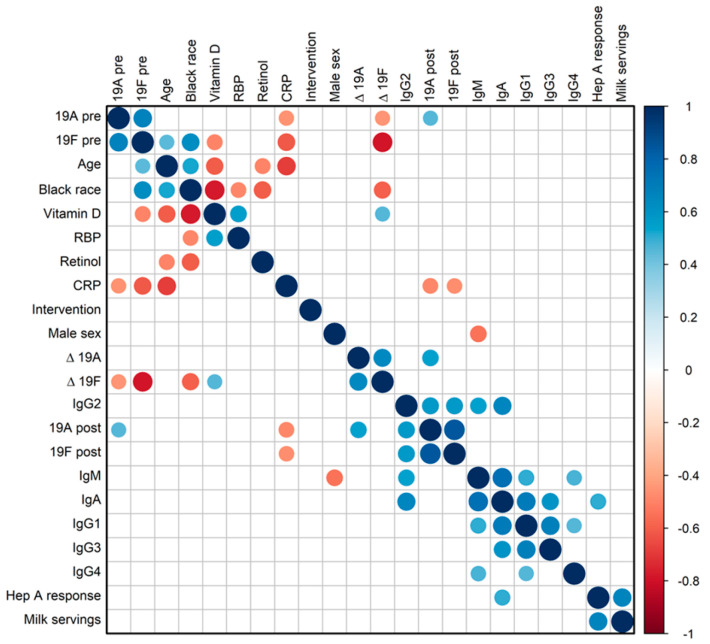
Previous studies have shown that high-dose vitamin supplements can improve vaccine-induced immune responses and pathogen protection in the context of vitamin deficiencies. To further elucidate the influence of vitamin supplements on immune responses toward pediatric vaccines, we performed a randomized controlled clinical trial (PCVIT) of 20 healthy children 1-4 years of age in Memphis, Tennessee. Study participants received a booster vaccine for pneumococcus and a primary vaccine for hepatitis A virus with or without a high-dose, oral, liquid supplement of 10,000 IU retinyl palmitate. We found that the children enrolled in PCVIT had higher baseline vitamin levels than previously described older children and adults living in Memphis. Only one child in PCVIT had a serum retinol level of less than 0.3 µg/mL. The children frequently consumed milk and baby foods that were likely vitamin-fortified, providing an explanation for the relatively high vitamin levels. Most children in PCVIT responded well to pneumococcus and hepatitis A vaccines by pathogen-specific antibody upregulation. The one child with a serum retinol level below 0.3 µg/mL did not receive a vitamin supplement and exhibited the lowest fold-change in antibody responses toward pneumococcal serotypes. A correlation matrix encompassing demographics, vitamin levels, vaccine-induced immune responses, C-reactive protein, and total serum immunoglobulin isotypes, including IgG2 and IgA, identified variables associated with vaccination outcomes. Perhaps because children were predominantly retinol-sufficient at baseline, the high-dose vitamin A supplement exhibited no benefit to vaccine-induced immune responses. In fact, when vitamin supplemented and vitamin unsupplemented groups were compared among participants with the highest baseline retinol levels, there was a trend toward weaker vaccine-induced immune responses in the vitamin supplemented group. Results encourage the performance of larger clinical studies before high-dose vitamin supplements are recommended for populations that are otherwise vitamin-replete.
Keywords: hepatitis A vaccine; pneumococcus vaccine; retinol; retinol binding protein.
Conflict of interest statement
The authors declare no conflicts of interest. The funders had no role in the design of the study, in the collection, analyses, or interpretation of data, in the writing of the manuscript or in the decision to publish the results.
Figures
Similar articles
-
Baseline Serum Vitamin A and D Levels Determine Benefit of Oral Vitamin A&D Supplements to Humoral Immune Responses Following Pediatric Influenza Vaccination.Viruses. 2019 Sep 30;11(10):907. doi: 10.3390/v11100907. Viruses. 2019. PMID: 31575021 Free PMC article.
-
Comparison of short- and long-term humoral immune responses to pneumococcal polysaccharide and glycoconjugate vaccines in an HIV-infected population.J Infect. 2024 Nov;89(5):106282. doi: 10.1016/j.jinf.2024.106282. Epub 2024 Sep 24. J Infect. 2024. PMID: 39326516
-
Assessing vaccine-induced immunity against pneumococcus, hepatitis A and B over a 9-year follow-up in pediatric liver transplant recipients: A nationwide retrospective study.Am J Transplant. 2024 Jun;24(6):1070-1079. doi: 10.1016/j.ajt.2023.12.011. Epub 2023 Dec 14. Am J Transplant. 2024. PMID: 38103788
-
Influences of Vitamin A on Vaccine Immunogenicity and Efficacy.Front Immunol. 2019 Jul 17;10:1576. doi: 10.3389/fimmu.2019.01576. eCollection 2019. Front Immunol. 2019. PMID: 31379816 Free PMC article.
-
Indirect protection in adults ≥18 years of age from pediatric pneumococcal vaccination: a review.Expert Rev Vaccines. 2024 Jan-Dec;23(1):997-1010. doi: 10.1080/14760584.2024.2416229. Epub 2024 Oct 28. Expert Rev Vaccines. 2024. PMID: 39435466 Review.
References
-
- Rudraraju R., Jones B.G., Surman S.L., Sealy R.E., Thomas P.G., Hurwitz J.L. Respiratory tract epithelial cells express retinaldehyde dehydrogenase ALDH1A and enhance IgA production by stimulated B cells in the presence of vitamin A. PLoS ONE. 2014;9:e86554. doi: 10.1371/journal.pone.0086554. - DOI - PMC - PubMed
Publication types
MeSH terms
Substances
Grants and funding
LinkOut - more resources
Full Text Sources
Medical
Research Materials
Miscellaneous
