


Temporal dynamics of lymphocytes in prostate cancer patients treated with proton therapy
- PMID: 40308498
- PMCID: PMC12040820
- DOI: 10.3389/fonc.2025.1470876
Temporal dynamics of lymphocytes in prostate cancer patients treated with proton therapy
Abstract
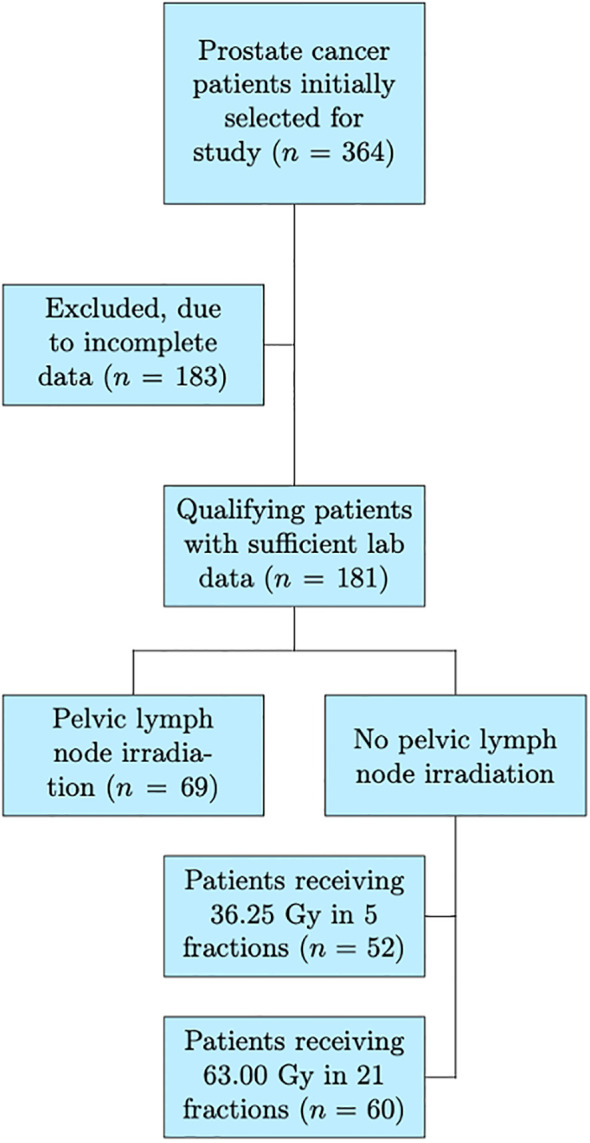
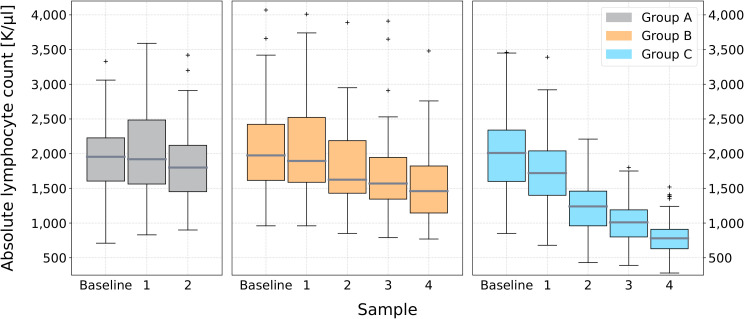
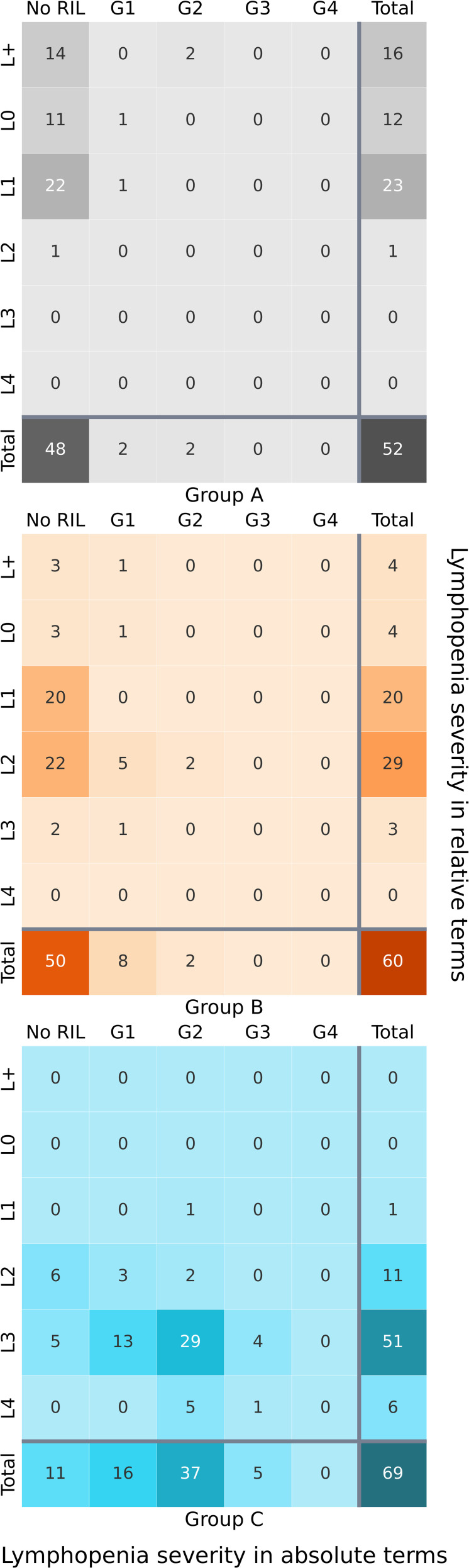
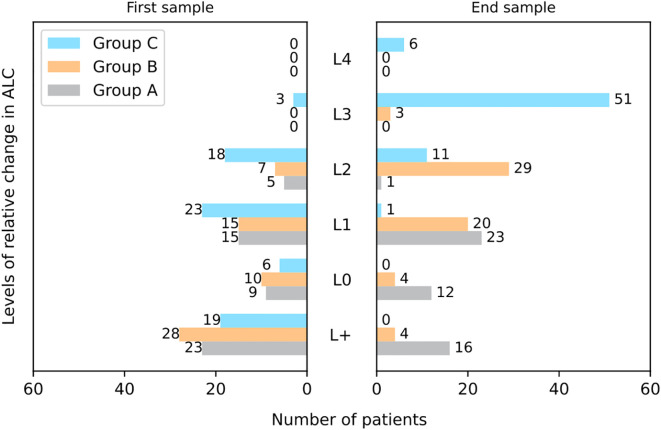
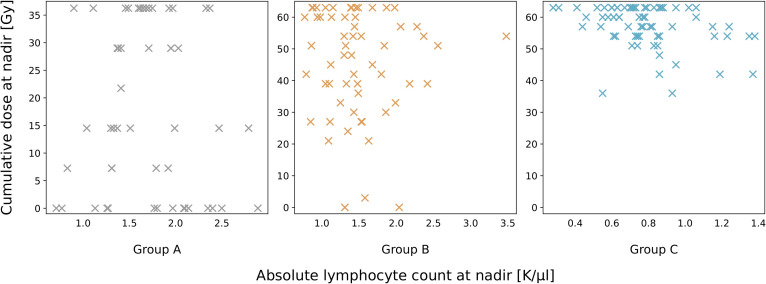
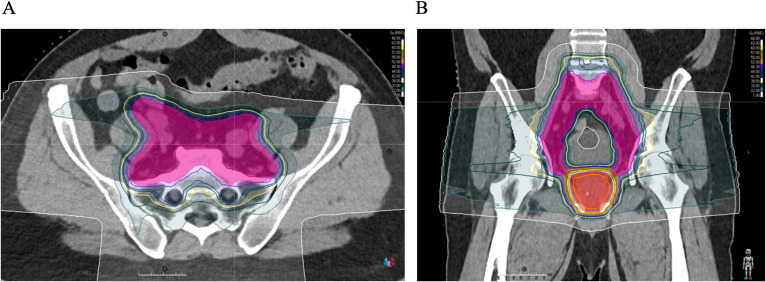
Radiotherapy can be both immunosuppressive and immunostimulatory. Radiation-induced lymphopenia (RIL) is an ongoing challenge in cancer treatment. We investigated weekly changes in the absolute lymphocyte count (ALC) during proton radiotherapy, evaluating the effects of different dosage, fractionation schedules, and pelvic node irradiation (PNI). Prostate cancer patients were prospectively chosen for this study, due to their relatively homogenous treatment plans. Treatment protocols were categorized into three groups: Group A (n=52) received 36.25 Gy/5-fractions, Group B (n=60) underwent 63 Gy/21-fractions and group C (n=69) received 63 Gy/21-fractions plus PNI. To account for individual characteristic differences, a new categorization method was made, according to the change in ALC relative to the baseline. Lymphopenia (ALC < 1000 K/μL) developed in 8%, 17% and 84% of patients in groups A, B, and C, respectively. An initial increase in ALC occurred in 44%, 47% and 28% of groups A, B and C, respectively, and declined with proceeding fractions. Patients with PNI had the most pronounced reduction in their ALC relative to the baseline. Increased dosage and fractionation led to a higher incidence of lymphopenia. Understanding which factors influence ALC in particle therapy is vital for leveraging the immune-enhancing effects of radiotherapy, while minimising its immunosuppressive impacts.
Keywords: hypofractionation; immunostimulation; lymphopenia; prostate cancer; proton therapy; radiation oncology.
Copyright © 2025 Al-Hamami, Kurucz, Vondráček, Pekar, Andrlík, Dědečková, Benešová, Haas, Ondrová, Pasztorová, Vítek and Kubeš.
Conflict of interest statement
The authors declare that the research was conducted in the absence of any commercial or financial relationships that could be construed as a potential conflict of interest.
Figures
References
-
- Damen PJJ, Kroese TE, van Hillegersberg R, Schuit E, Peters M, Verhoeff JJC, et al. . The influence of severe radiation-induced lymphopenia on overall survival in solid tumors: A systematic review and meta-analysis. Int J Radiat. Oncol Biol Phys. (2021) 111:936–48. doi: 10.1016/j.ijrobp.2021.07.1695 - DOI - PubMed
-
- Sini C, Fiorino C, Perna L, Noris Chiorda B, Deantoni CL, Bianchi M, et al. . Dose-volume effects for pelvic bone marrow in predicting hematological toxicity in prostate cancer radiotherapy with pelvic node irradiation. Radiother. Oncol. (2016) 118:79–84. doi: 10.1016/j.radonc.2015.11.020 - DOI - PubMed
LinkOut - more resources
Full Text Sources
