


Machine learning algorithms reveal gut microbiota signatures associated with chronic hepatitis B-related hepatic fibrosis
- PMID: 40308807
- PMCID: PMC12038523
- DOI: 10.3748/wjg.v31.i16.105985
Machine learning algorithms reveal gut microbiota signatures associated with chronic hepatitis B-related hepatic fibrosis
Abstract
Background: Hepatic fibrosis (HF) represents a pivotal stage in the progression and potential reversal of cirrhosis, underscoring the importance of early identification and therapeutic intervention to modulate disease trajectory.
Aim: To explore the complex relationship between chronic hepatitis B (CHB)-related HF and gut microbiota to identify microbiota signatures significantly associated with HF progression in CHB patients using advanced machine learning algorithms.
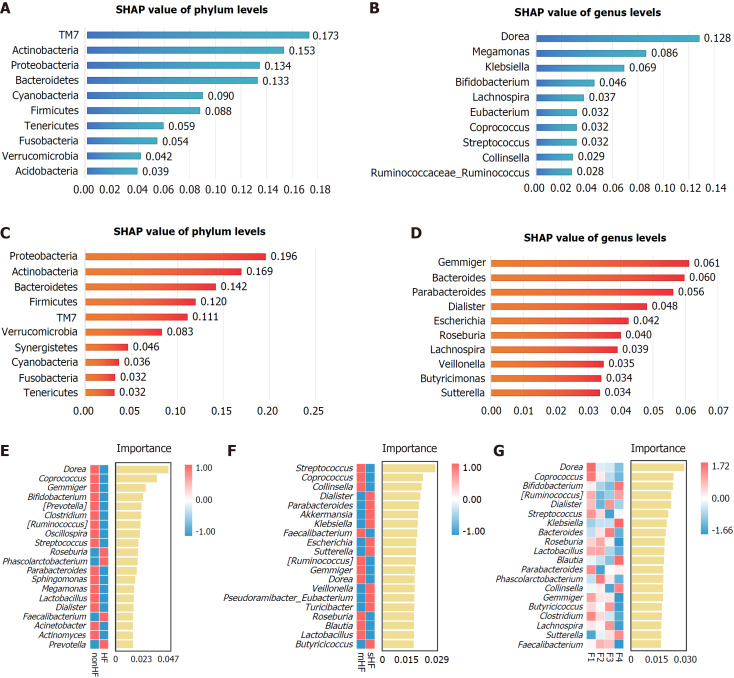
Methods: This study included patients diagnosed with CHB and classified them into HF and non-HF groups based on liver stiffness measurements. The HF group was further subdivided into four subgroups: F1, F2, F3, and F4. Data on clinical indicators were collected. Stool samples were collected for 16S rRNA sequencing to assess the gut microbiome. Microbiota diversity, relative abundance, and linear discriminant analysis effect size (LEfSe) were analyzed in different groups. Correlation analysis between clinical indicators and the relative abundance of gut microbiota was performed. The random forest and eXtreme gradient boosting algorithms were used to identify key differential gut microbiota. The Shapley additive explanations were used to evaluate microbiota importance.
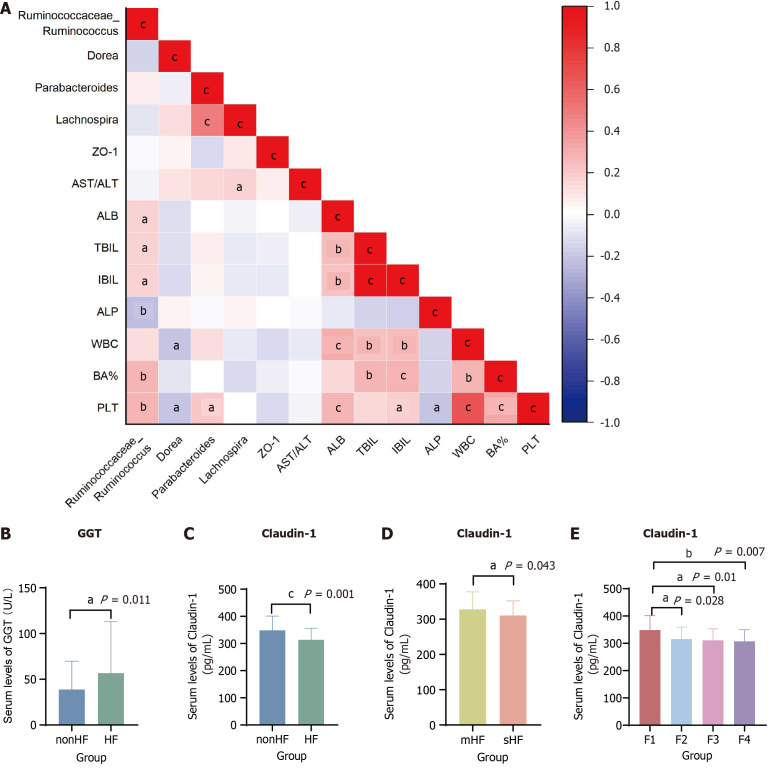
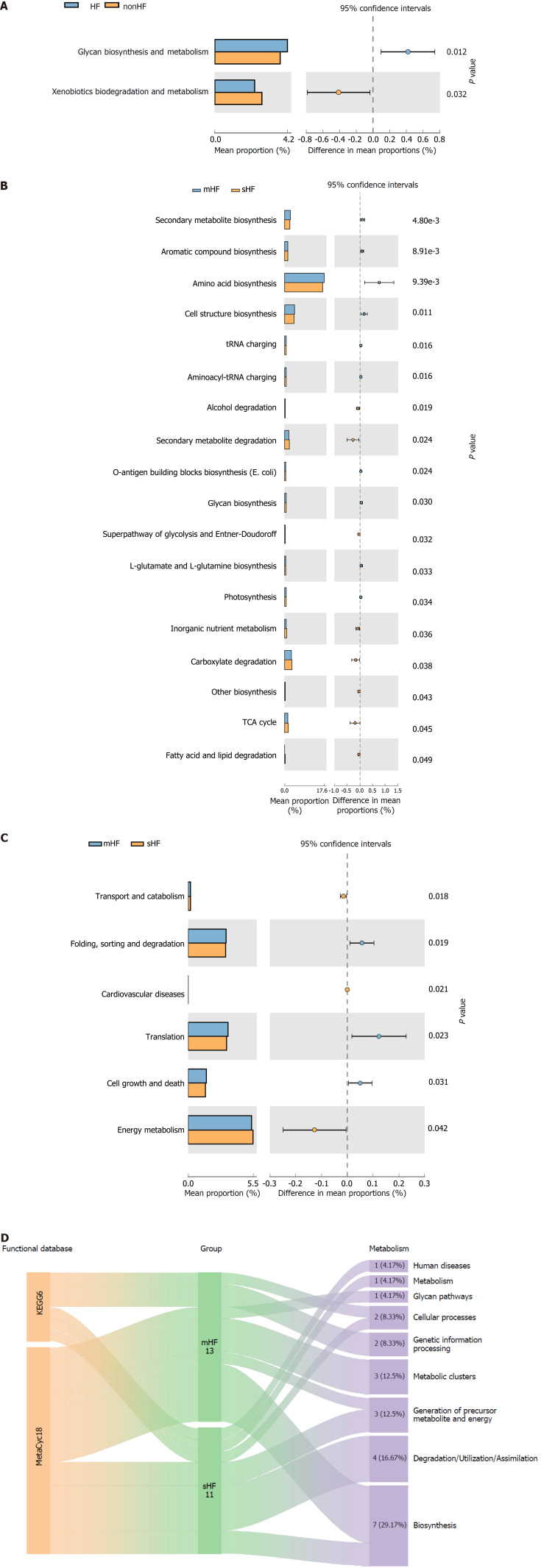
Results: Integrating the results from univariate analysis, LEfSe, and machine learning, we identified that the presence of Dorea in gut microbiota may be a key feature associated with CHB-related HF. Dorea possibly serves as a core differential feature of the gut microbiota that distinguishes HF from non-HF patients, and the presence of Dorea shows significant variations across different stages of HF (P < 0.05). The relative abundance of Dorea significantly decreases with increasing HF severity (P = 0.041). Moreover, the gut microbiota composition in patients with different stages of HF was found to correlate with several liver function indicators, such as γ-glutamyl transferase, alkaline phosphatase, total bilirubin, and the aspartate aminotransferase/alanine transaminase ratio (P < 0.05). The associated pathways were predominantly enriched in biosynthesis, degradation/utilization/assimilation, generation of precursors, metabolites, and energy, among other categories.
Conclusion: HF affects the composition of the gut microbiota, indicating that the gut microbiota plays a crucial role in its pathophysiological processes. The abundance of Dorea varies significantly across various stages of HF, making it a potential microbial marker for identifying HF onset and progression.
Keywords: Chronic hepatitis B virus infection; Fecal microbiomes; Hepatic fibrosis; Liver stiffness; Serum intestinal mucosal barrier.
©The Author(s) 2025. Published by Baishideng Publishing Group Inc. All rights reserved.
Conflict of interest statement
Conflict-of-interest statement: The authors declare that they have no conflict of interest.
Figures
References
-
- WHO Guidelines for the prevention, diagnosis, care and treatment for people with chronic hepatitis B infection. [cited April 1, 2025]. Available from: https://www.who.int/publications/i/item/9789240090903 .
-
- Wang K, Lu X, Zhou H, Gao Y, Zheng J, Tong M, Wu C, Liu C, Huang L, Jiang T, Meng F, Lu Y, Ai H, Xie XY, Yin LP, Liang P, Tian J, Zheng R. Deep learning Radiomics of shear wave elastography significantly improved diagnostic performance for assessing liver fibrosis in chronic hepatitis B: a prospective multicentre study. Gut. 2019;68:729–741. - PMC - PubMed
-
- WHO Global hepatitis report 2024: action for access in low- and middle-income countries. [cited April 1, 2025]. Available from: https://www.who.int/publications/i/item/9789240091672 .
MeSH terms
Substances
LinkOut - more resources
Full Text Sources
Medical
Research Materials
Miscellaneous
