


Molecular dissection of the genetic architecture of phenology underlying Lupinus hispanicus early flowering and adaptation to winter- or spring sowing
- PMID: 40312418
- PMCID: PMC12046050
- DOI: 10.1038/s41598-025-00096-1
Molecular dissection of the genetic architecture of phenology underlying Lupinus hispanicus early flowering and adaptation to winter- or spring sowing
Abstract
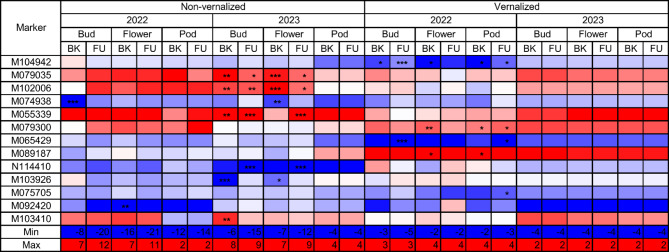
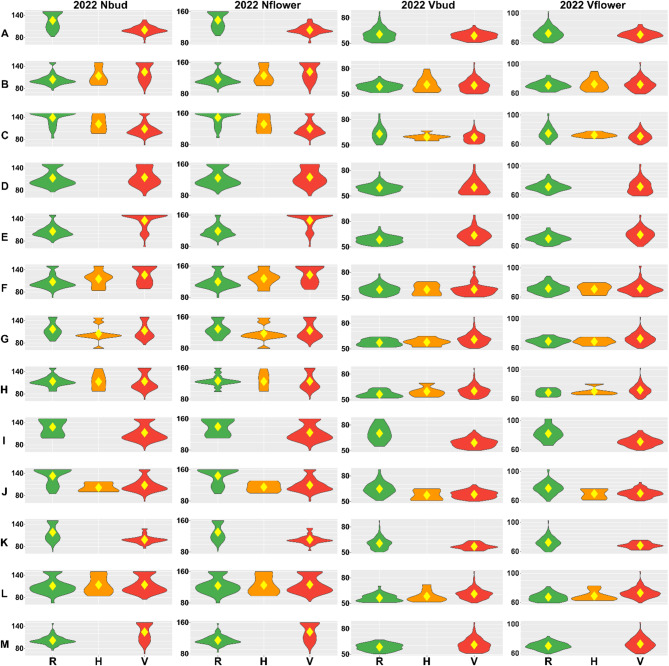
Spanish lupin, Lupinus hispanicus Boiss. et Reut. is an untapped grain legume species characterized by moderate frost resistance, tolerance to poor soil and waterlogging, high yield stability, and remarkable seed protein content. It has been recognized as a good candidate for domestication to broaden the palette of crop diversity. One of the key characteristics that need to be precisely addressed during domestication is the vernalization responsiveness of flowering, which is advantageous in autumn sowing due to improved frost tolerance, whilst undesired in spring sowing as it delays flowering. Ahead of L. hispanicus breeding, in the present work, we aimed to recognize existing phenotypic variability of flowering time and vernalization response and to evaluate the genetic architecture of early and late phenology by DArT-seq genotyping and genome-wide association study (GWAS) in world germplasm collection of the species. Controlled environment phenotyping revealed high variability of flowering time and vernalization responsiveness and significant correlations with population structure. DArT-seq genotyping yielded 23 728 highly polymorphic markers distributed extensively across all 26 chromosomes. GWAS identified a number of markers significantly associated with flowering time with or without pre-sowing vernalization, including those overlapping with the two major quantitative trait loci reported previously for white lupin species. Microsynteny-based analysis of the genetic content of L. hispanicus genome regions carrying significantly associated markers highlighted several candidate genes from photoperiodic and vernalization pathways. To summarize, the present study identified germplasm resources for autumn- and spring-sown cultivation of L. hispanicus and provided tools for marker-assisted selection towards required flowering phenology.
Keywords: Lupinus hispanicus; Flowering induction; GWAS; Legume crop; Legumes; Vernalization.
© 2025. The Author(s).
Conflict of interest statement
Declarations. Competing interests: The authors declare no competing interests. The authors declare that they have no known competing financial interests or personal relationships that could have appeared to influence the work reported in this paper.
Figures




References
-
- Sujak, A., Kotlarz, A. & Strobel, W. Compositional and nutritional evaluation of several lupin seeds. Food Chem.98, 711–719. 10.1016/j.foodchem.2005.06.036 (2006). - DOI
-
- Boschin, G., D’Agostina, A., Annicchiarico, P. & Arnoldi, A. The fatty acid composition of the oil from Lupinus albus Cv. Luxe as affected by environmental and agricultural factors. Eur. Food Res. Technol.225, 769–776. 10.1007/s00217-006-0480-0 (2007). - DOI
MeSH terms
Grants and funding
LinkOut - more resources
Full Text Sources
