


Recent advances in mitochondrial transplantation to treat disease
- PMID: 40313574
- PMCID: PMC12041809
- DOI: 10.12336/biomatertransl.2025.01.002
Recent advances in mitochondrial transplantation to treat disease
Abstract
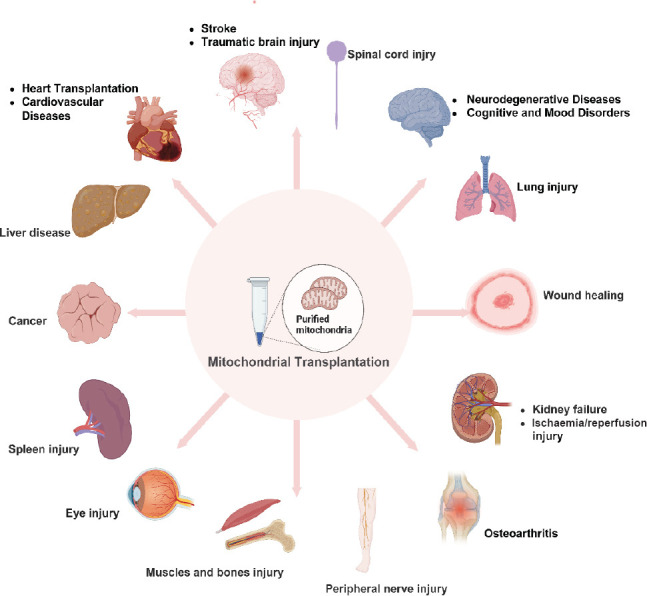
Mitochondrial transplantation (MT), an innovative regenerative technique widely used to treat diseases caused by mitochondrial dysfunction, shows great promise for clinical application. This procedure can increase the number of mitochondria and improve the function of damaged mitochondria, resulting in increased adenosine triphosphate levels, decreased reactive oxygen species production, improved Ca2+ buffering capacity, modulated inflammatory response, and reduced apoptosis to protect cells, thus promoting tissue repair. In this review, we describe research advances in MT over the last five years, focusing on its application in treating various diseases, including ischaemic injuries (of the kidney, heart, lung, and liver), neurodegenerative disorders, spinal cord injury, sepsis, diabetes mellitus, stroke, and ultraviolet radiation injuries, as well as in procedures such as organ transplantation, focusing on instances where MT demonstrated good efficacy. We also cover the application of engineered mitochondria and mitochondrial combination therapies and present the latest advances in improving MT efficiency, as well as the current clinical applications and shortcomings of MT, aiming to provide a theoretical foundation for enhanced MT utilisation in the future.
Keywords: cardiovascular diseases; ischaemia/reperfusion injury; mitochondrial dysfunction; mitochondrial transplantation; neurodegenerative diseases.
Conflict of interest statement
Conflicts of interest statement: The authors declare no conflict of interest.
Figures
References
-
- Pernas L., Scorrano L. Mito-morphosis:mitochondrial fusion, fission, and cristae remodeling as key mediators of cellular function. Annu Rev Physiol. 2016;78:505–531. - PubMed
Publication types
LinkOut - more resources
Full Text Sources
Miscellaneous