


A nomogram risk prediction model for ischemic mitral regurgitation after primary percutaneous coronary intervention in patients with ST-segment elevation myocardial infarction
- PMID: 40317080
- PMCID: PMC12048939
- DOI: 10.1186/s40001-025-02624-1
A nomogram risk prediction model for ischemic mitral regurgitation after primary percutaneous coronary intervention in patients with ST-segment elevation myocardial infarction
Abstract
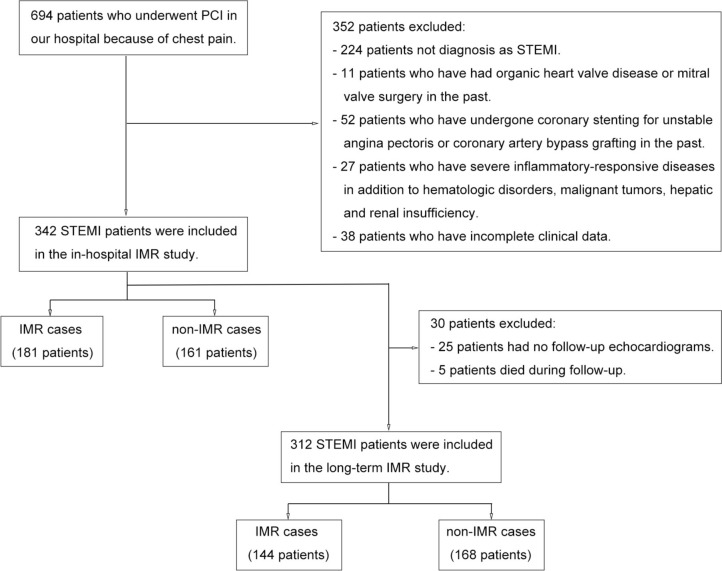
Aim: This study developed a nomogram to predict the risk of ischemic mitral regurgitation (IMR) after percutaneous coronary intervention (PCI) in patients with ST-segment elevation myocardial infarction (STEMI) patients and evaluate their long-term prognosis.
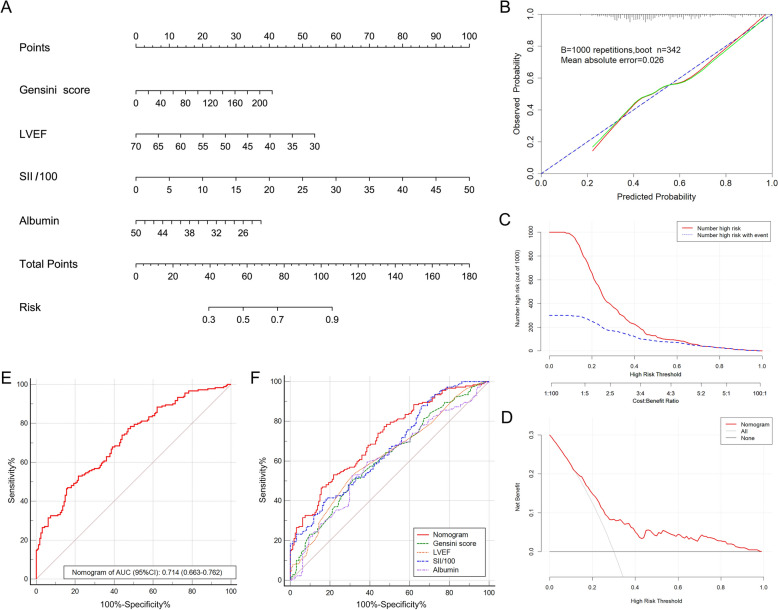
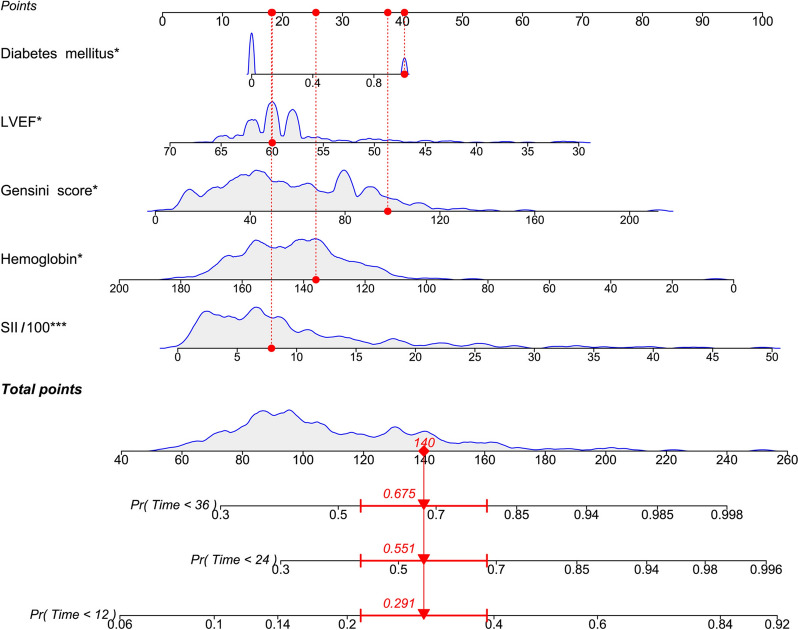
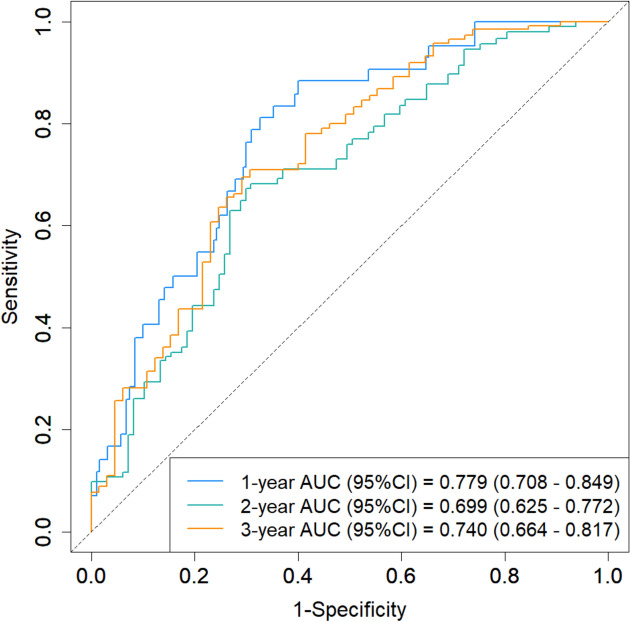
Methods: Data from 342 STEMI patients were collected. Logistic regression identified independent risk factors for IMR during hospitalization, while Cox regression assessed risk factors during follow-up. The nomogram was developed based on these factors. ROC evaluated its predictive value, and decision curve analysis/clinical impact curves assessed clinical utility. Kaplan-Meier analysis evaluated the model's prognostic value.
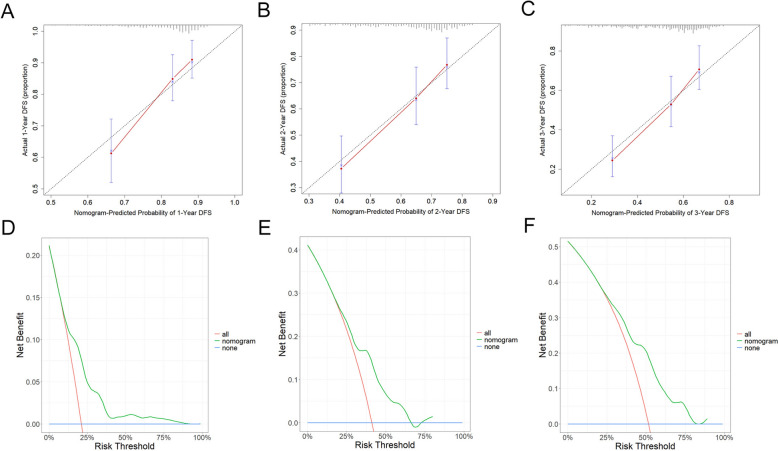
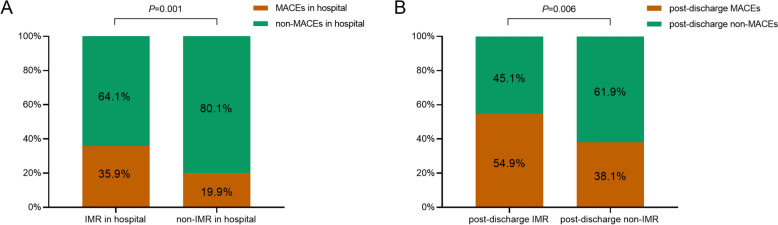
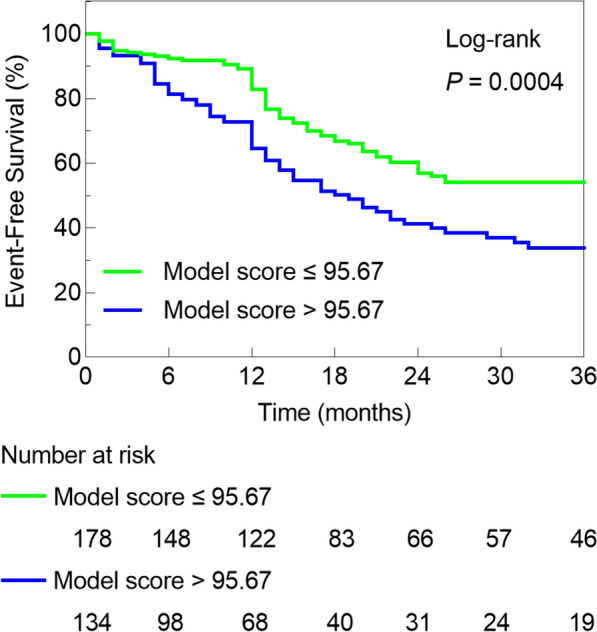
Results: The independent risk factors for hospitalized IMR after PCI in STEMI patients included Gensini score (OR 1.009; P = 0.047), left ventricular ejection fraction (LVEF) (OR 0.941; P = 0.007), albumin (OR 0.941; P = 0.046), and systemic immune-inflammatory index (SII) (OR 1.096; P < 0.001). During follow-up, diabetes mellitus (HR: 1.154; P = 0.019), hemoglobin (HR: 0.991; P = 0.028), Gensini score (HR: 1.007; P = 0.022), LVEF (HR: 0.972; P = 0.015), and SII/100 (HR: 1.034; P < 0.001) were identified as independent predictors of IMR. The nomogram showed strong clinical benefit, good calibration, and predictive value. Patients with lower scores had better long-term outcomes.
Conclusion: This nomogram effectively predicts the occurrence of IMR after PCI in STEMI patients, providing valuable prognostic insights.
Keywords: Major adverse cardiovascular events; Mitral regurgitation; Nomogram; Prognosis; ST-segment elevation myocardial infarction.
© 2025. The Author(s).
Conflict of interest statement
Declarations. Ethics approval and consent to participate: The research was carried out in compliance with the Declaration of Helsinki and granted approval by the Joint Logistics Support Force of the Chinese People's Liberation Army, 904 Hospital Ethics Committee, Wuxi, China (Clinical trial number: 20240405). Written informed consent was obtained from all patients, allowing for the retrospective utilization of their de-identified data for health-related research purposes. Consent for publication: Not applicable. Competing interests: The authors declare no competing interests.
Figures
References
-
- Moreira DM, da Silva RL, Vieira JL, et al. Role of vascular inflammation in coronary artery disease: potential of anti-inflammatory drugs in the prevention of atherothrombosis. Inflammation and anti-inflammatory drugs in coronary artery disease. Am J Cardiovasc Drug Drug Devices Interv. 2015;15(1):1–11. 10.1007/s40256-014-0094-z. - DOI - PubMed
MeSH terms
Grants and funding
LinkOut - more resources
Full Text Sources
Medical
Miscellaneous
