


Grapevine adaptation to cold and heat stress
- PMID: 40317295
- PMCID: PMC12321747
- DOI: 10.1093/jxb/eraf158
Grapevine adaptation to cold and heat stress
Abstract
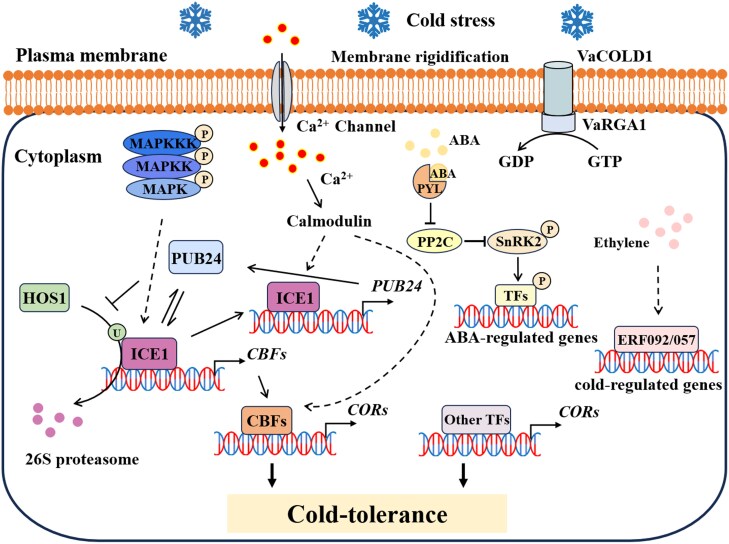
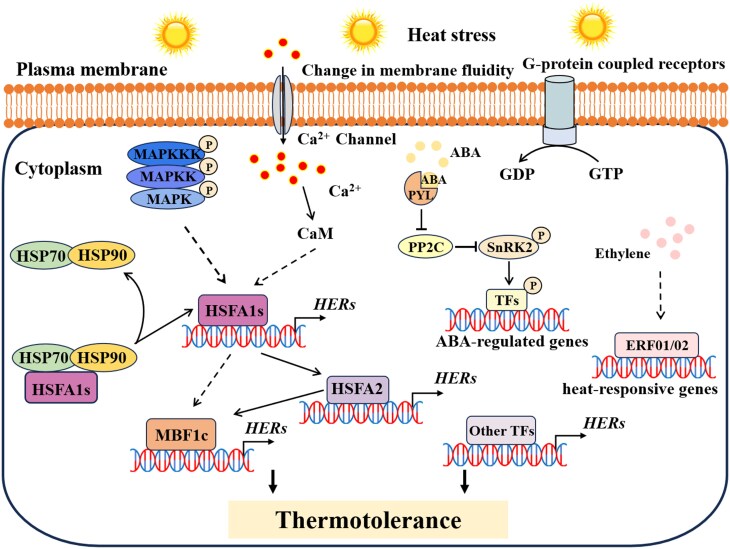
Temperature plays a pivotal role in modulating growth, development, and distribution of plants. Grapevine (Vitis spp.), a perennial plant, must withstand changes in both low and high temperatures due to its sessile nature. However, the extensively cultivated Vitis vinifera L. is sensitive to both cold and heat, and cannot withstand extremely low and high temperatures. In contrast, certain wild germplasms such as Vitis amurensis, Vitis riparia, and Vitis davidii demonstrate excellent tolerance to cold and heat stressors. In recent years, substantial advancements have occurred in the understanding of grapevine resistance, focusing extensively on physiological mechanisms, metabolic pathways, and molecular regulatory processes. However, our understanding of the mechanisms underlying grapevine cold and heat resistance remains insufficient. This review aims to summarize the main progress in research on cold and heat tolerance in grapevines, while also addressing existing gaps and identifying relevant topics for further investigation.
Keywords: Cold stress; grapevine; heat stress; molecular regulation; physiological changes; stress signaling.
© The Author(s) 2025. Published by Oxford University Press on behalf of the Society for Experimental Biology.
Conflict of interest statement
Conflict of interest: The authors declare they have no conflicts of interest.
Figures
References
-
- An J, Li R, Qu F, You C-X, Wang X-F, Hao Y-J. 2018. R2R3-MYB transcription factor MdMYB23 is involved in the cold tolerance and proanthocyanidin accumulation in apple. The Plant Journal 96, 562–577. - PubMed
Publication types
MeSH terms
Grants and funding
LinkOut - more resources
Full Text Sources
Miscellaneous
