


Spatial variation and multilevel determinants of malaria infection among pregnant women in Sub-Saharan Africa: using malaria indicator surveys
- PMID: 40320558
- PMCID: PMC12051275
- DOI: 10.1186/s12879-025-11037-8
Spatial variation and multilevel determinants of malaria infection among pregnant women in Sub-Saharan Africa: using malaria indicator surveys
Abstract
Background: Malaria remains a major public health challenge in Sub-Saharan Africa, with pregnant women being particularly vulnerable to its adverse effects, including increased risk of maternal and neonatal mortality. Despite significant efforts to control malaria, high infection rates persist, especially in underserved areas. Existing studies have identified individual-level factors as contributors to malaria infection, yet the influence of community-level factors and spatial variations remain underexplored. This study aimed to investigate the spatial variation and multilevel determinants of malaria infection among pregnant women in Sub-Saharan Africa.
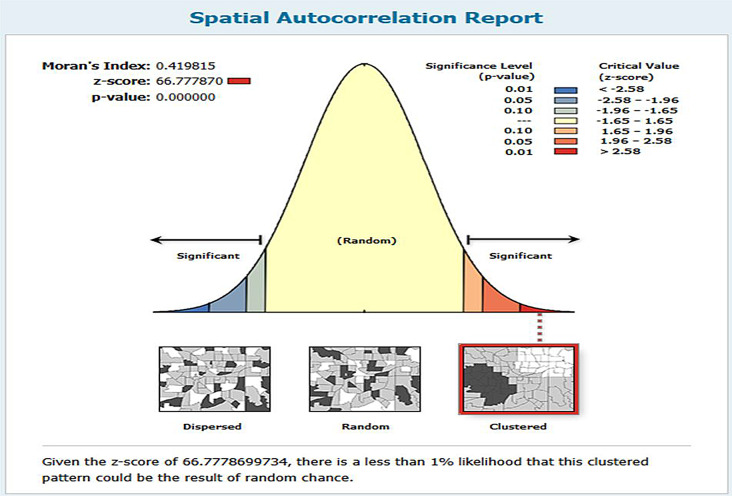
Methods: Data from the Malaria Indicator Surveys across 19 Sub-Saharan African countries were used for analysis. The study included a total of 107,712 pregnant women aged 15-49. Spatial autocorrelation was employed to assess the spatial dependency of malaria infection. Kriging interpolation was used to predict malaria infection in the unsampled areas. Factors associated with malaria infection were considered significant at p-values < 0.05. The adjusted odds ratio and confidence intervals were used to interpret the results. A model with the lowest deviance and highest log-likelihood ratio was selected as the best-fit model.
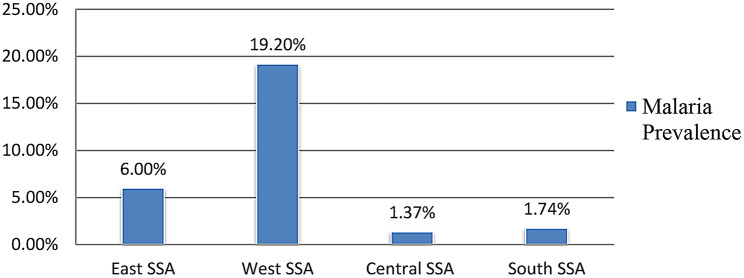
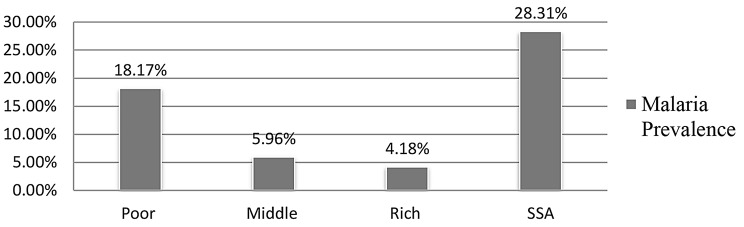
Results: The pooled prevalence of malaria among pregnant women was 28.31% (95% CI: 27.47, 29.20). Factors associated with higher odds of malaria infection included advanced maternal age (AOR: 1.19, 95% CI: 1.03, 1.37), no formal education (AOR: 1.52, 95% CI: 1.28, 1.80), non-use of bed nets (AOR: 6.63, 95% CI: 3.20, 13.73), use of untreated bed nets (AOR: 4.16, 95% CI: 3.72, 8.49), no use of indoor residual spraying (AOR: 2.07, 95% CI: 1.63, 2.64), rural residence (AOR: 2.11, 95% CI: 1.64, 2.41), and residing in West Sub-Saharan Africa (AOR: 6.58, 95% CI: 5.67, 7.64) were determinants of malaria infection.
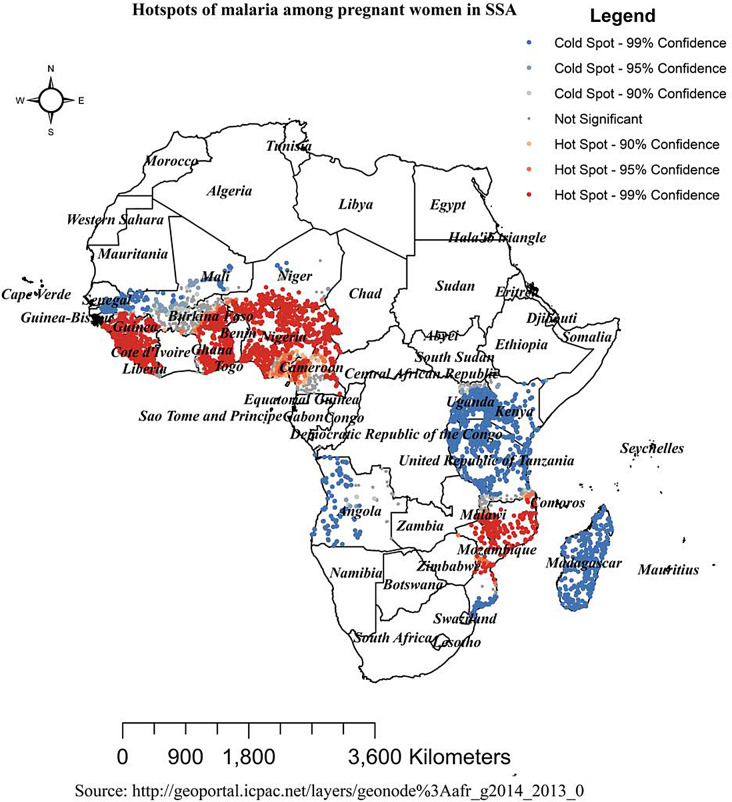
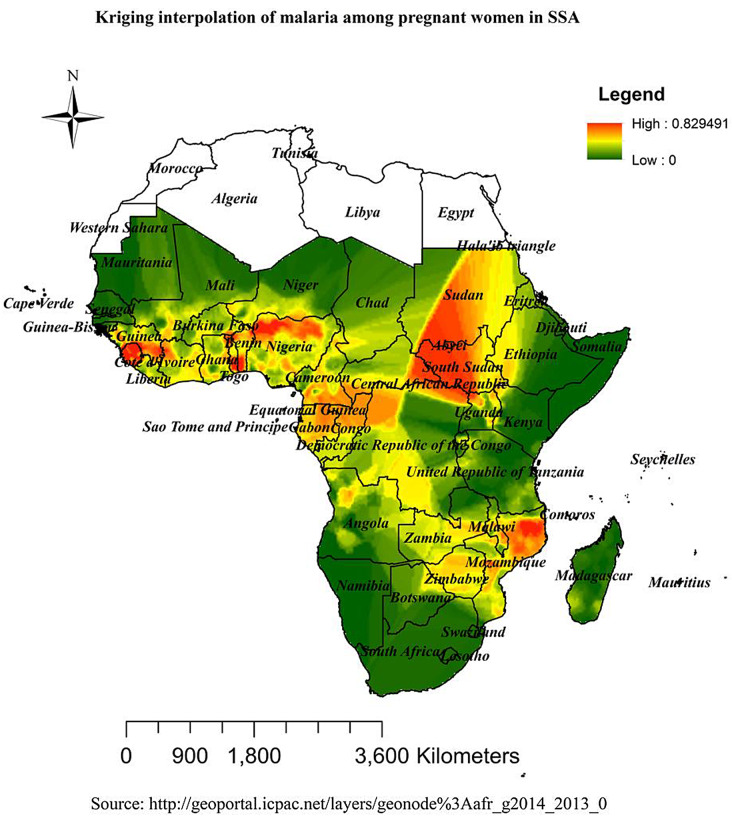
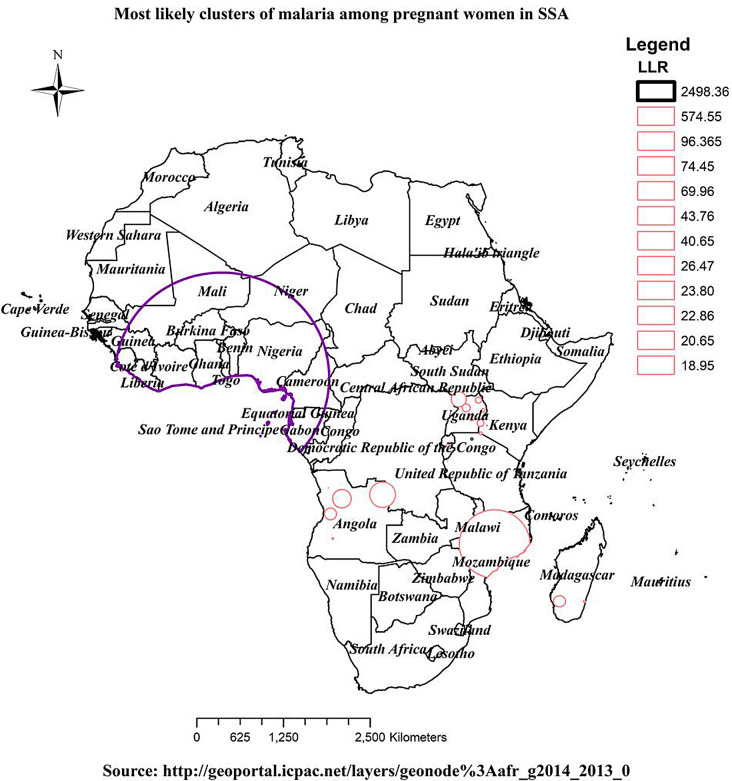
Conclusions: This study revealed a high malaria infection rate among pregnant women in Sub-Saharan Africa, with both individual and community-level factors playing a significant role. Health policies should prioritize targeted interventions for pregnant women, especially in rural areas, with an emphasis on increasing bed net use, indoor residual spraying, and region-specific strategies, particularly in West Sub-Saharan Africa where malaria clustering is notably high.
Keywords: Determinants; Malaria infection; Pregnant women; Spatial analysis; Sub-Saharan Africa.
© 2025. The Author(s).
Conflict of interest statement
Declarations. Ethical approval and consent to participate: Since this study is a secondary analysis of malaria indicator surveys, ethical approval is not necessary. We registered, requested the dataset from the DHS online repository, and were granted permission to view and download the data files in order to perform our study. The malaria indicator surveys report states that during the survey data collection process, all participant information was anonymized. Visit: https://www.dhsprogram.com/data/dataset_admin/index.cfm . Consent for publication: Not applicable. Competing interests: The authors declare no competing interests.
Figures
References
-
- Drake N, Sternberg T, Burrough S, Meyer M. The world atlas of deserts and drylands. Princeton University Press; 2025.
-
- You D, Hug L, Anthony D. Generation 2030/Africa: ERIC; 2014.
-
- Tupy M. Africa is Getting Richer, Thanks to Capitalism. Foundation for Economic Education. 2016.
-
- Zareen S, Rehman HU, Gul N, Zareen H, Hisham M, Ullah I, et al. Malaria is still a life threatening disease review. J Entomol Zool Stud. 2016;105:105–12.
-
- World Health Organization, Geneva. Malaria. WHO; 2023. https://www.who.int/health-topics/malaria.
MeSH terms
LinkOut - more resources
Full Text Sources
Medical
