


Use of posterior probabilities from a long short-term memory network for characterizing dance behavior with multiple accelerometers
- PMID: 40320775
- PMCID: PMC12173766
- DOI: 10.1177/13872877251336482
Use of posterior probabilities from a long short-term memory network for characterizing dance behavior with multiple accelerometers
Abstract
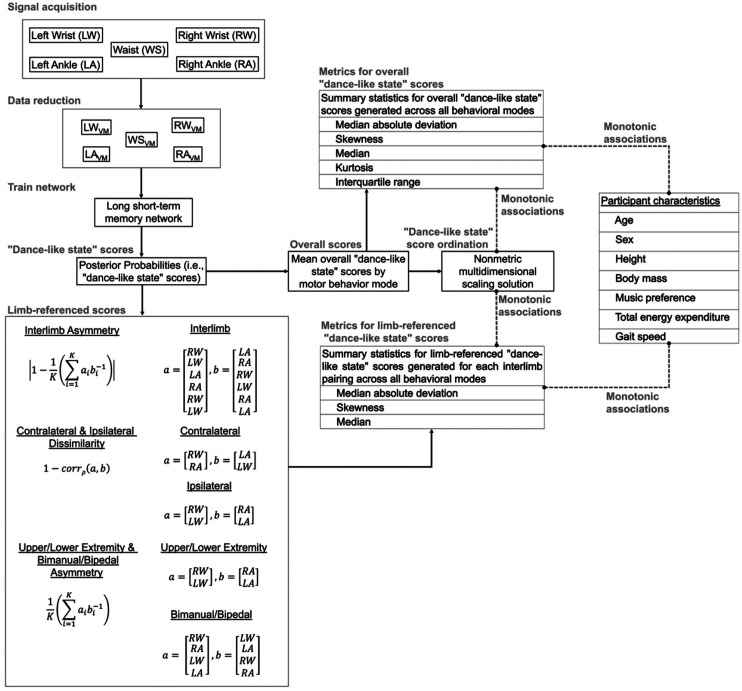
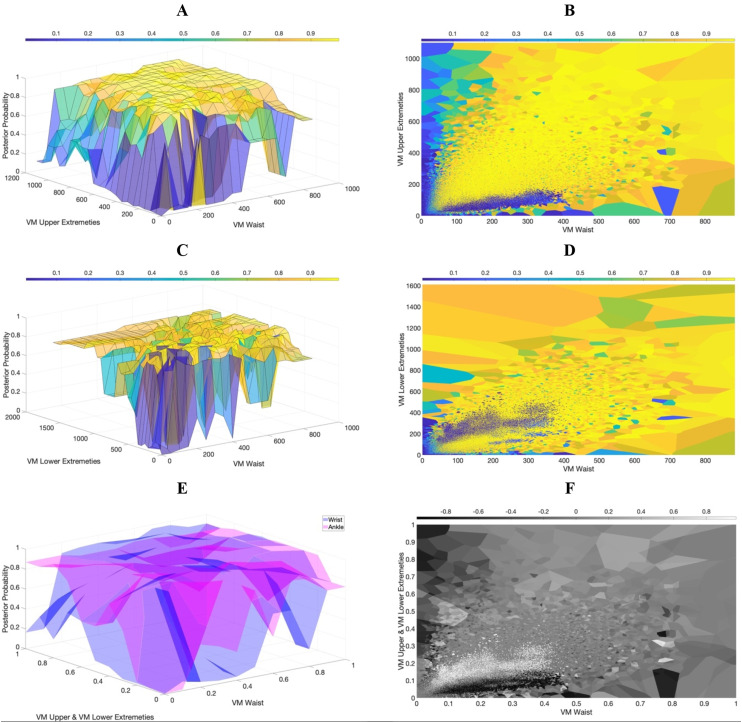
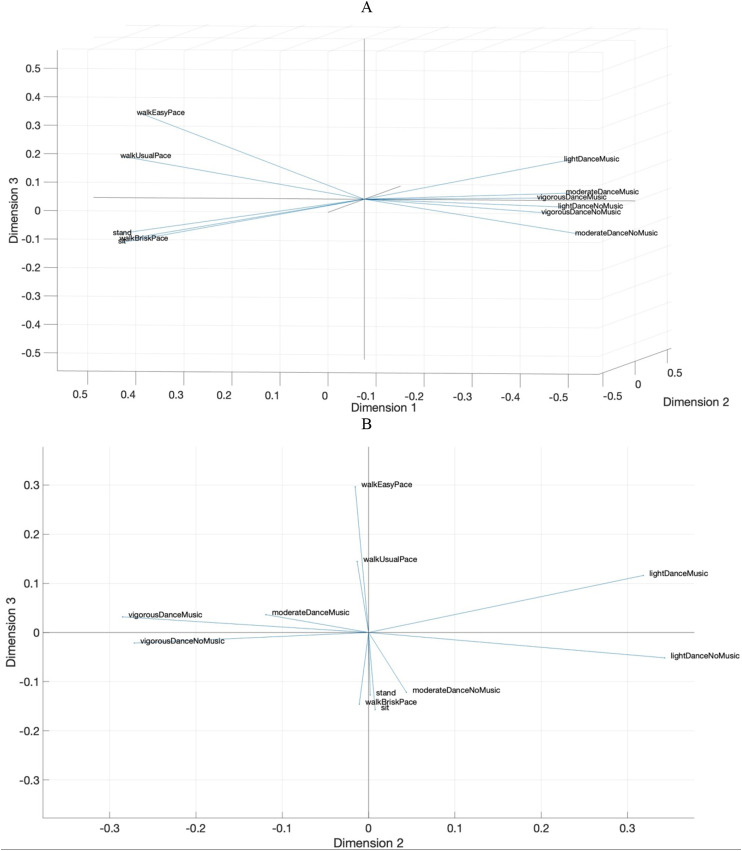
BackgroundDancing may be protective for cognitive health among adults with mild cognitive impairment, Alzheimer's disease or dementia; however, additional methods are needed to characterize motor behavior quality in studies of dance.ObjectiveTo determine how long each of a range of motor behaviors should be observed to optimize the reliability of "dance-like state" (DLS) scores-a novel metric for characterizing motor behavior quality in reference to free-form dancing using accelerometry.MethodsAdults (n = 41) wore five triaxial accelerometers (on both wrists, both ankles, and the waist) while engaged in sitting, standing, walking, and free-form dancing in a laboratory. Accelerometer data were used as predictors in a long short-term memory (LSTM) network, where the target was the binary coded observed behavior (dancing/not dancing) over time. LSTM accuracy was evaluated, and the Spearman-Brown (SB) Prophecy formula was used to determine the number of 1-min observational periods required to reach sufficient reliability (r ≥ 0.80) when using DLS scores.ResultsThe LSTM network trained with accelerometer data that were collected using all five devices showed very good to excellent classification accuracy (95% confidence interval: 89.1% to 94.0%) in the task of recognizing free-form dance behavior. SB results showed LSTM-generated posterior probabilities are reliable (r > 0.80) when averaged over ≥2 min periods. DLS scores were significantly correlated with age, prior dance training, height, body mass, music tempo and mode, gait speed, and energy expenditure.ConclusionsDLS scores can be used to characterize motor behavior quality. Additional research on motor behavior quality in relation to cognitive health is needed.
Keywords: Alzheimer's disease; automated pattern recognition; biometry; classification; deep learning; motor activity; physical activity; wearable devices.
Conflict of interest statement
Declaration of conflicting interestsThe author declared no potential conflicts of interest with respect to the research, authorship, and/or publication of this article.
Figures
References
-
- Clifford AM, Shanahan J, McKee J, et al. The effect of dance on physical health and cognition in community dwelling older adults: a systematic review and meta-analysis. Arts Health 2023; 15: 200–228. - PubMed
-
- Narayanan A, Desai F, Stewart T, et al. Application of raw accelerometer data and machine-learning techniques to characterize human movement behavior: a systematic scoping review. J Phys Act Health 2020; 17: 360–383. - PubMed
MeSH terms
Grants and funding
LinkOut - more resources
Full Text Sources
Miscellaneous
