


Changes in Serum PDGF-C and TGF-β1 Levels After PCI in Premature Coronary Artery Disease: Combined Predictive Value for MACCE
- PMID: 40321937
- PMCID: PMC12050022
- DOI: 10.2147/IJGM.S510456
Changes in Serum PDGF-C and TGF-β1 Levels After PCI in Premature Coronary Artery Disease: Combined Predictive Value for MACCE
Abstract
Objective: This study evaluates dynamic changes in platelet derived growth factor C (PDGF-C) and transforming growth factor β1 (TGF-β1) levels after percutaneous coronary intervention (PCI) in patients with premature coronary artery disease (PCAD) and their combined predictive value for major adverse cardiac and cerebrovascular events (MACCE).
Methods: A total of 100 PCAD patients admitted to the hospital from July 2021 to July 2023 who had completed 2 years of follow-up were retrospectively selected as the research objects. The patients were divided into MACCE group and non-MACCE group according to the occurrence of MACCE. The changes of serum PDGF-C and TGF-β1 levels were compared before operation, 1 year after operation and 2 years after operation. Cox regression was used to test the influencing factors. Receiver operating characteristic (ROC) curve was used to predict the predictive value. The decision curve was used to analyze the predicting value of serum PDGF-C and TGF-β1.
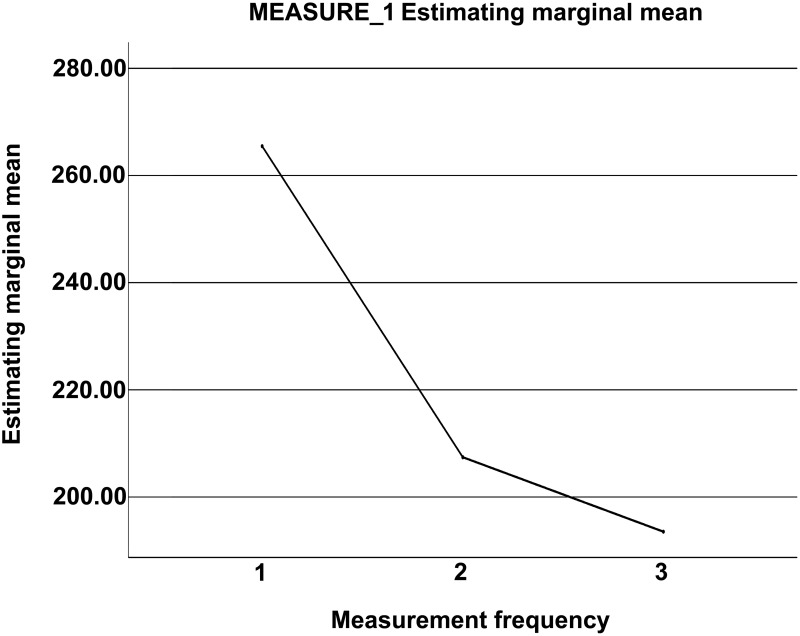
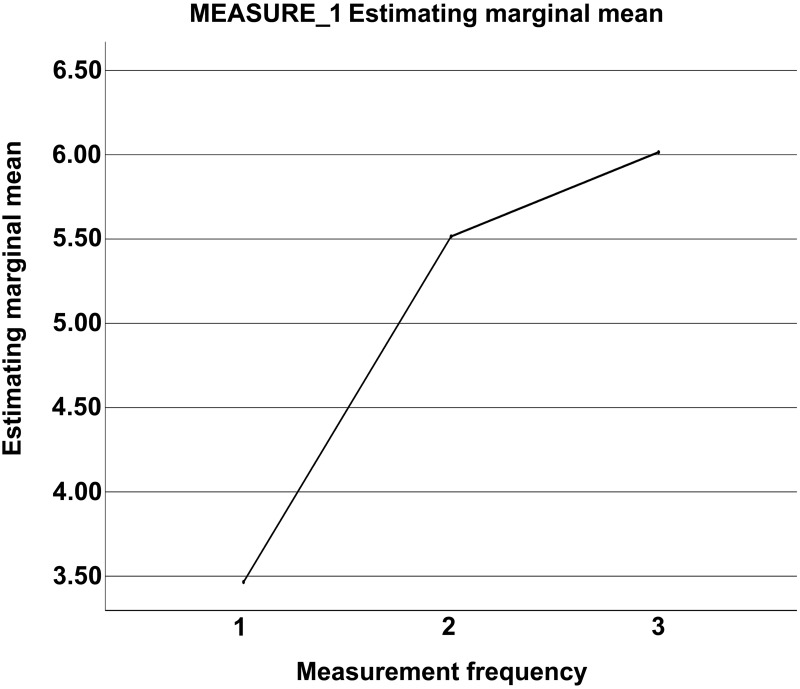
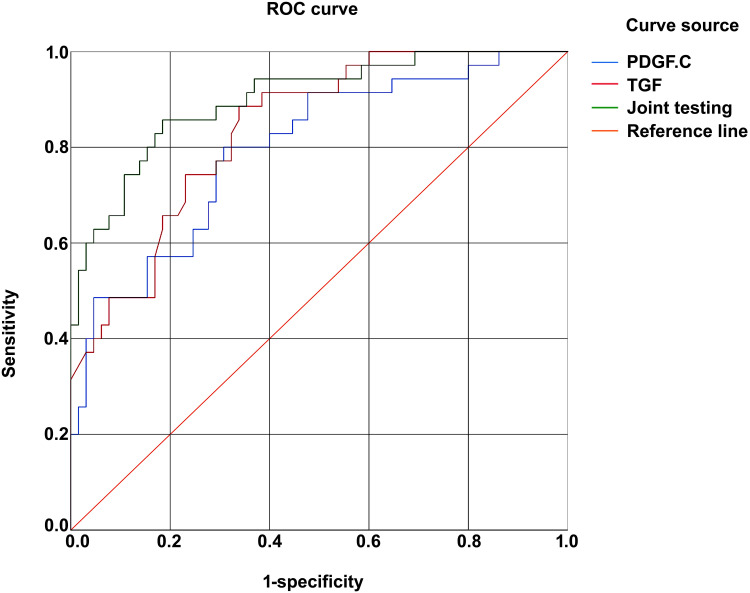
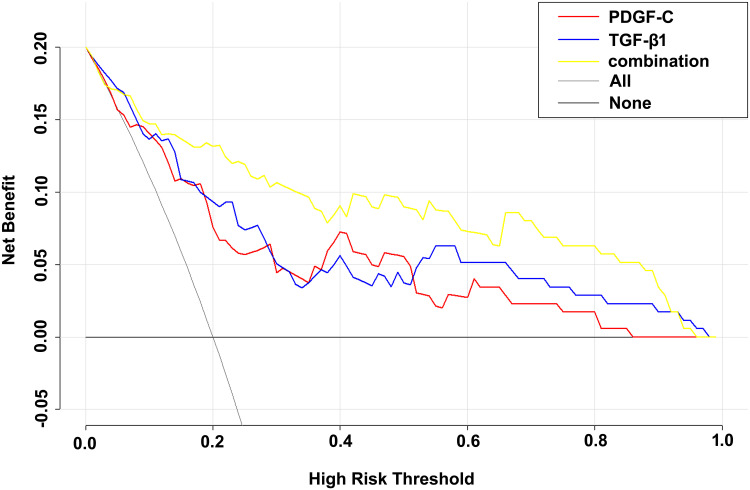
Results: Compared with that before operation, serum PDGF-C levels increased, while TGF-β1 levels decreased at 1 year and 2 years post-PCI (P<0.05). The levels of hs-CRP, HDL-C, MPV and PDGF-C in the MACCE group were higher than those in the non-MACCE group, and the level of TGF-β1 was lower than that in the non-MACCE group (P<0.05). The hs-CRP, MPV and PDGF-C were identified as independent risk factors for MACCE (HR>1, P<0.05), and TGF-β1 was identified as a protective factor (HR<1, P<0.05). The AUC of PDGF-C levels and TGF-β1 levels n in predicting MACCE after PCI in PCAD patients were 0.796 and 0.837, respectively. Combined prediction has higher sensitivity and specificity than individual markers. The decision curve showed that within the threshold range of 0.141-0.202 and 0.216-0.998, the net return rate of the combination of PDGF-C and TGF-β1 levels in predicting MACCE after PCI in PCAD patients was better than that of either alone.
Conclusion: hs-CRP, MPV, PDGF-C and TGF-β1 were the influencing factors of MACCE in PCAD patients after PCI. Combined detection of PDGF-C and TGF- β1 enhanced predictive accuracy for MACCE, offering potential value for risk stratification in PCAD patients post-PCI.
Keywords: biomarkers; major adverse cardiac and cerebrovascular events; prediction model; premature coronary artery disease; risk stratification of.
© 2025 Liu et al.
Conflict of interest statement
Haide Liu and Shanglang Tan are co-first authors and co-corresponding authors. The authors report no conflicts of interest in this work.
Figures
References
LinkOut - more resources
Full Text Sources
Research Materials
Miscellaneous
