


Incidence Risk Factors and Drug Resistance Patterns of Bacterial Isolates in Patients with Catheter-associated Urinary Tract Infections
- PMID: 40322239
- PMCID: PMC12045042
- DOI: 10.5005/jp-journals-10071-24932
Incidence Risk Factors and Drug Resistance Patterns of Bacterial Isolates in Patients with Catheter-associated Urinary Tract Infections
Abstract
Introduction: Catheter-associated urinary tract infections (CAUTIs) account for 80% of nosocomial UTIs and 40% of hospital-acquired infections, making them the most common healthcare-associated infections globally. Despite the rise of quinolone-resistant Escherichia coli and extended-spectrum β-lactamase-producing gram-negative bacteria, fluoroquinolones remain a common empirical treatment. Understanding antimicrobial resistance (AMR) associated with CAUTIs is critical.
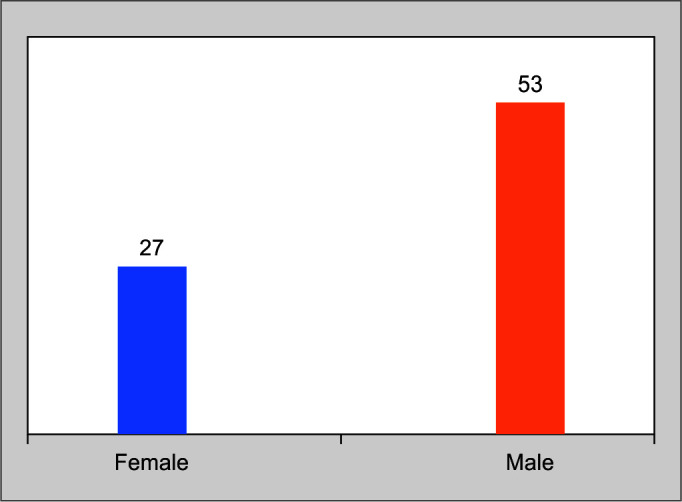
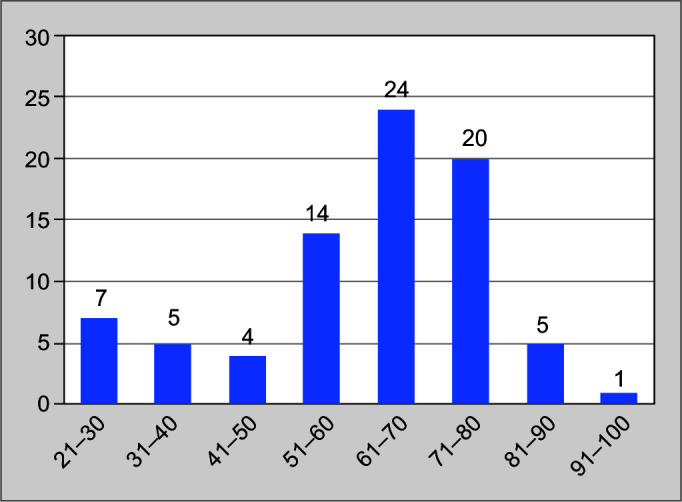
Methods: A prospective observational study was conducted from November 2023 to July 2024 at Deenanath Mangeshkar Hospital, Maharashtra, India. The study included catheterized patients in the intensive care unit (ICU) with a duration of over 48 hours showing UTI symptoms, including fever, suprapubic discomfort, urgency, or dysuria. Among 80 patients (mean age 56.75 ± 23.65 years; 53% male), bacterial isolates, resistance patterns, and risk factors were analyzed.
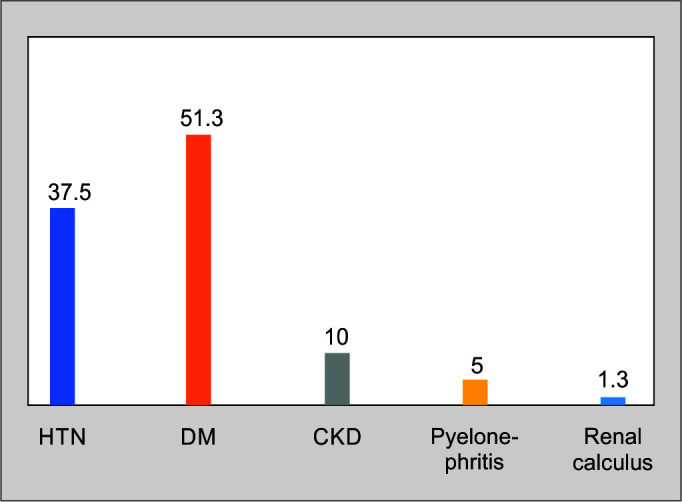
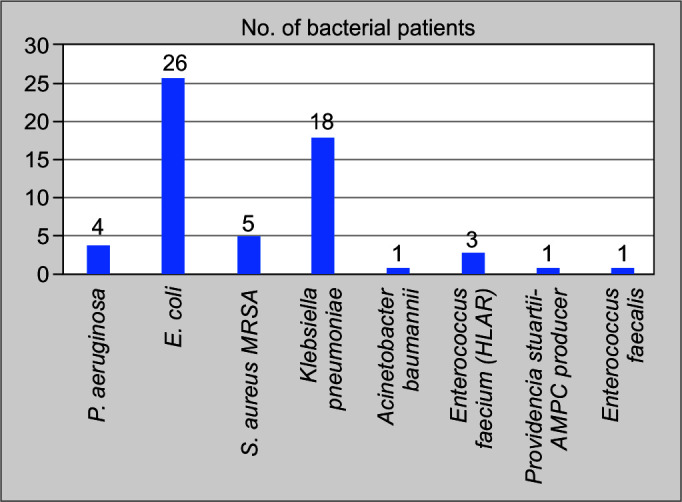
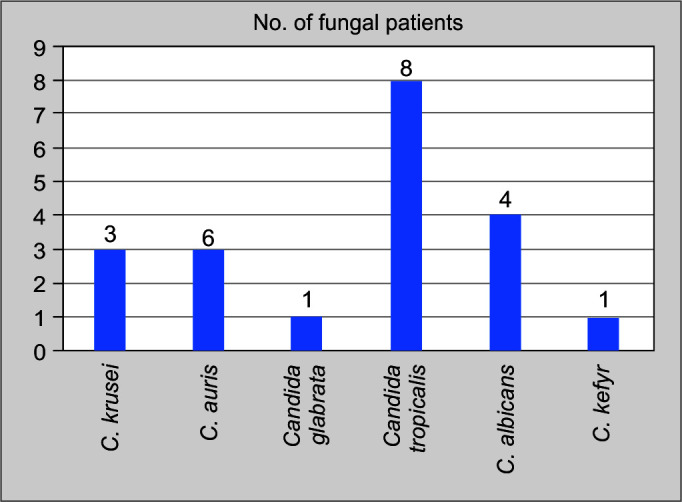
Results: Catheter-associated UTIs developed in 59 patients (73.75% prevalence; 83.1 per 1,000 catheter days). Patients aged over 60, hospitalized for more than 10 days, or with comorbidities like diabetes (51.3%), hypertension (HTN) (37.5%), or chronic kidney disease (10%) were at higher risk. Escherichia coli and Klebsiella pneumoniae were the most common pathogens (34.14%), with gram-negative bacilli constituting 84.74% of isolates. Candida species, particularly C. tropicalis (34.78%) and C. auris (26%), were also significant.
Conclusion: This study identifies E. coli, K. pneumoniae, and Candida species as major CAUTI pathogens, with substantial multidrug resistance among gram-negative bacteria. Regular AMR surveillance and targeted infection control strategies are essential to combat CAUTI-related challenges and improve clinical outcomes.
How to cite this article: Jha T, Khaparde M, Parkhe TS, Purandare B, Lavate R. Incidence Risk Factors and Drug Resistance Patterns of Bacterial Isolates in Patients with Catheter-associated Urinary Tract Infections. Indian J Crit Care Med 2025;29(4):338-344.
Keywords: Antimicrobial resistance; Healthcare-associated infections; Nosocomial infections; Observational study.
Copyright © 2025; The Author(s).
Conflict of interest statement
Source of support: Nil Conflict of interest: NoneConflict of interest: None
Figures
References
-
- D'Incau S, Atkinson A, Leitner L, Kronenberg A, Kessler TM, Marschall J. Bacterial species and antimicrobial resistance differ between catheter and non-catheter-associated urinary tract infections: Data from a national surveillance network. Antimicrob Steward Healthc Epidemiol. 2023;3(1):e55. doi: 10.1017/ash.2022.340. - DOI - PMC - PubMed
-
- Centers for Disease Control and Prevention . Guidelines for prevention of catheter-associated urinary tract infections (CAUTIs) [online]. CDC; 2022.https://www.cdc.gov/infectioncontrol/guidelines/cauti/ Available from:
-
- Peng D, Li X, Liu P, Luo M, Chen S, Su K, et al. Epidemiology of pathogens and antimicrobial resistance of catheter-associated urinary tract infections in intensive care units: A systematic review and meta-analysis. Am J Infect Control. 2018;46(12):e81–e90. doi: 10.1016/j.ajic.2018.07.012. Epub 2018 Aug 31. - DOI - PubMed
LinkOut - more resources
Full Text Sources