


A multi-center study on the predictors of different subtypes of hemorrhagic transformation of brain infarction after thrombolysis in atrial fibrillation patients presented with embolic stroke
- PMID: 40325067
- PMCID: PMC12053602
- DOI: 10.1038/s41598-025-97968-3
A multi-center study on the predictors of different subtypes of hemorrhagic transformation of brain infarction after thrombolysis in atrial fibrillation patients presented with embolic stroke
Abstract
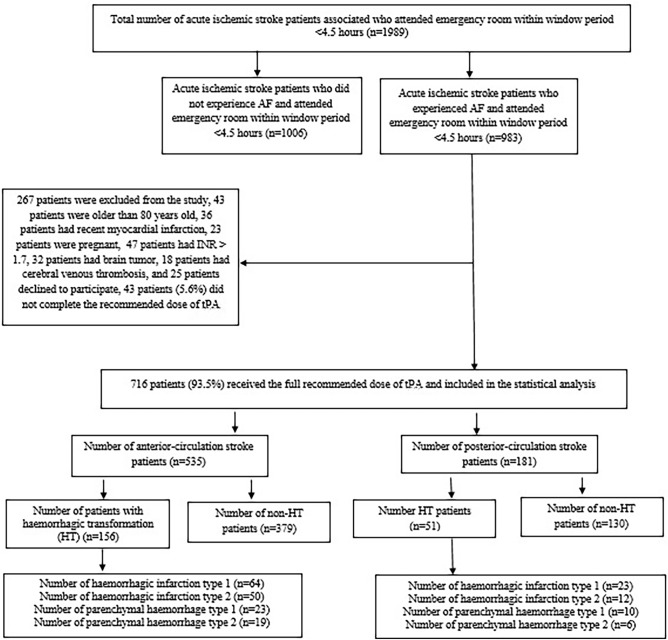
Embolic stroke is connected to a higher risk of hemorrhagic transformation (HT), functional disability, and mortality. Although, AF and HT are not one entity; no such study evaluated the factors, including AF types and treatment, which could predict the different types of HT in AF patients presenting with embolic stroke and administered alteplase. We aimed to assess the predictors of HT in general and predictors of different ECASS-based subtypes of post-alteplase HT in AF patients who experienced first-ever embolic ischemic stroke. Our study included 716 AF patients who presented with acute embolic stroke and received the full recommended dose of alteplase. The study comprised six parallel groups. The first group consisted of 509 patients who did not experience haemorrhagic transformation. The second group comprised 207 patients who had any HT. The third group comprised 87 patients with haemorrhagic infarction (HI)1. The fourth group comprised 62 patients with HI2. The fifth group comprised 33 patients with parenchymal hematoma (PH) 1, and the sixth group comprised 25 patients with PH 2. We evaluated the ability of different baseline characters and risk factors to predict the occurrence of HT in general and the predictors of occurrence of different ECASS-based HT subtypes. HT was detected in 207 patients (28.9%), older age, higher NIHSS, sustained AF, warfarin use, and higher HAS-BLED score were independent predictors of all ECASS-based subtypes of hemorrhagic transformation; moreover, anterior-circulation stroke was an independent predictor of PH 1 and PH 2. In atrial fibrillation patients presented with first-ever embolic stroke and received alteplase in Egypt and the United Arab Emirates, older age, higher NIHSS, sustained AF, warfarin use, and higher HAS-BLED score were independent predictors of all ECASS-based subtypes of haemorrhagic infarction; in addition, anterior-circulation stroke was an independent predictor of PH 1 and PH 2.Trial registration (clinicaltrials.gov NCT06653946), retrospectively registered on 23/10/2024.
Keywords: Alteplase; Egypt; Embolic stroke; Hemorrhagic infarction; United Arab Emirates.
© 2025. The Author(s).
Conflict of interest statement
Declarations. Competing interests: The authors declare no competing interests. Ethical approval: This study protocol was reviewed and approved by the scientific research ethics committee at Kafr El-Sheikh University in Egypt, and the approval number was KFSIRB200-570. We obtained a written informed consent from all adults participating in this study. Our study did not include any vulnerable patient. Consent to participate: Before inclusion in the study, formal written informed consent was obtained from the included patients.
References
Publication types
MeSH terms
Substances
Associated data
LinkOut - more resources
Full Text Sources
Medical
