


Multi-Omic Associations of Epigenetic Age Acceleration Are Heterogeneously Shaped by Genetic and Environmental Influences
- PMID: 40325911
- PMCID: PMC12341791
- DOI: 10.1111/acel.70088
Multi-Omic Associations of Epigenetic Age Acceleration Are Heterogeneously Shaped by Genetic and Environmental Influences
Abstract
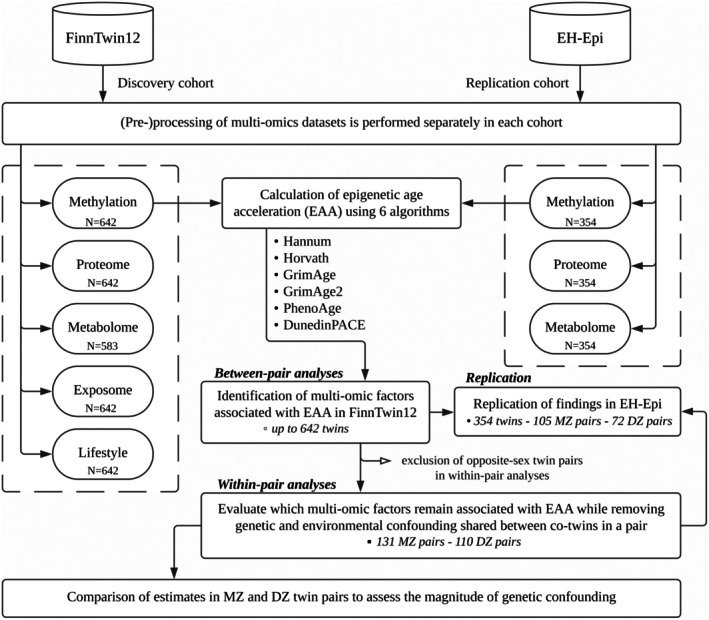
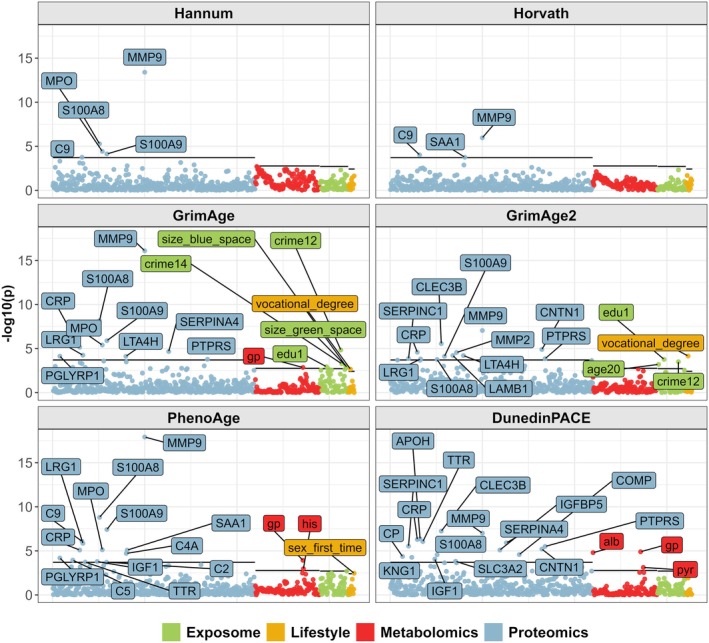
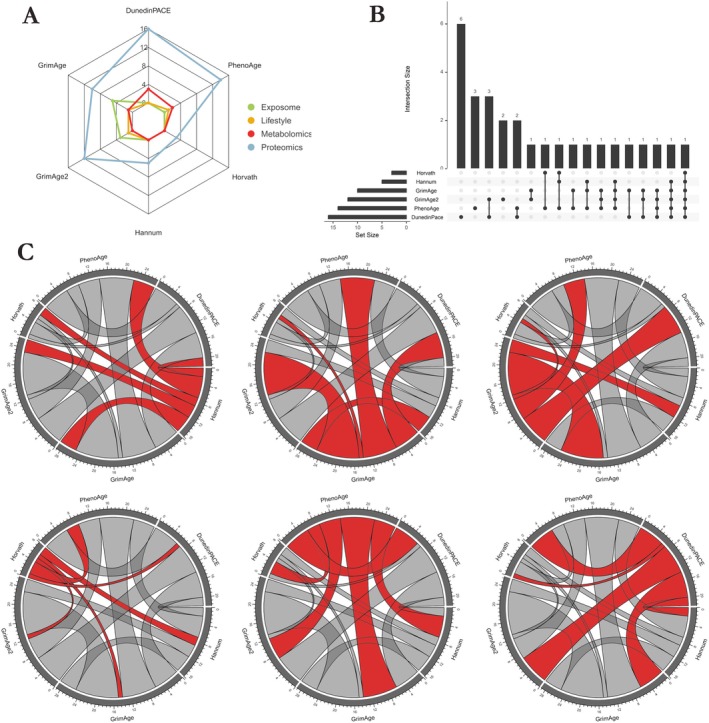
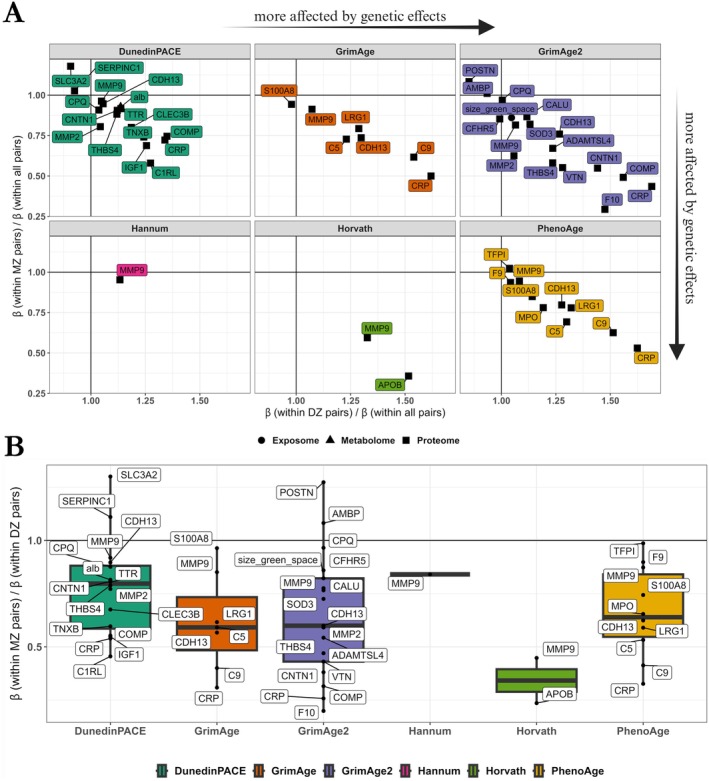
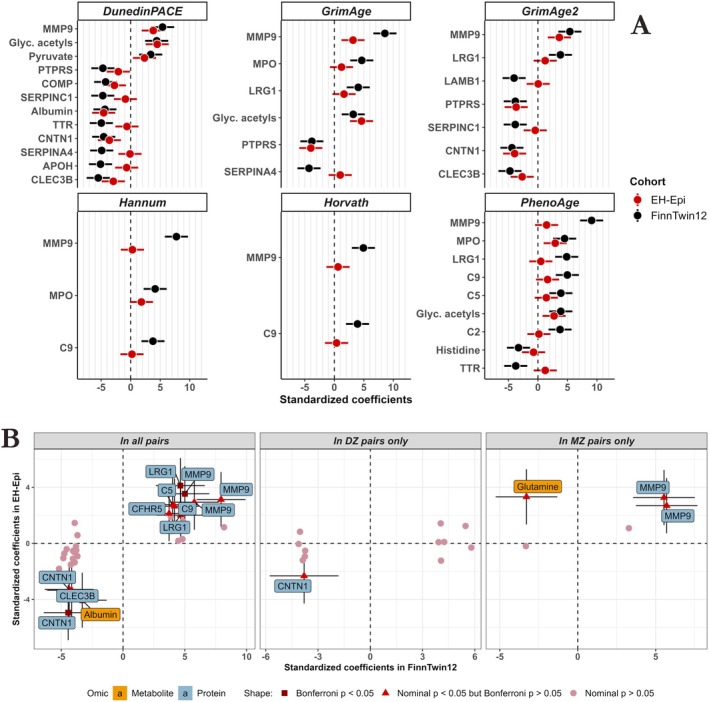
Connections between the multi-ome and epigenetic age acceleration (EAA), and especially whether these are influenced by genetic or environmental factors, remain underexplored. We therefore quantified associations between the multi-ome comprising four layers-the proteome, metabolome, external exposome (here, sociodemographic factors), and specific exposome (here, lifestyle)-with six different EAA estimates. Two twin cohorts were used in a discovery-replication scheme, comprising, respectively, young (N = 642; mean age = 22.3) and older (N = 354; mean age = 62.3) twins. Within-pair twin designs were used to assess genetic and environmental effects on associations. We identified 40 multi-omic factors, of which 28 were proteins, associated with EAA in the young twins while adjusting for sex, smoking, and body mass index. Within-pair analyses revealed that genetic confounding influenced these associations heterogeneously, with six multi-omic factors -matrix metalloproteinase 9, complement component C6, histidine, glycoprotein acetyls, lactate, and neighborhood percentage of nonagenarians- remaining significantly associated with EAA, independent of genetic effects. Replication analyses showed that some associations assessed in young twins were consistent in older twins. Our study highlights the differential influence of genetic effects on the associations between the multi-ome and EAA and shows that some, but not all, of the associations persist into adulthood.
Keywords: environment; epigenetic age acceleration; genetics; multi‐omics; twins.
© 2025 The Author(s). Aging Cell published by Anatomical Society and John Wiley & Sons Ltd.
Conflict of interest statement
The authors declare no conflicts of interest.
Figures
References
Publication types
MeSH terms
Grants and funding
LinkOut - more resources
Full Text Sources
Medical
