


Distinct methylomic signatures of high-altitude acclimatization and adaptation in the Tibetan Plateau
- PMID: 40328746
- PMCID: PMC12056056
- DOI: 10.1038/s41421-025-00795-z
Distinct methylomic signatures of high-altitude acclimatization and adaptation in the Tibetan Plateau
Abstract
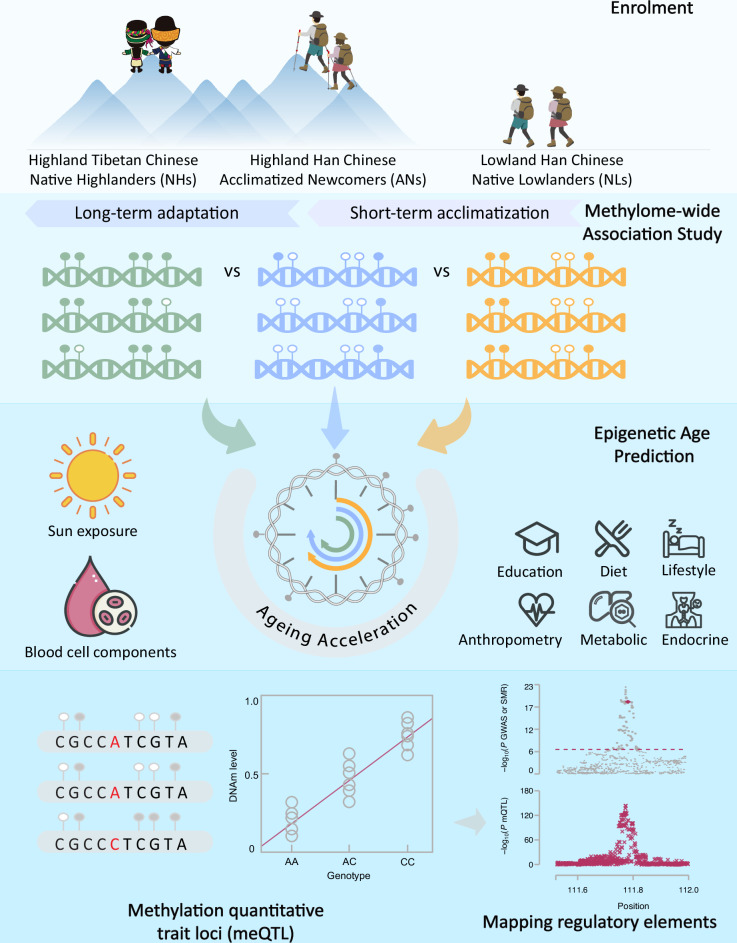
High altitude presents a challenging environment for human settlement. DNA methylation is an essential epigenetic mechanism that responds to environmental stimuli, but its roles in high-altitude short-term acclimatization (STA) and long-term adaptation (LTA) are poorly understood. Here, we conducted a methylome-wide association study involving 687 native highlanders and 299 acclimatized newcomers in the Tibetan Plateau and 462 native lowlanders to identify differentially methylated sites (DMSs) associated with STA or LTA. We identified 93 and 4070 DMSs for STA and LTA, respectively, which had no overlap, showed opposite asymmetric effect size patterns, and resided near genes enriched in distinct biological pathways/processes (e.g., cell cycle for STA and immune diseases and calcium signalling pathway for LTA). Epigenetic clock analysis revealed evidence of accelerated ageing in the acclimatized newcomers compared to the native lowlanders. Our research provides novel insights into epigenetic regulation in relation to high altitude and intervention strategies for altitude-related ageing or illnesses.
© 2025. The Author(s).
Conflict of interest statement
Conflict of interest: The authors declare no competing interests.
Figures


References
Grants and funding
LinkOut - more resources
Full Text Sources
