


Evaluation of Non-cross-linked Hyaluronic Acid on Oral Wound Healing After Diode Laser and Scalpel Incisions
- PMID: 40330169
- PMCID: PMC12055100
- DOI: 10.1097/GOX.0000000000006836
Evaluation of Non-cross-linked Hyaluronic Acid on Oral Wound Healing After Diode Laser and Scalpel Incisions
Abstract
Background: The aim was to assess the impact of non-cross-linked hyaluronic acid (HA) injections on the healing of intraoral wounds from 3 types of incisions.
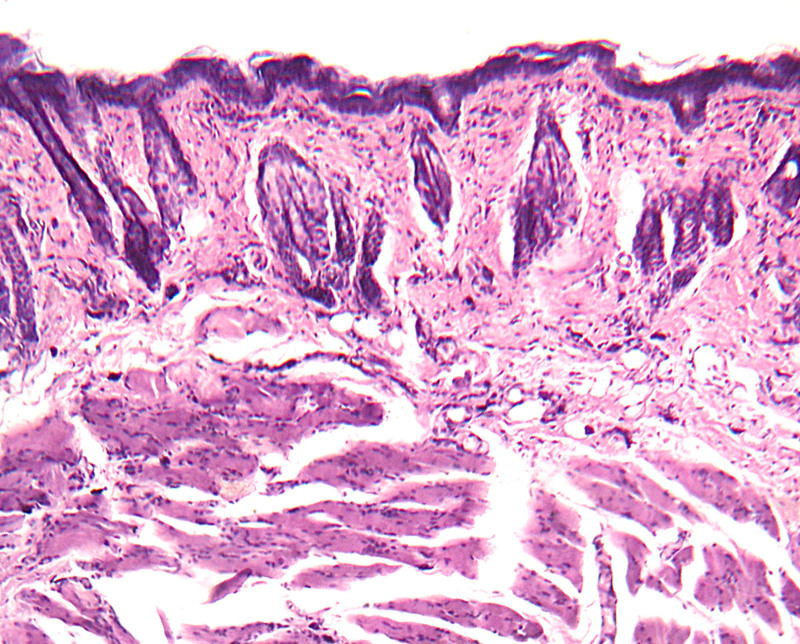
Methods: A total of 36 Wister albino rats were included in this research. The rats were randomly assigned to 1 of 6 groups: the first group underwent a scalpel incision in the buccal mucosa with HA injection. The second group received a laser incision using a 976-nm diode laser with HA injection, whereas the third group was subjected to a laser incision with a 450-nm diode laser with HA injection. The fourth group underwent scalpel incision only, the fifth group received a 976-nm laser incision only, and the sixth group received a 450-nm laser incision only. Biopsies were collected at baseline, as well as on the third and seventh days, to assess wound healing using hematoxylin and eosin and Masson trichrome staining.
Results: Group 3 exhibited the most pronounced results on the third and seventh days after surgery, with collagen formation noted alongside well-organized granulation tissue that contributed to improved and expedited wound healing.
Conclusions: In this low-volume experimental study, HA injections in wounds made with a 450-nm diode laser demonstrated encouraging outcomes, enhancing the healing process and resulting in quicker recovery.
Copyright © 2025 The Authors. Published by Wolters Kluwer Health, Inc. on behalf of The American Society of Plastic Surgeons.
Conflict of interest statement
The authors have no financial interest to declare in relation to the content of this article. Disclosure statements are at the end of this article, following the correspondence information.
Figures




References
-
- Hearnden V, Sankar V, Hull K, et al. New developments and opportunities in oral mucosal drug delivery for local and systemic disease. Adv Drug Deliv Rev. 2012;64:16–28. - PubMed
LinkOut - more resources
Full Text Sources