


Recent Macrolide Resistance Pattern of Mycoplasma Pneumonia in the World: A Systematic Review and Meta-Analysis
- PMID: 40330176
- PMCID: PMC12051807
- DOI: 10.18502/ijph.v54i3.18246
Recent Macrolide Resistance Pattern of Mycoplasma Pneumonia in the World: A Systematic Review and Meta-Analysis
Abstract
Background: We aimed to systematically review and analyze the prevalence and pattern of resistance in Mycoplasma pneumoniae.
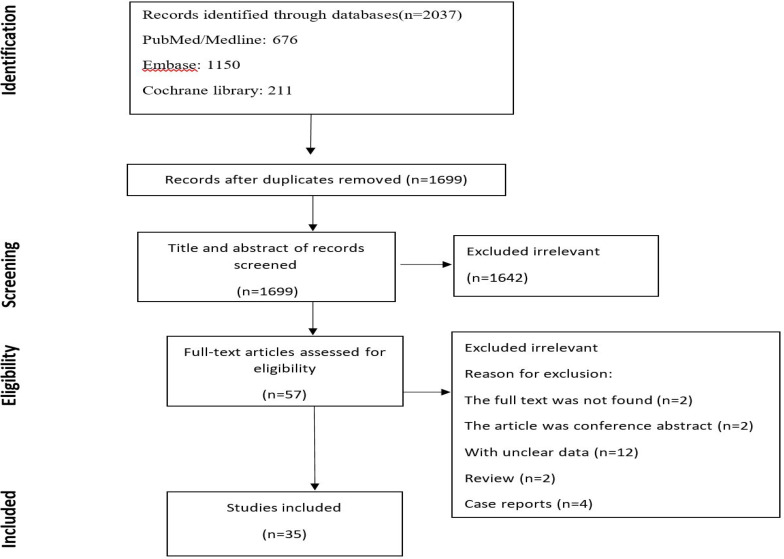
Methods: We searched authentic scientific sources and databases, and reference lists of relevant articles from Jan 1, 2017, to Jun 1, 2023.
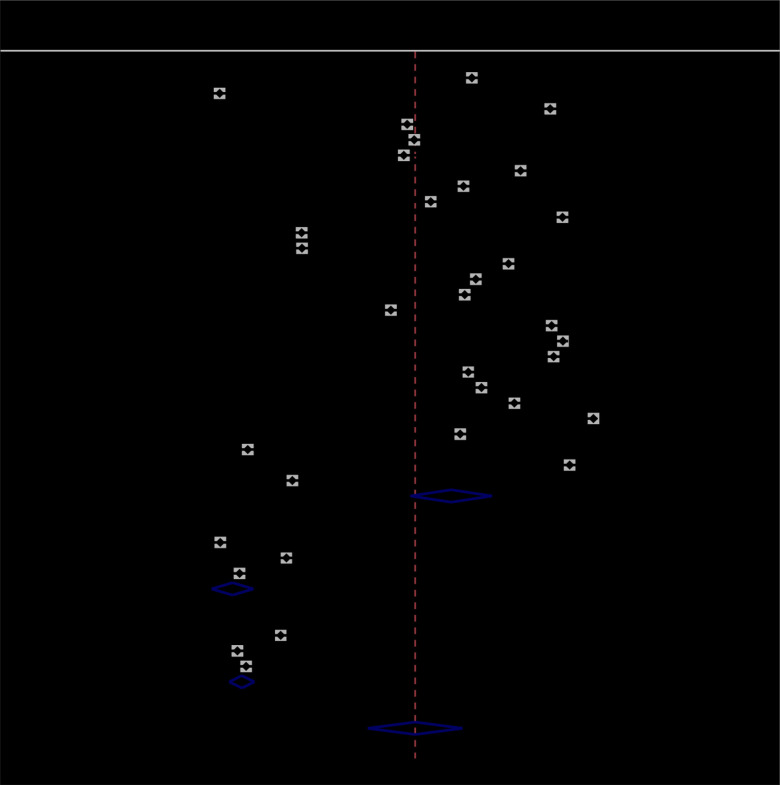
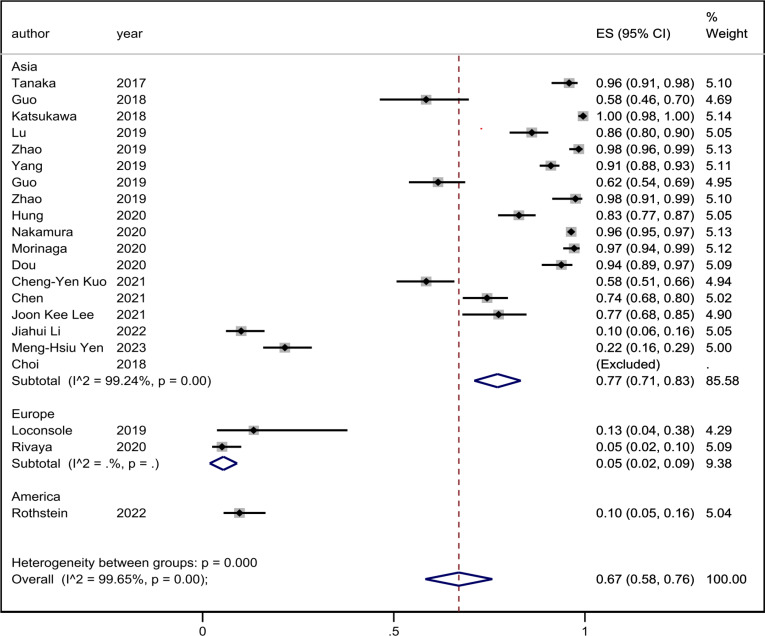
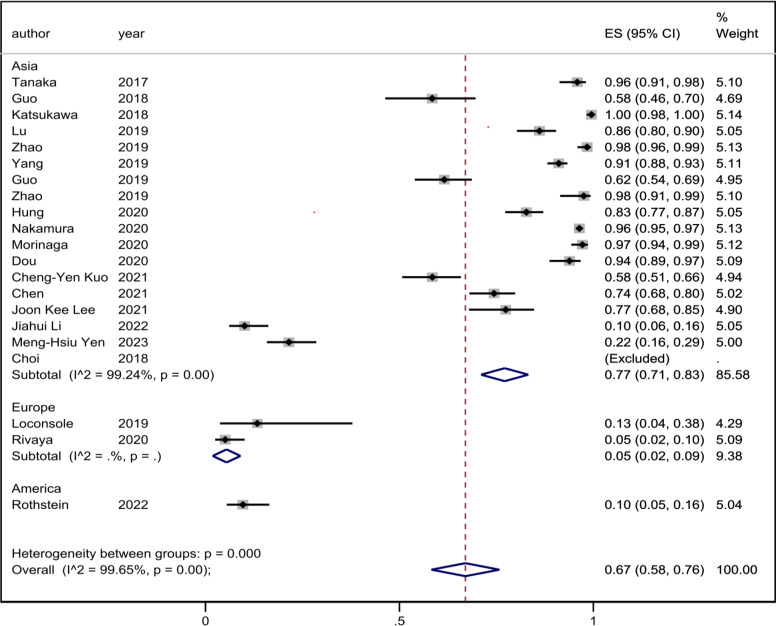
Results: Most of the included studies were conducted in Asia (11470 patients). The overall pooled prevalence was 53% (41%-65%), I2=99.69%; P <0.001. While subgroups analyses revealed that the pooled prevalence for America (3 studies), Asia (29 studies), and Europe (3 studies) was 9% (5%-12%), 62% (52%-73%), and 6% (1%-12%), respectively. Twenty-one eligible studies for determining of A2063G and 16 for A2064G were analyzed. Global pooled prevalence was 67% (58%-76%), I2=99.65%; P<0.001, and 3% (2%-4%), I2=87.44%; P<0.001 for A2063G and A2064G, respectively. Pooled prevalence of A2063G for America, Asia and Europe was 10% (5%-16%), 77% (71%-83%) and 5% (2%-9%), respectively.
Conclusion: While the prevalence of macrolide-resistant M. pneumonia is quite low in America, it is a great dilemma in East Asia and the low prevalence in most countries could be underestimated. This study revealed an increasing trend in macrolide resistance. Indiscriminate and improper use of macrolides may be a warning in this regard.
Keywords: Antimicrobial resistance; Drug resistance; Macrolide-resistant; Meta-analysis; Mycoplasma pneumoniae.
Copyright© 2025 Alavi Darazam et al. Published by Tehran University of Medical Sciences.
Figures
References
-
- Narita M. (2010). Pathogenesis of extrapulmonary manifestations of Mycoplasma pneumoniae infection with special reference to pneumonia. J Infect Chemother, 16 (3):162–9. - PubMed
-
- Principi N, Esposito S. (2013). Macrolide-resistant Mycoplasma pneumoniae: its role in respiratory infection. J Antimicrob Chemother, 68 (3):506–11. - PubMed
Publication types
LinkOut - more resources
Full Text Sources
Miscellaneous