


Curcumin as a potential therapeutic agent for Parkinson's disease: a systematic review
- PMID: 40331193
- PMCID: PMC12052530
- DOI: 10.3389/fphar.2025.1593191
Curcumin as a potential therapeutic agent for Parkinson's disease: a systematic review
Abstract
Importance: Parkinson's disease (PD) is a growing global health concern with the number of affected individuals projected to double by 2040. Current treatments primarily address motor symptoms but do not prevent disease progression and often have significant side effects.
Objective: To evaluate the clinical efficacy and safety of curcumin as an adjunctive treatment for PD, with a focus on its impact on motor and non-motor symptoms, quality of life, and neuroprotective mechanisms, especially regarding α-synuclein aggregation.
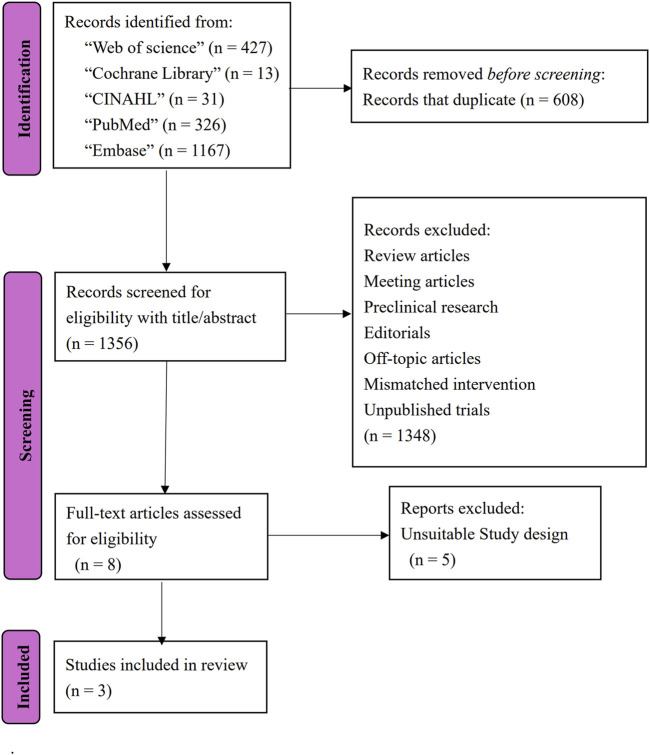
Evidence review: A systematic search was conducted in Web of Science, Embase, PubMed, CINAHL, and Cochrane Library from February to March 2025, using specific search terms, and following the PRISMA 2020 guidelines. The search strategy used the terms ("Parkinson's disease" OR "Parkinson Disease" OR "Parkinsonism") AND ("Curcumin" OR "Turmeric" OR "Diferuloylmethane" OR "Curcuminoids"), limiting results to English-language publications. The Cochrane Risk of Bias 2 Tool was used for assessing the risk of bias in RCTs, and the Newcastle-Ottawa scale was used for the cohort study.
Findings: The review included two randomized controlled trials and one cohort study, comprising a total of 125 PD participants. The studies suggest that curcumin may offer modest benefits as an adjunct therapy in PD when administered in formulations designed to enhance its bioavailability. Long-term curcumin supplementation was associated with a slower deterioration of motor function and a tendency to reduce the deposition of phosphorylated α-synuclein in skin nerves. A nanomicelle formulation of curcumin significantly improved sleep quality and overall quality of life in PD patients over a three-month period, while no significant effect was observed on fatigue severity.
Conclusion and relevance: Curcumin, particularly in formulations that enhance its bioavailability, may be a beneficial add-on treatment for PD, potentially improving non-motor symptoms and slowing the advancement of motor dysfunction. However, current clinical practice guidelines do not recommend curcumin due to the limited and preliminary nature of the evidence. Additional validation through larger trials with standardized methodologies is necessary to confirm these findings.
Systematic review registration: https://www.crd.york.ac.uk/PROSPERO/view/CRD420251000404.
Keywords: Parkinson’s disease; complementary therapy; curcumin; neuroprotection; parkinsonism.
Copyright © 2025 Chang.
Conflict of interest statement
The authors declare that the research was conducted in the absence of any commercial or financial relationships that could be construed as a potential conflict of interest.
Figures
References
-
- Abrahams S., Haylett W. L., Johnson G., Carr J. A., Bardien S. (2019). “Antioxidant effects of curcumin in models of neurodegeneration, aging,” in Oxidative and nitrosative stress: a review, 1873–7544. - PubMed
-
- Chuah A. M., Jacob B., Jie Z., Ramesh S., Mandal S., Puthan J. K., et al. (2014). Enhanced bioavailability and bioefficacy of an amorphous solid dispersion of curcumin, 1873–7072. - PubMed
Publication types
LinkOut - more resources
Full Text Sources
