The Incorporation of Copper-Doped Bioactive Glass Nanoparticles into Resin Composites Improves Their Biological, Mechanical and Adhesive Properties
- PMID: 40331405
- PMCID: PMC12057575
- DOI: 10.3290/j.jad.c_2014
The Incorporation of Copper-Doped Bioactive Glass Nanoparticles into Resin Composites Improves Their Biological, Mechanical and Adhesive Properties
Abstract
Purpose: This study aims to develop and characterize copper-doped bioactive glass nanoparticles (BG/CuNp), and to evaluate the effects of their addition into a resin composite on antimicrobial activity (AMA), cytotoxicity (CTX), ultimate tensile strength (UTS), Knoop microhardness (KHN), as well as immediate resin-dentin microtensile bond strength (μTBS), nanoleakage (NL) and in-situ degree of conversion (DC).
Materials and methods: BG/CuNp were added to a resin composite at different concentrations (0% [control]; 5, 10 and 20 wt%). The AMA was evaluated against Streptococcus mutans. For CTX, the Gingival mesenchymal stem cells (GMSC) cell line was used. For UTS and KHN, specimens were tested after 24 h and 28 days. For bonding evaluation, a universal adhesive was applied on flat dentin surfaces, experimental resin composite build-ups were prepared, and specimens were sectioned to obtain resin-dentin sticks. These were evaluated for μTBS, NL and DC after water storage. Data were submitted to statistical analyses (α = 0.05).
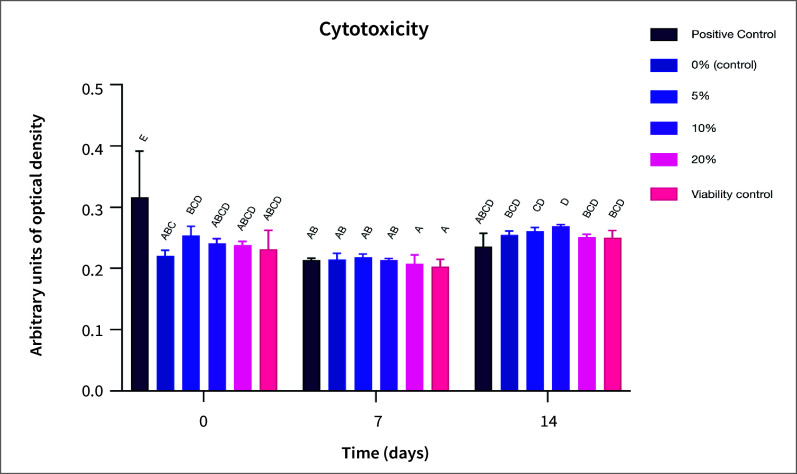
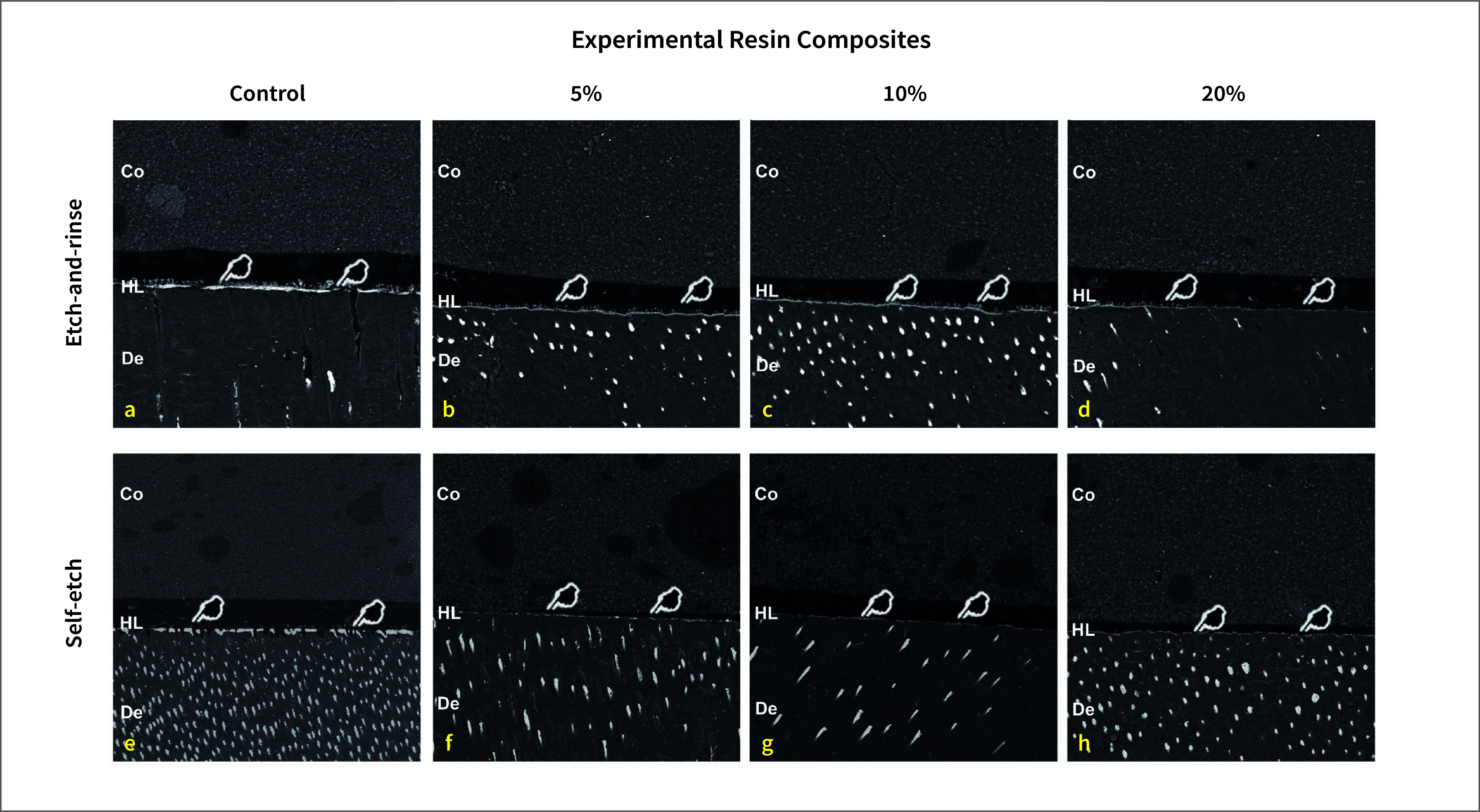
Results: The addition of 5% and 10% of BG/CuNp increases AMA (P 0.05), while the CTX remained unchanged with resin-containing BG/CuNp (P > 0.05). UTS and KHN remained stable with the addition of 5% and 10% of BG/CuNp at 24 h, but showed significantly higher values compared to the control after 28 d (P 0.05). μTBS and in-situ DC remained unchanged with BG/CuNp addition, regardless of the concentration added. However, significantly lower NL was observed for BG/CuNp groups (P 0.05).
Conclusion: The addition of BG/CuNp in the tested concentrations into a resin composite may be an alternative to provide antimicrobial activity and improve the integrity of the hybrid layer, without compromising biological, adhesives and mechanical properties.
Keywords: bioactive glass; copper; microtensile bond strength and nanoleakage; nanoparticles; resin composite.
Conflict of interest statement
The authors declare no competing financial interest.
Figures
References
-
- Abuna G, Feitosa VP, Correr AB, Cama G, Giannini M, Sinhoreti MA, et al. Bonding performance of experimental bioactive/biomimetic self-etch adhesives doped with calcium-phosphate fillers and biomimetic analogs of phosphoproteins. J Dent. 2016;52:79–86. - PubMed
-
- Akhtach S, Tabia Z, El Mabrouk K, Bricha M, Belkhou R. A comprehensive study on copper incorporated bio-glass matrix for its potential antimicrobial applications. Ceramics Int. 2021;47:424–433.
-
- Ástvaldsdóttir Á, Dagerhamn J, van Dijken JW, Naimi-Akbar A, Sandborgh-Englund G, Tranæus S, Nilsson M. Longevity of posterior resin composite restorations in adults – a systematic review. J Dent. 2015;43:934–954. - PubMed
-
- Bauer J, Silva e Silva A, Carvalho EM, Carvalho CN, Carvalho RM, Manso AP. A niobophosphate bioactive glass suspension for rewetting dentin: Effect on antibacterial activity, pH and resin-dentin bonding durability. Int J Adhes Adhes. 2018;84:178–183.
-
- Brambilla E, Gagliani M, Ionescu A, Fadini L, García-Godoy F. The influence of light-curing time on the bacterial colonization of resin composite surfaces. Dent Mater. 2009;25:1067–1072. - PubMed
MeSH terms
Substances
LinkOut - more resources
Full Text Sources