


N-ACETYLCYSTEINE REDUCES VON WILLEBRAND FACTOR MULTIMER SIZE AND IMPROVES RENAL MICROVASCULAR BLOOD FLOW IN RATS AFTER SEVERE TRAUMA
- PMID: 40333203
- PMCID: PMC12263321
- DOI: 10.1097/SHK.0000000000002611
N-ACETYLCYSTEINE REDUCES VON WILLEBRAND FACTOR MULTIMER SIZE AND IMPROVES RENAL MICROVASCULAR BLOOD FLOW IN RATS AFTER SEVERE TRAUMA
Abstract
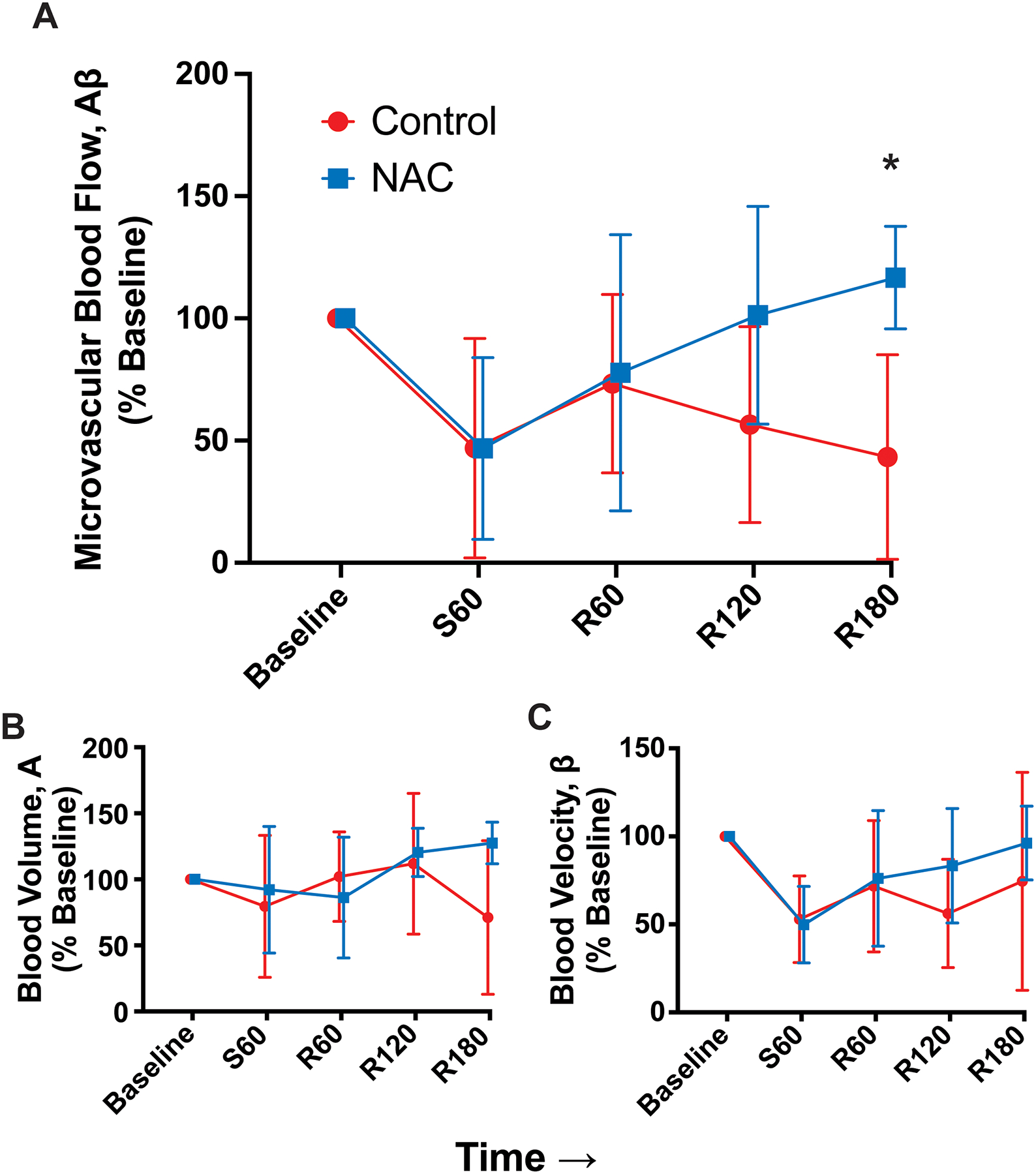
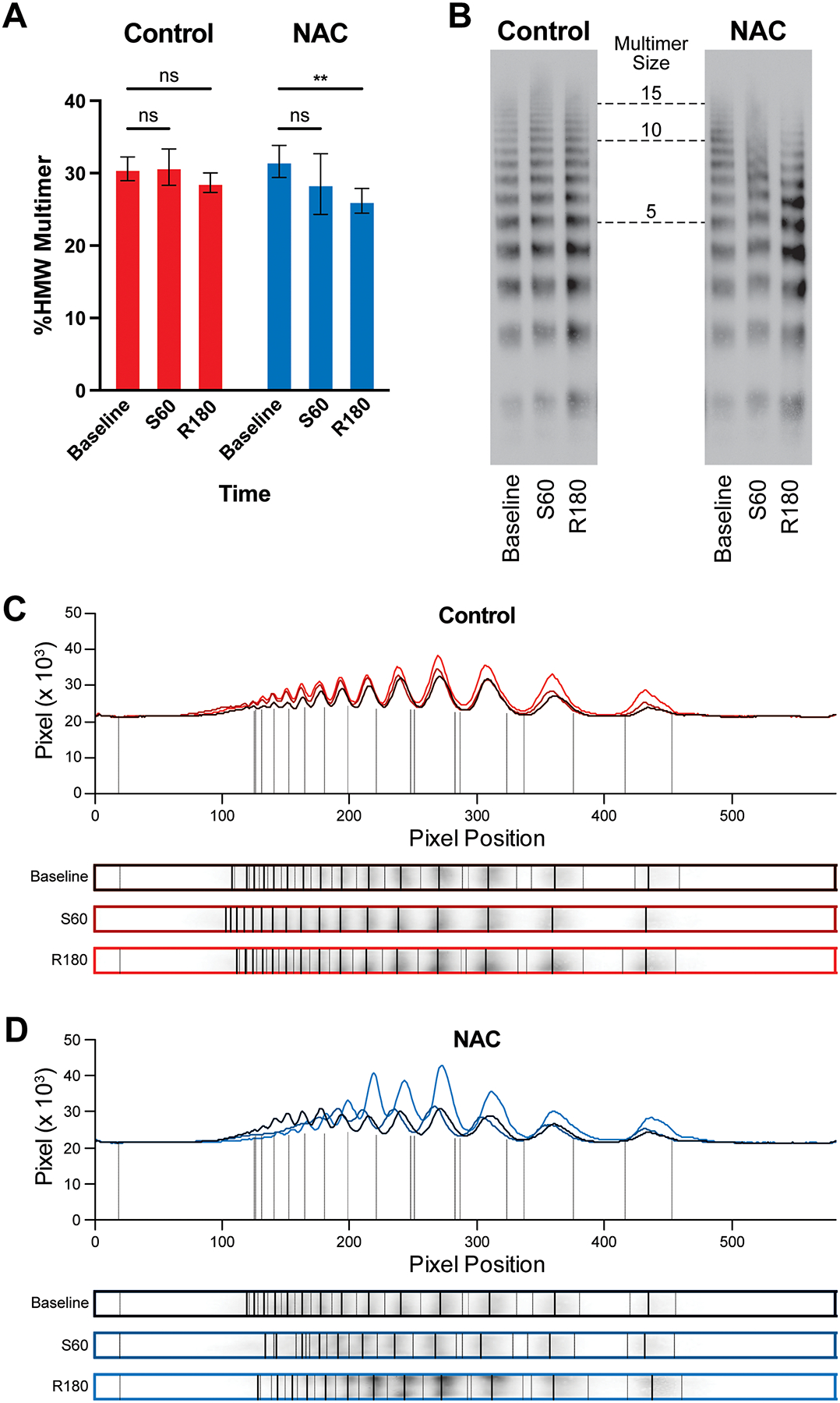
Background: Severe injury induces systemic microvascular impairment that reduces microvascular blood flow (MBF), even after resuscitation to normal blood pressure. These changes are associated with organ dysfunction and death, but the underlying causes and potential therapeutic approaches to address them remain unclear. Two possible contributors are hyperadhesive von Willebrand factor (VWF) secretion from an activated endothelium and oxidative modification of hemostatic proteins. N-acetylcysteine has been shown to address both of these processes and increase MBF in other disease states with similar features. Methods: Anesthetized, male Sprague-Dawley rats were subjected to a standardized polytrauma and pressure-targeted catheter hemorrhage. They then received either no treatment (control) or a single bolus of N-acetylcysteince (NAC), followed by autologous whole blood transfusion. Renal MBF was measured using contrast-enhanced ultrasound at prespecified time points. VWF multimer gels and other laboratory studies were performed. Histologic analysis of vascular thrombi was also performed on uninjured tissue from rats undergoing either this trauma protocol or a sham procedure. Results: NAC increased MBF at 3 h after resuscitation. This was accompanied by a decrease in VWF multimer size that was not seen in the control group. Histologic data showed an overall increase in systemic thrombus burden associated with trauma. Conclusions: NAC improves renal MBF, possibly by reducing VWF multimer size and reducing microthrombus burden. This is significant both mechanistically and therapeutically. It sheds light on the possible pathways involved in causing microvascular obstruction after trauma and identifies possible treatment approaches that could be developed further. Ultimately, targeting these pathways could move us closer to resuscitation strategies that optimize vital organ MBF.
Keywords: Microvascular blood flow; antioxidant; rats; trauma; von Willebrand factor.
Copyright © 2025 by the Shock Society.
Conflict of interest statement
The authors report no conflicts of interest.
Figures

References
-
- Campos-Serra A, Mesquida J, Montmany-Vioque S, et al. Alterations in tissue oxygen saturation measured by near-infrared spectroscopy in trauma patients after initial resuscitation are associated with occult shock. Eur J Trauma Emerg Surg. Feb 2023;49(1):307–315. doi: 10.1007/s00068-022-02068-w - DOI - PMC - PubMed
MeSH terms
Substances
Grants and funding
LinkOut - more resources
Full Text Sources
Medical
Miscellaneous
