


3D Printing and Electrospinning of Drug- and Graphene-Enhanced Polycaprolactone Scaffolds for Osteochondral Nasal Repair
- PMID: 40333487
- PMCID: PMC12028827
- DOI: 10.3390/ma18081826
3D Printing and Electrospinning of Drug- and Graphene-Enhanced Polycaprolactone Scaffolds for Osteochondral Nasal Repair
Abstract
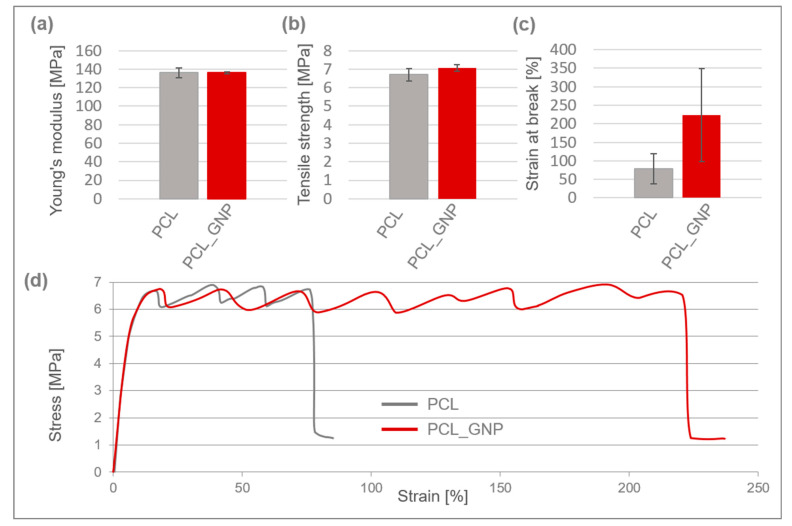
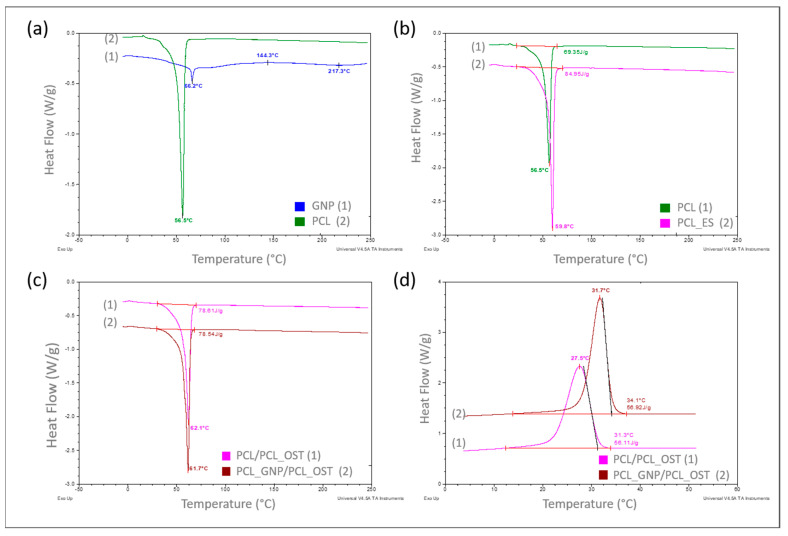
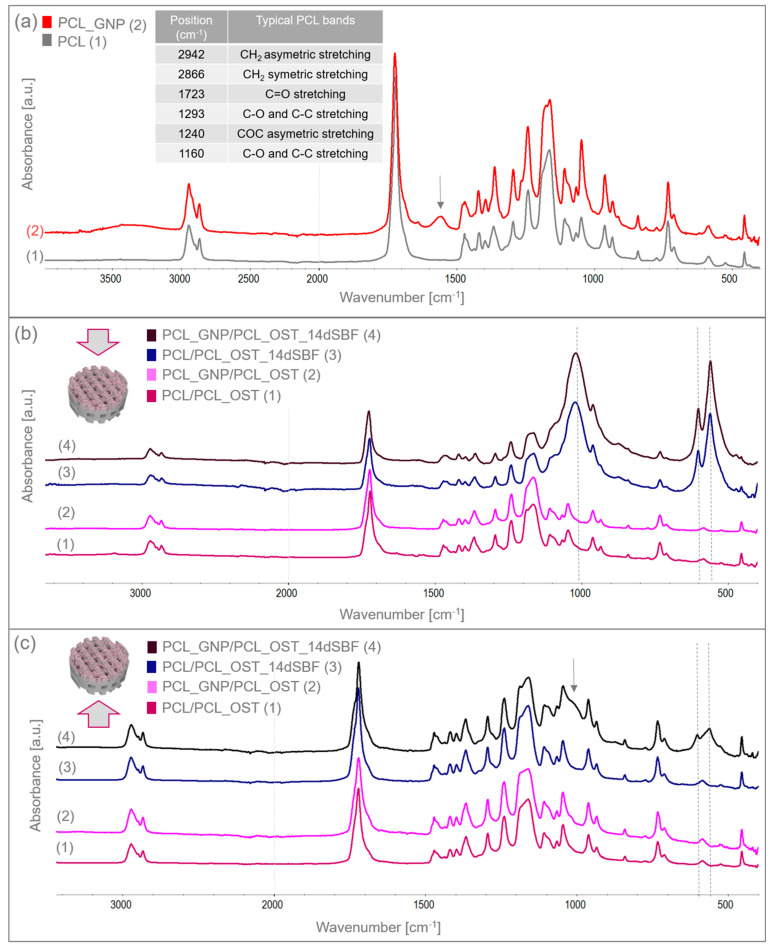
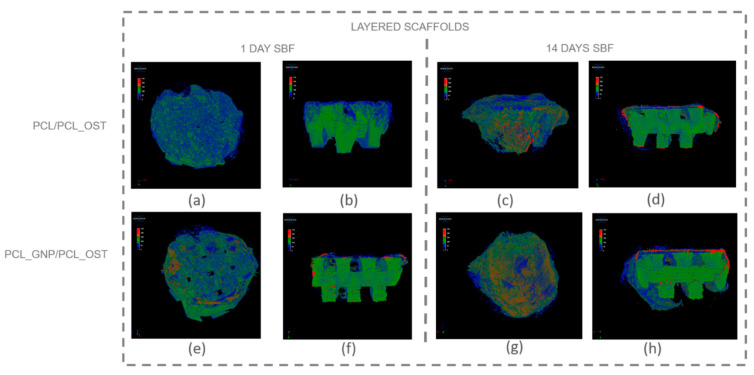
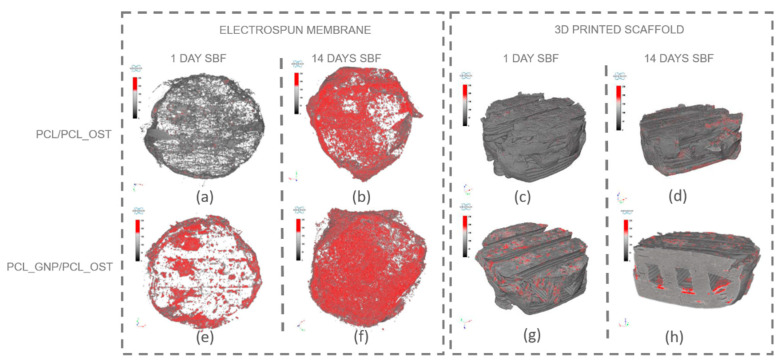
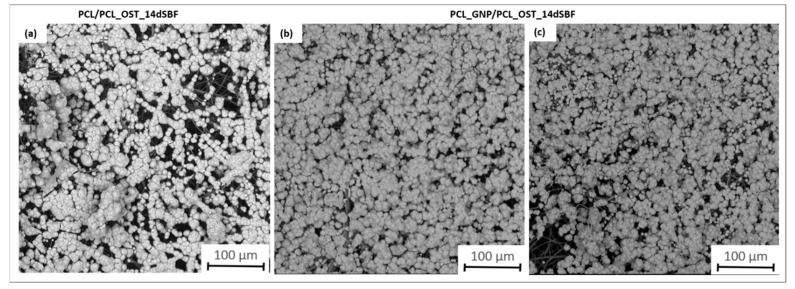
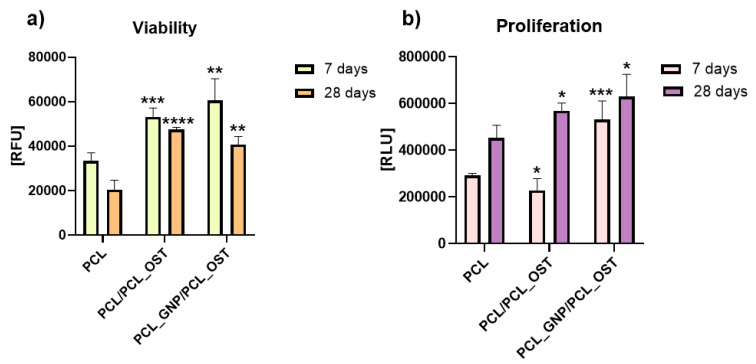
A novel bi-layered scaffold, obtained via 3D printing and electrospinning, was designed to improve osteochondral region reconstruction. The upper electrospun membrane will act as a barrier against unwanted tissue infiltration, while the lower 3D-printed layer will provide a porous structure for tissue ingrowth. Graphene was integrated into the scaffold for its antibacterial properties, and the drug Osteogenon® (OST) was added to promote bone tissue regeneration. The composite scaffolds were subjected to comprehensive physical, thermal, and mechanical evaluations. Additionally, their biological functionality was assessed by means of NHAC-kn cells. The 0.5% graphene addition to PCL significantly increased strain at break, enhancing the material ductility. GNP also acted as an effective nucleating agent, raising crystallization temperatures and supporting mineralization. The high surface area of graphene facilitated rapid apatite formation by attracting calcium and phosphate ions. This was confirmed by FTIR, µCT and SEM analyses, which highlighted the positive impact of graphene on mineral deposition. The synergistic interaction between graphene nanoplatelets and Osteogenon® created a bioactive environment that enhanced cell adhesion and proliferation, and promoted superior apatite formation. These findings highlight the scaffold's potential as a promising biomaterial for osteochondral repair and regenerative medicine.
Keywords: 3D printing; bi-layer scaffold; drug; electrospinning; graphene; polycaprolactone.
Conflict of interest statement
The authors declare no conflict of interest.
Figures
References
-
- Oladele A.O., Olabanji J.K., Olekwu A.A., Awe O.O. Experience with management of nasal defects. Niger. J. Plast. Surg. 2018;14:36–44. doi: 10.4103/njps.njps_8_18. - DOI
-
- Liu Y., Zhou G., Cao Y. Recent Progress in Cartilage Tissue Engineering—Our Experience and Future Directions. Engineering. 2017;3:28–35. doi: 10.1016/J.ENG.2017.01.010. - DOI
-
- Lin G., Lawson W. Complications using grafts and implants in rhinoplasty. Oper. Tech. Otolaryngol. Head Neck Surg. 2007;18:315–323. doi: 10.1016/j.otot.2007.09.004. - DOI
-
- Selim M., Mousa H.M., Abdel-Jaber G.T., Barhoum A., Abdal-hay A. Innovative designs of 3D scaffolds for bone tissue regeneration: Understanding principles and addressing challenges. Eur. Polym. J. 2024;215:113251. doi: 10.1016/j.eurpolymj.2024.113251. - DOI
Grants and funding
LinkOut - more resources
Full Text Sources
