


Geospatial distribution and multilevel determinants of inadequate minimum dietary diversity and its consequences for children aged 6-23 months in Sub-Saharan Africa
- PMID: 40333698
- PMCID: PMC12057906
- DOI: 10.1371/journal.pone.0321254
Geospatial distribution and multilevel determinants of inadequate minimum dietary diversity and its consequences for children aged 6-23 months in Sub-Saharan Africa
Abstract
Background: Inadequate minimum dietary diversity (MMD) is the leading cause of malnutrition among young children in Sub-Saharan Africa (SSA). The evidence of geospatial distribution and multilevel determinants of inadequate MDD and its consequence among children is important for the Sustainable Development Goal (SDG0) 2030 agenda. Therefore, this study aimed to determine the geospatial distribution and multilevel determinants of inadequate MDD and its consequences among children in SSA.
Method: The study utilized recent Demographic and Health Surveys data including 57,912 children. Spatial and multilevel analyses were employed, and variables significantly associated with inadequate MDD and undernutrition with MDD consumption were assessed and significance was declared using a p-value threshold of <0.05. Adjusted odds ratio (AOR) with 95% confidence interval (CI) was reported.
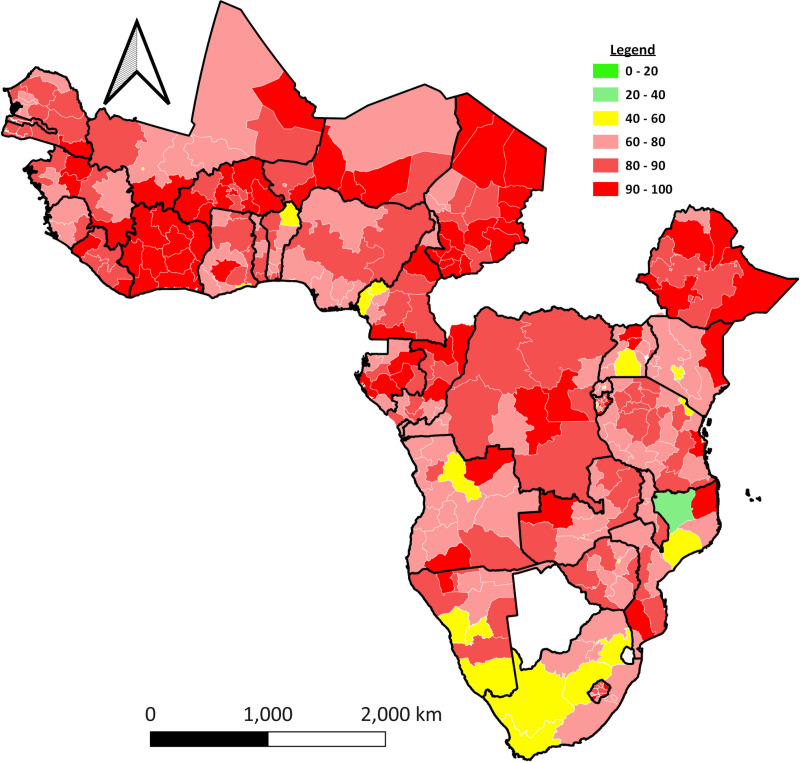
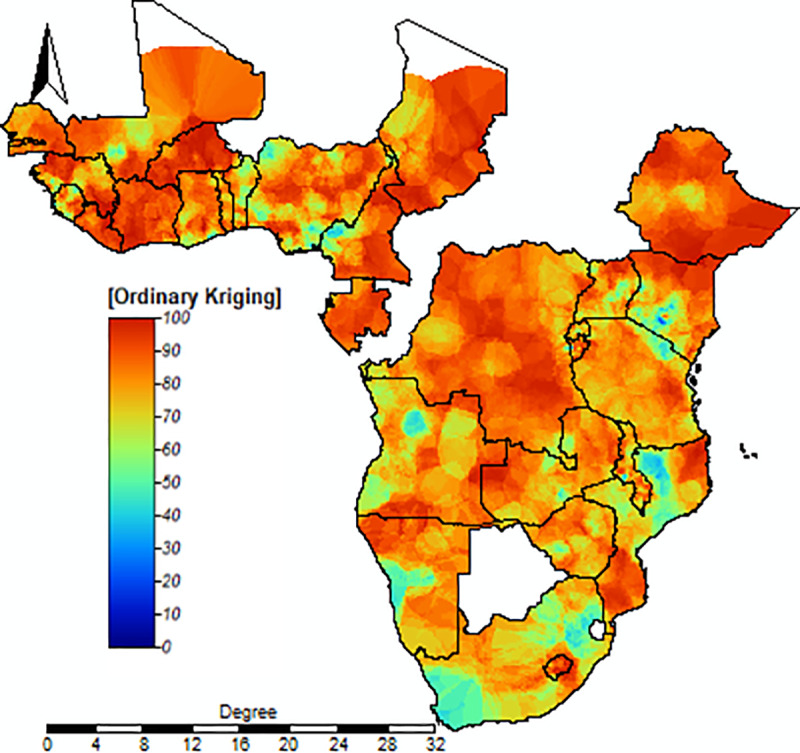
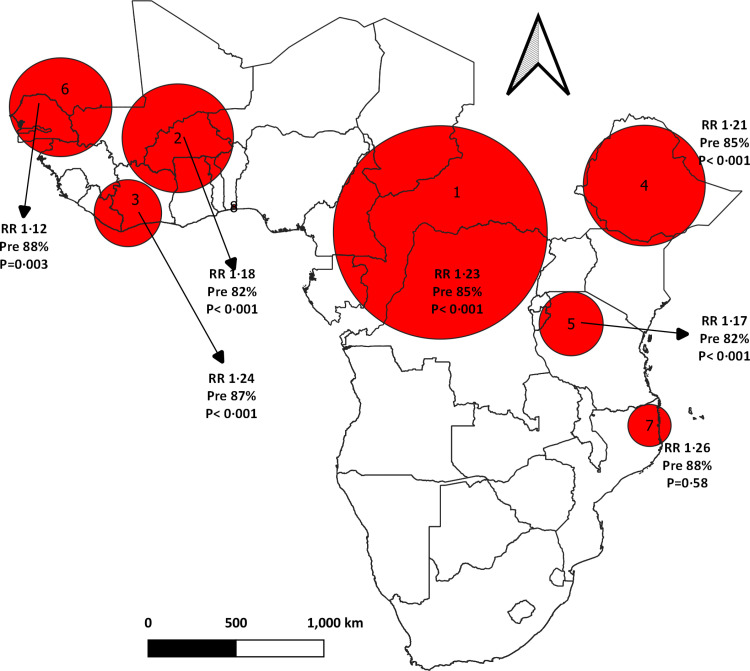
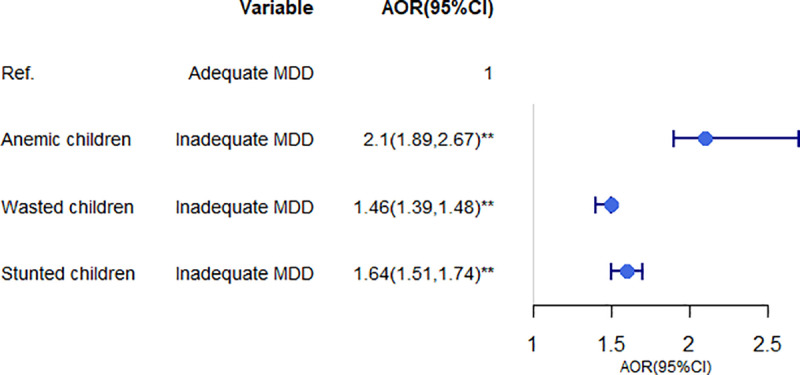
Results: The prevalence of inadequate MDD was 80.3% with distinct spatial variation. Spatial distribution showed that; Gabon, Cameron, Ethiopia, Democratic Republic of Congo, Chad, Mali, Burkina Faso, Ivory Coast, Liberia, and Senegal had a very high burden of inadequate MDD. Factors like children's age, maternal age, educational status, antenatal care (ANC)/ postnatal care (PNC) visits, no media exposure, wealth status, maternal stunting and wasting, and distance from health facilities were associated with inadequate MDD in SSA. The risk of anemia, stunting, and wasting were significantly associated with inadequate MDD among children in SSA.
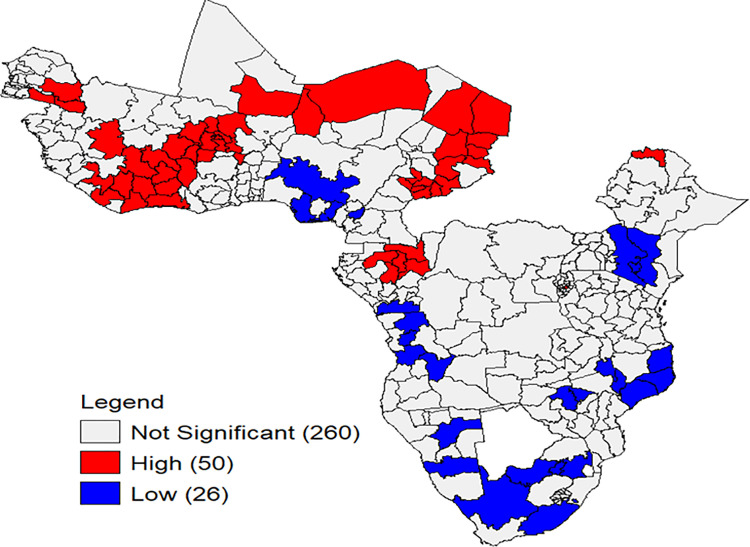
Conclusion: The prevalence of inadequate MDD in SSA is high. Spatial distribution revealed that inadequate MDD was prevalent in most areas of the Western, Northern, Eastern, and Central parts of SSA. Maternal and children's age, educational status, ANC/ PNC visits, no media exposure, wealth status, maternal stunting and wasting, and distance from health facilities were determinants of inadequate MDD in SSA. The spatial clustering of inadequate MDD in certain regions of SSA, suggests the need for geographically targeted interventions to address the determinants of inadequate MDD in these high-burden areas. The study revealed strategies should focus on promoting frequent ANC/ PNC visits, improving maternal nutrition, reducing poverty, and improving maternal employment status to reduce inadequate MDD among children. This study highlights a significant association between MDD and anemia, stunting, and wasting in children aged 6--23 months. To address these critical issues, it is essential to improve MDD among children, as this intervention can play a vital role in achieving SDG target 2.2, which aims to end all forms of malnutrition by 2030.
Copyright: © 2025 Hailu et al. This is an open access article distributed under the terms of the Creative Commons Attribution License, which permits unrestricted use, distribution, and reproduction in any medium, provided the original author and source are credited.
Conflict of interest statement
The authors have declared that no competing interests exist.
Figures
References
-
- Organization WH. Indicators for assessing infant and young child feeding practices: definitions and measurement methods. 2021.
-
- Mitchell MK. Nutrition across the life span. 2003.
-
- Eshete T. Determinants of inadequate minimum dietary diversity among children aged 6–23 months in Ethiopia: secondary data analysis from Ethiopian Demographic and Health Survey 2016. Agricult Food Security. 2018;7(1):1–8.
-
- Organization WH. WHO recommendations on maternal health: guidelines approved by the WHO Guidelines Review Committee. World Health Organization. 2017.
MeSH terms
LinkOut - more resources
Full Text Sources
Medical
Research Materials
