


The F-words relating to symptomatic flexible flat feet: A scoping review
- PMID: 40333772
- PMCID: PMC12057978
- DOI: 10.1371/journal.pone.0320310
The F-words relating to symptomatic flexible flat feet: A scoping review
Abstract
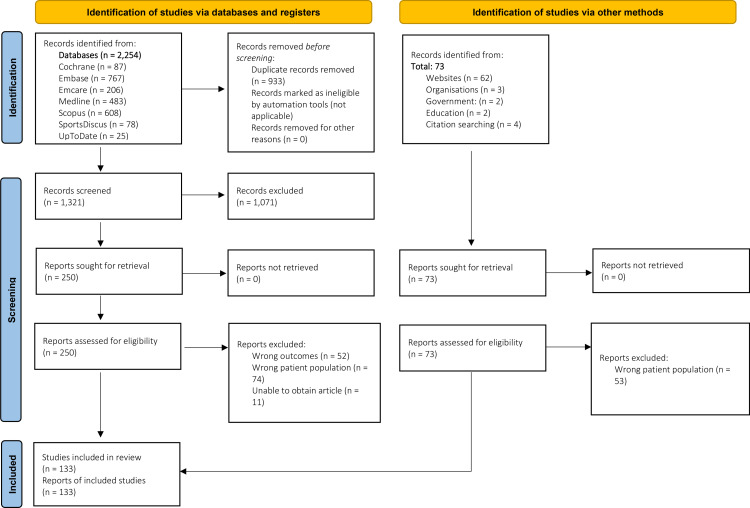
Flexible flat feet are one of the most common musculoskeletal concerns presenting to paediatric health services, despite this being an expected finding in children under 10 years and only requiring management when symptoms are associated. Understanding which symptoms are associated with symptomatic presentations of flexible flat foot in children will provide clarity in identifying those that require further assessment and/or intervention. A scoping review of the literature was conducted to gather all known symptoms related to symptomatic flexible flat foot in the child. Data was mapped using the 'F-words' framework, a child friendly, six-item tool based on the International Classification of Functioning, Disability and Health Framework 11 (ICF-11). This review identified 42 individual symptoms relative to symptomatic presentations of flexible flat foot, which were allocated into five of the six 'F-words' categories (fitness, functioning, friends, family and future). Of these, pain was the most reported symptom, identified in 124 (of 133) included citations, followed by symptoms associated with reduced lower limb function (altered gait patterns, reduced balance and stability and increased tripping), fatigue and reduced participation. Other less frequently reported symptoms include callus formation, night pain and cramps. When present, these symptoms may occur independently or may co-exist at the same time. No symptoms were allocated to the fun category of the 'F-words'. A multitude of symptoms are reportedly associated with symptomatic flexible flatfoot in the child, with no discernible pattern or coherence noted. Further research should examine development and progression of symptoms and seek to better understand causality of relationship between symptoms and foot posture.
Copyright: © 2025 Urukalo et al. This is an open access article distributed under the terms of the Creative Commons Attribution License, which permits unrestricted use, distribution, and reproduction in any medium, provided the original author and source are credited.
Conflict of interest statement
The authors have declared that no competing interests exist.
Figures

References
-
- Fabry G Clinical practice: static, axial, and rotational deformities of the lower extremities in children. European Journal of Pediatrics. 2010;169:529–34 - PubMed
-
- Evans AM, Rome K. A Cochrane review of the evidence for non-surgical interventions for flexible pediatric flat feet. Eur J Phys Rehabil Med. 2011;47(1):69–89. - PubMed
-
- Rome K, Ashford RL, Evans A. Non‐surgical interventions for paediatric pes planus. Cochrane Database of Systematic Reviews. 2010(7). - PubMed
Publication types
MeSH terms
LinkOut - more resources
Full Text Sources
