


Elderly care expectation how to influence the fertility desire: Evidence from Chinese general social survey data
- PMID: 40334001
- PMCID: PMC12057963
- DOI: 10.1371/journal.pone.0318628
Elderly care expectation how to influence the fertility desire: Evidence from Chinese general social survey data
Abstract
Background: The changes of population structure will have profound impact on economic and social development. In recent years, the continuous intensification of population aging and the persistent decline of fertility rates have posed a certain challenge to the stability of population structure in China.This paper combines the two social hot issues of elderly care and fertility, and puts forward relevant policies and enlightenment through quantitative analysis and research,so as to promote better social development.
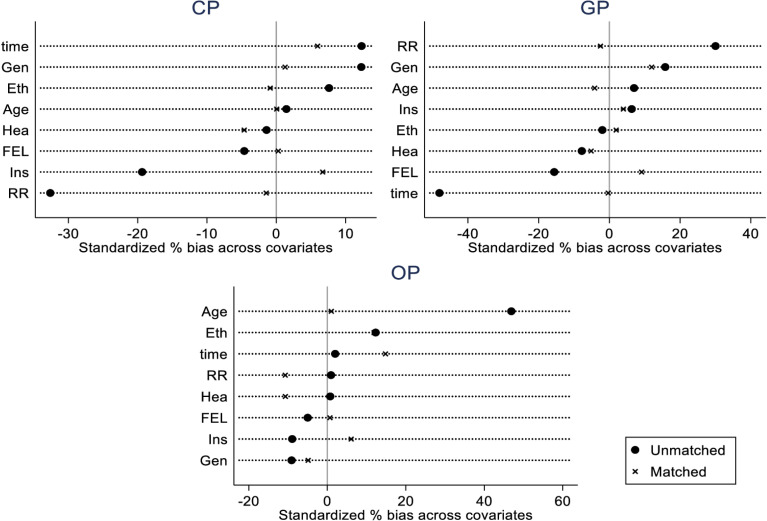
Methods: Based on the data of the Chinese General Social Survey (CGSS) in 2017 and 2021, this paper uses the logistic regression model, linear regression model and the Propensity Score Matching model to analyze the influence of the elderly care expectation on residents' fertility desire. The elderly care expectations include government elderly care, self-care, offspring elderly care and responsibility sharing.The fertility desire includes 'whether to give birth', 'quantity','gender preference' and 'fertility echelon'.
Result: The research results shows that: first, government elderly care expectations not only significantly reduces residents' willingness to have children, but also has an inhibitory effect on lower fertility echelons, but has a promoting effect on higher fertility echelons. Second, the self-care expectations significantly reduces residents' willingness to have children and has a significant negative impact on their expected fertility quantity, especially has a significant inhibitory effect on lower fertility echelons.Third, offspring elderly care expectations significantly increases residents' willingness to have children and has a significant positive impact on their expected fertility quantity, especially for increasing residents' willingness to have a second child, and residents with offspring elderly care expectations have a higher preference for boys.
Conclusion: This study highlights the complex relationship between elderly care expectation and fertility desire, offering valuable insights for policymakers. The concept of fertility echelons provides a nuanced understanding of the dynamic impacts on fertility preferences. By addressing both elderly care and fertility challenges, this research contributes to the development of strategies for sustainable social progress.
Copyright: © 2025 Jia Yang. This is an open access article distributed under the terms of the Creative Commons Attribution License, which permits unrestricted use, distribution, and reproduction in any medium, provided the original author and source are credited.
Conflict of interest statement
The authors have declared that no competing interests exist.
Figures
References
-
- Su LY, Bai TT, Zhang T, Wang Q, Dai F. The Economic Impact of Population Based on Cluster Center. J. Chongqing Univ. Technol. (Natural Science). 2020;34(12):247-255. doi: 10.3969/j.issn.1674-8425(z).2020.12 - DOI
-
- Hou JW, Huang SL, Xin ZQ, Sun L, Zhang HC, Dou DH. A Change in the Desired Fertility of the Chinese Population: 1980-2011. Social Sciences in China 2014; (4):78-97+206.
-
- Chen JY. Research on Young People’s Fertility Intention and the Influencing Factors. Sustain. Dev. 2020;10(2):252-260. doi: 10.12677/sd.2020.102031 - DOI
-
- Zhang T, Wang ZL.Analysis of relevant factors affecting women’s willingness to bear children under two-child policy. Chin. J Family Plann. Gynecotokol. 2021;13(4):13-15+23. doi: 10.3969/j.issn.1674-4020.2021.04.04 - DOI
-
- Zhou FL. Research on fertility desire and its measurement index. Statistical Educ. 2005; (10): 9-11.
MeSH terms
Supplementary concepts
LinkOut - more resources
Full Text Sources
