


Chlorhexidine and benzalkonium chloride: promising adjuncts in combating multidrug resistant Klebsiella pneumoniae in healthcare settings
- PMID: 40335970
- PMCID: PMC12057036
- DOI: 10.1186/s12879-025-10980-w
Chlorhexidine and benzalkonium chloride: promising adjuncts in combating multidrug resistant Klebsiella pneumoniae in healthcare settings
Abstract
Background: Hospital-acquired infections caused by multidrug resistant (MDR) Klebsiella pneumoniae pose a significant global health threat. Effective antisepsis and disinfection protocols are mandatory to prevent these infections. This study aimed to isolate Klebsiella pneumoniae, evaluate antimicrobial susceptibility, and assess the efficacy of selected biocides.
Methods: Fifty clinical MDR Klebsiella pneumoniae isolates were collected from various hospital departments. Antimicrobial susceptibility was determined using the disc diffusion method. Minimum inhibitory concentrations (MICs) of chlorhexidine and benzalkonium chloride were measured via agar dilution. Conventional PCR was employed to detect biocide resistance genes (qacE∆1 and cepA).
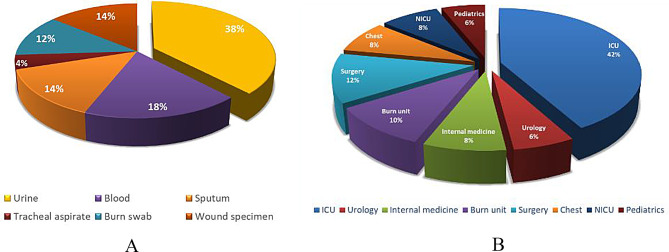
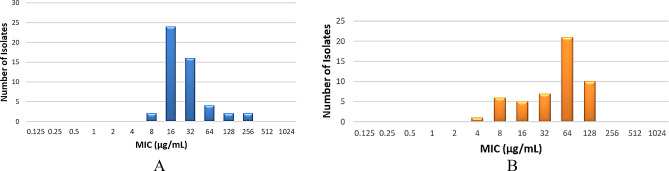
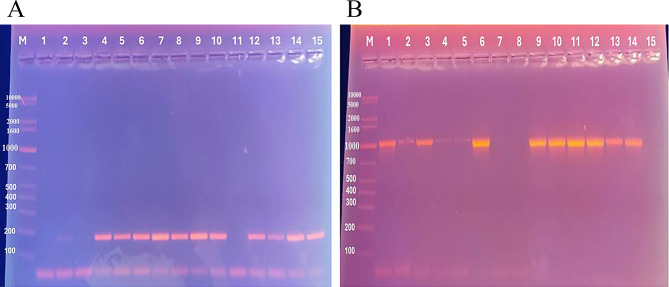
Results: Klebsiella pneumoniae was identified in 19.16% of cases. All isolates exhibited multidrug resistance, with multiple antimicrobial resistance indices ranging from 0.24 to 0.92, reaching up to 1. Benzalkonium chloride MICs significantly increased with resistance, reaching up to 64 µg/mL, while chlorhexidine MICs were consistent across isolates. The qacE∆1 and cepA genes were detected in 62% and 72% of isolates, respectively, with a significant association between qacE∆1 and cephalosporin resistance. No significant correlation was found between biocide MICs and clinical specimen types or hospital units.
Conclusion: The cepA gene is closely associated with extensive drug resistance in Klebsiella pneumoniae, emphasizing its role in antimicrobial resistance. Optimized biocide formulations, when properly developed and applied, can play a crucial role in combating and preventing infections caused by multidrug-resistant Klebsiella pneumoniae.
Keywords: CepA; Klebsiella pneumoniae; qacE∆1; Benzalkonium chloride; Chlorhexidine.
© 2025. The Author(s).
Conflict of interest statement
Declarations. Ethics approval and consent to participate: An informed written consent was obtained from each patient or from their guardians before enrollment in this study and the study protocol was approved by the Local Ethical Committee of Faculty of Medicine, Menoufia University (IRB 3/2022MICRO44).The study was conducted following the good clinical practice and the Declaration of Helsinki. Consent for publication: Not applicable. Competing interests: The authors declare no competing interests.
Figures
References
-
- Arnold WA, Blum A, Branyan J, Bruton TA, Carignan CC, Cortopassi G, Datta S, DeWitt J, Doherty AC, Halden RU, Harari H, Hartmann EM, Hrubec TC, Iyer S, Kwiatkowski CF, LaPier J, Li D, Li L, Muñiz Ortiz JG, Salamova A, Schettler T, Seguin RP, Soehl A, Sutton R, Xu L, Zheng G. Quaternary ammonium compounds: a chemical class of emerging concern. Environ Sci Technol. 2023;57(20):7645–65. - DOI - PMC - PubMed
MeSH terms
Substances
LinkOut - more resources
Full Text Sources
