


Perforated peptic ulcers in children: a systematic review
- PMID: 40335985
- PMCID: PMC12057288
- DOI: 10.1186/s12887-025-05725-2
Perforated peptic ulcers in children: a systematic review
Abstract
Background: Perforated peptic ulcers (PPU) represent a significant complication of peptic ulcers, associated with high mortality. As no systematic review of the literature on PPU in children currently exists, this study aims to summarize findings from studies focusing on its risk factors, etiology, treatment modalities, and outcomes.
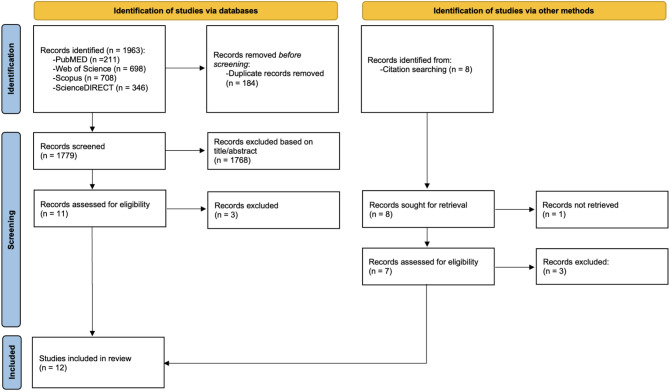
Methods: A systematic review was conducted following the PRISMA guidelines. A literature search was performed on 24 November 2024, using four electronic databases: Web of Science, Scopus, PubMed, and ScienceDirect. The inclusion criteria were studies published in English, focusing on perforated peptic ulcers in paediatric patients. The exclusion criteria were: studies published in languages other than English; publication formats such as conference abstracts, personal communications, and single case reports; studies focusing on non-perforated peptic ulcers; studies involving participants > 18 years; and studies reporting ulcer perforations outside the stomach or duodenum.
Results: Out of 1963 records identified, 12 studies met the inclusion criteria and were included in the review. A total of 239 children with perforated peptic ulcers were analyzed, with a median age of 11 years (range 3.2-16.5 years). The results indicate that ulcer perforations were more prevalent in males (74.8%). Furthermore, duodenal perforations (73%) were more common than gastric perforations (27%). The most commonly reported symptoms were abdominal pain (n = 175, 73.2%), vomiting (n = 82, 34.3%), peritoneal signs (n = 79, 33%), and fever (n = 38, 15.9%). Subdiaphragmatic free air was detected in 141 patients (58.9%). Of the total number of patients, 207 (86.6%) were treated surgically, while 32 (13.4%) received conservative treatment. Regarding the surgical approach, most patients underwent open surgery (n = 143, 69%) compared to laparoscopic repair (n = 64, 31%). Among the surgical procedures, 114 involved simple sutures, with or without an omental patch. Postoperative complications were reported in 30 children (14.5%). Reoperation was required in 4 patients (1.9%), and mortality was recorded in 9 patients (3.8%).
Conclusions: PPU was more prevalent in males and predominantly located in the duodenum. Ulcer suturing, with or without an omental patch, was the most commonly utilized treatment modality, demonstrating a relatively low complication rate. Further studies are needed to provide more comprehensive and unbiased evidence on PPU in children.
Keywords: Children; Duodenal ulcer; Laparoscopy; Peptic ulcer; Peptic ulcer disease; Peptic ulcer perforation; Perforation; Stomach ulcer; Surgery.
© 2025. The Author(s).
Conflict of interest statement
Declarations. Ethics approval and consent to participate: All methods were carried out in strict adherence to the ethical principles outlined in the Declaration of Helsinki, a cornerstone document of the World Medical Association that provides guidelines for conducting medical research involving human participants. Consent for publication: Not applicable. Competing interests: The authors declare no competing interests.
Figures
References
-
- Almadi MA, Lu Y, Alali AA, Barkun AN. Peptic ulcer disease. Lancet. 2024;404(10447):68–81. 10.1016/s0140-6736(24)00155-7. - PubMed
-
- Lanas A, Chan FKL. Peptic ulcer disease. Lancet. 2017;390(10094):613–24. 10.1016/s0140-6736(16)32404-7. - PubMed
-
- Urs AN, Narula P, Thomson M. Peptic ulcer disease. Paediatr Child Health. 2014;24(11):485–90. 10.1016/j.paed.2014.06.003.
Publication types
MeSH terms
LinkOut - more resources
Full Text Sources
Research Materials
Miscellaneous
