


Role of remote ischaemic conditioning in fracture healing and orthopaedic surgery-a systematic review and narrative synthesis
- PMID: 40336073
- PMCID: PMC12060424
- DOI: 10.1186/s13018-025-05772-6
Role of remote ischaemic conditioning in fracture healing and orthopaedic surgery-a systematic review and narrative synthesis
Abstract
Introduction: Remote ischaemic conditioning (RIC) involves the use of controlled and transient ischemia and reperfusion cycles, commonly of the upper or lower limb, to mitigate cellular damage from ischaemic events. Studies have demonstrated that RIC may have anti-inflammatory and cardiovascular protective effects and thus could represent a novel therapeutic strategy to improve outcomes following orthopaedic surgery. This review aimed to comprehensively describe the current pre-clinical and clinical evidence for RIC in orthopaedics.
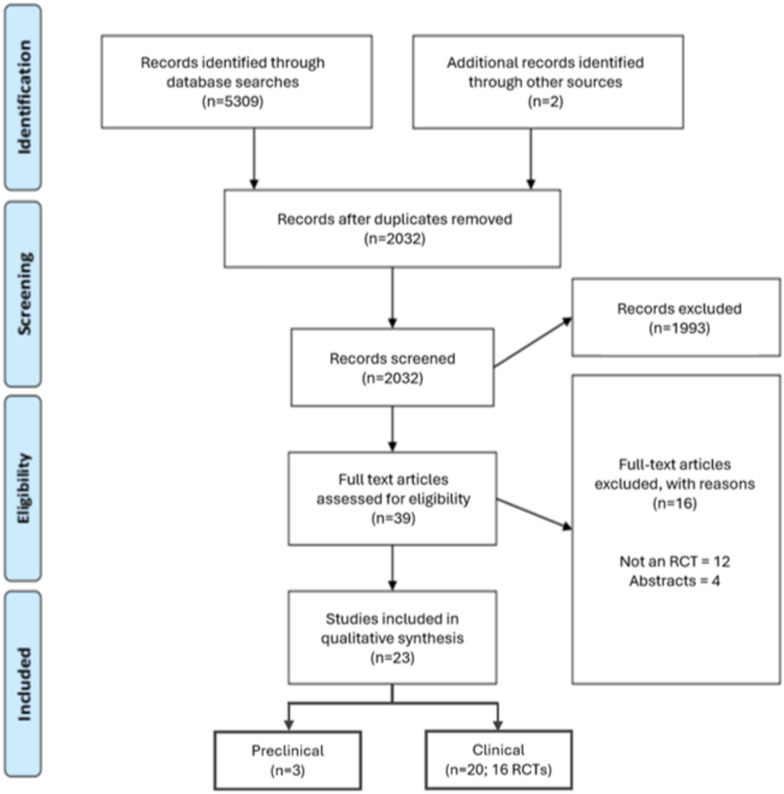
Methods: MEDLINE and EMBASE via OVID (1966-March 2024) were searched using a systematic search strategy for randomised controlled trials (RCTs) investigating the effects of RIC on fracture, bone healing, and orthopaedics. Both pre-clinical and clinical RCTs were included.
Results: Three pre-clinical RCTs (comprising of 198 rats in models of experimental fracture) met the inclusion criteria. These showed that RIC was associated with enhanced callus formation (volume and biomechanical strength) post-fracture, reduced oxidative stress and upregulated osteoblastic activity. Sixteen clinical RCTs, involving 628 patients, investigated RIC in 6 different elective orthopaedic procedures (knee, lower limb, cervical, shoulder, general, hip fracture). RIC protocols varied in cycle frequency, duration, and pressure, but all were given as a single dose at induction of anaesthesia. Significant results included reductions in oxidative stress, improved cerebral and peripheral oxygenation, and reduced pain scores and analgesia use. Only 1 study (n = 648) evaluated RIC in acute hip fracture and demonstrated an early cardioprotective effect.
Conclusion: The potential therapeutic effects of RIC in orthopaedic surgery is supported by preliminary evidence from pre-clinical and clinical studies. Trials to date are largely small but warrant investigation in well-powered multicentre RCTs. There are still many unanswered questions about the optimal RIC parameters (cuff pressure, frequency and duration) in orthopaedic surgery and determining which patients may benefit most from this therapy.
Keywords: Elective surgery; Emergency surgery; Ischaemia; Myocardial infarction; Remote ischaemic conditioning; Stroke.
© 2025. The Author(s).
Conflict of interest statement
Declarations. Ethical approval and consent to participate: Not applicable. Consent for publication: Not applicable. Protocol registration: This systematic review protocol was not registered or previously published. Competing interests: None
Figures

References
-
- Greenstein AS, Gorczyca JT. Orthopedic Surgery and the Geriatric Patient. Clin Geriatr Med. 2019 Feb;35(1):65-92. 10.1016/j.cger.2018.08.007. - PubMed
-
- GBD 2017 Disease and Injury Incidence and Prevalence Collaborators. Global, regional, and national incidence, prevalence, and years lived with disability for 354 diseases and injuries for 195 countries and territories, 1990-2017: a systematic analysis for the Global Burden of Disease Study 2017. Lancet. 2018;392(10159):1789-1858. 10.1016/S0140-6736(18)32279-7 Erratum in: Lancet. 2019;393(10190):e44. 10.1016/S0140-6736(19)31047-5. - PMC - PubMed
Publication types
MeSH terms
LinkOut - more resources
Full Text Sources
Miscellaneous
