


Gender disparities in cognitive impairment across neurological autoimmune disorders: a systematic review
- PMID: 40337166
- PMCID: PMC12055792
- DOI: 10.3389/fneur.2025.1555407
Gender disparities in cognitive impairment across neurological autoimmune disorders: a systematic review
Abstract
Introduction: Neurological autoimmune disorders (NADs) often intertwine with cognitive impairment (CI), representing a multi-layered challenge in both clinical understanding and therapeutic management. The compounded burden of NADs and CI not only significantly affects patient's quality of Life (QoL), condition's prognosis, and treatment outcomes, but disproportionately impacts women, who are inherently more susceptible to autoimmunity. This review endeavors to investigate gender-based cognitive deficits, their underlying mechanisms, and their clinical implications. We will focus on Hashimoto's thyroiditis (HT), Graves' disease (GD), fibromyalgia (FMS), Guillain-Barré syndrome (GBS), myasthenia gravis (MG), multiple sclerosis (MS), and narcolepsy type 1 (NT1).
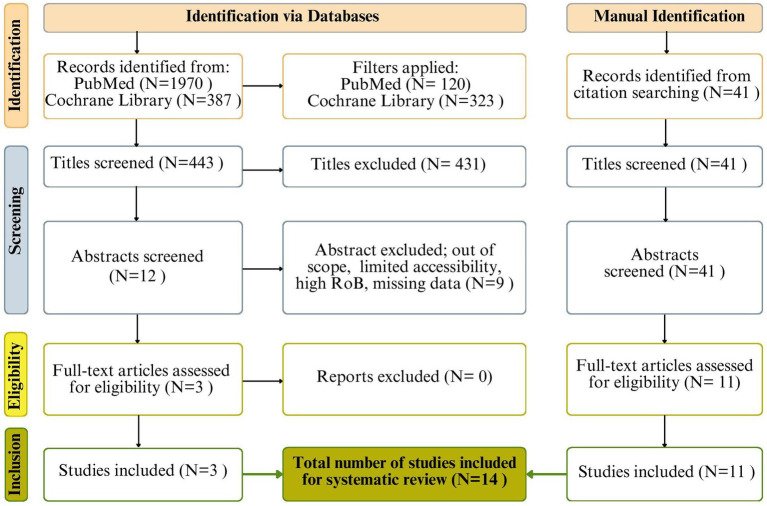
Methods: A systematic search of PubMed and the Cochrane Library was conducted for peer-reviewed articles published in the last decade. The search included the keywords "cognitive impairment," "cognitive decline," "gender disparities," "neurological autoimmune disorders," "Hashimoto's thyroiditis," "graves' disease," "multiple sclerosis," "fibromyalgia," "Guillain-Barre syndrome," "myasthenia gravis," and "narcolepsy type 1″. A manual search also took place to uncover grey literature and additional studies we already know exist that did not appear in the two main databases. After applying inclusion and exclusion criteria, 14 articles were selected for analysis. These articles were evaluated for their contribution to unraveling gender-based cognitive impairment trends across NADs and the possible factors involved.
Results: The systematic search yielded a limited number of relevant studies addressing gender disparities in CI across NADs and, apart from MS, most conditions remain under-researched, indicating a significant research gap. While evidence suggests gender-based differences in the manifestations and severity of CI, these findings highlight the necessity for further investigations and innovative clinical approaches tailored to these distinctions.
Conclusion: CI remains a critical, underexplored aspect of NADs, with gender disparities receiving even less attention. Our review highlights a research imbalance and a lack of specific investigations, leading to overgeneralized conclusions about CI across NADs and a limited understanding of the various involved mechanisms. Clinically, addressing CI in NADs requires comprehensive cognitive assessments that account for gender differences, alongside equitable access to resources and personalized treatment approaches. Future advancements are likely to revolve around diagnostic innovations, precision medicine, interdisciplinary collaborations, and holistic approaches to chronic disease management.
Keywords: cognition; cognitive gender disparities; cognitive impairment; neuroimmunology; neurological autoimmune disorders; systematic review; women’s health.
Copyright © 2025 Ouled Toumi, Kassaw and Demareva.
Conflict of interest statement
The authors declare that the research was conducted in the absence of any commercial or financial relationships that could be construed as a potential conflict of interest.
Figures
References
-
- Jiang L, D'Souza RS, Oh T, Vincent A, Mohabbat AB, Ashmore Z, et al. . Sex-related differences in symptoms and psychosocial outcomes in patients with fibromyalgia: a prospective questionnaire study. Mayo Clin Proc Innov Qual Outcomes. (2020) 4:767–74. doi: 10.1016/j.mayocpiqo.2020.06.009, PMID: - DOI - PMC - PubMed
-
- Segura-Jiménez V, Estévez-López F, Soriano-Maldonado A, Álvarez-Gallardo IC, Delgado-Fernández M, Ruiz JR, et al. . Gender differences in symptoms, health-related quality of life, sleep quality, mental health, cognitive performance, pain-cognition, and positive health in Spanish fibromyalgia individuals: the Al-Ándalus project. Pain Res Manag. (2016) 2016:5135176–14. doi: 10.1155/2016/5135176, PMID: - DOI - PMC - PubMed
-
- Iannuccelli C, Lucchino B, Gioia C, Dolcini G, Rabasco J, Venditto T, et al. . Gender influence on clinical manifestations, depressive symptoms and brain-derived neurotrophic factor (BDNF) serum levels in patients affected by fibromyalgia. Clin Rheumatol. (2022) 41:2171–8. doi: 10.1007/s10067-022-06133-y, PMID: - DOI - PMC - PubMed
Publication types
LinkOut - more resources
Full Text Sources
Miscellaneous
