


Case Report: An unusual case of cardiac anaphylaxis in the maintenance phase of vespula venom immunotherapy
- PMID: 40337199
- PMCID: PMC12055852
- DOI: 10.3389/falgy.2025.1583909
Case Report: An unusual case of cardiac anaphylaxis in the maintenance phase of vespula venom immunotherapy
Abstract
Background: Cardiac involvement in anaphylaxis remains difficult to assess; however, histamine release during an anaphylactic reaction can induce functional and metabolic alterations in the myocardium. Mast cells, identified within myocardial fibers, perivascular tissue, and arterial structures, play a crucial role in systemic and cardiac anaphylaxis through the release of inflammatory mediators, including histamine, platelet-activating factor, cytokines, chemokines, tryptase, chymase, prostaglandins, and leukotrienes. Hymenoptera venom immunotherapy (VIT) is the most effective strategy for preventing systemic reactions in sensitized individuals. Although VIT is generally well tolerated, severe allergic reactions can occur, particularly during the build-up phase, while they are rare in the maintenance phase.
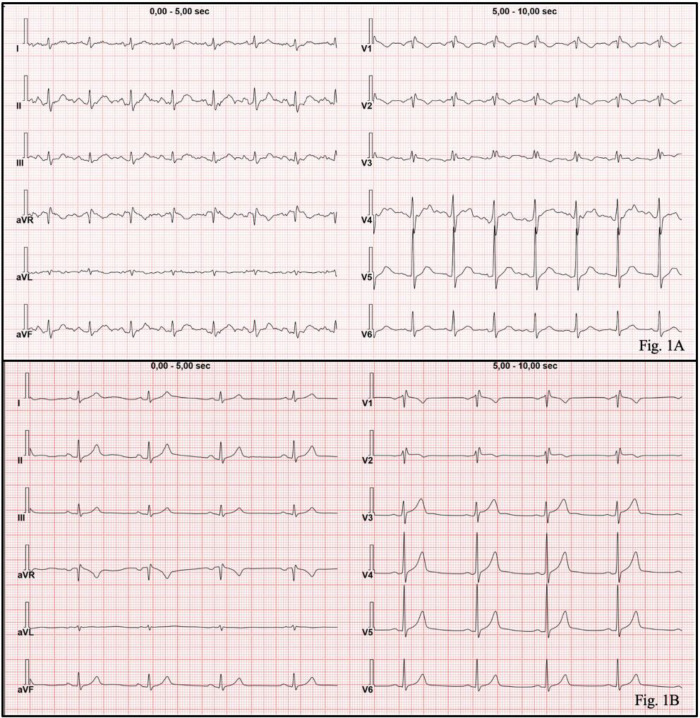
Case report: We present the case of a 57-year-old male with a history of severe systemic reactions (SSR) to Vespula stings who experienced cardiac anaphylaxis during the maintenance phase of VIT. He started VIT with a conventional up-dosing schedule, which was well-tolerated. However, during the third monthly maintenance dose, he developed an anaphylactic syncopal episode with a right bundle branch block (RBBB) on ECG. He was treated promptly with adrenaline, corticosteroids, and antihistamines, and his ECG normalized within 20 days.
Conclusions: This case underscores the potential cardiac involvement in anaphylaxis during VIT maintenance and highlights the need to systematically evaluate cardiovascular manifestations during anaphylaxis episodes to optimize risk assessment and management.
Keywords: VIT; cardiac anaphylaxis; maintenance phase; tryptase; vespula sting anaphylaxis.
© 2025 Brunetto, Buta, Gangemi and Ricciardi.
Conflict of interest statement
The authors declare that the research was conducted in the absence of any commercial or financial relationships that could be construed as a potential conflict of interest. The author(s) declared that they were an editorial board member of Frontiers, at the time of submission. This had no impact on the peer review process and the final decision.
Figures
References
Publication types
LinkOut - more resources
Full Text Sources
Research Materials
