


Evaluation of the evidence for self-management post-stroke within clinical practice guidelines for people with stroke: A systematic review
- PMID: 40337346
- PMCID: PMC12033886
- DOI: 10.1177/03080226221107768
Evaluation of the evidence for self-management post-stroke within clinical practice guidelines for people with stroke: A systematic review
Abstract
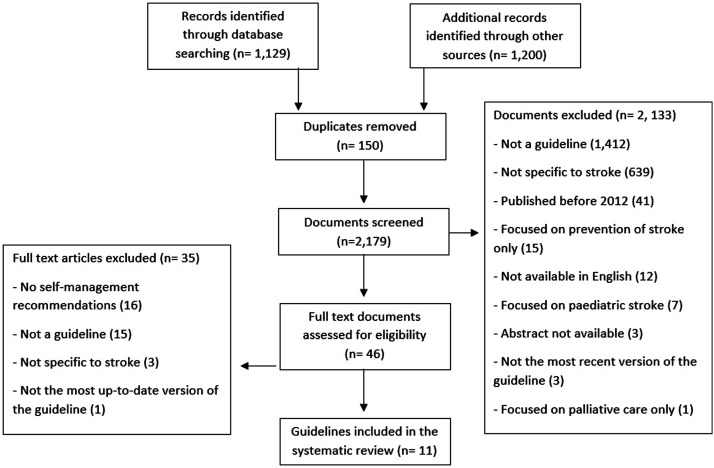
Introduction: Self-management post-stroke is essential where healthcare systems are stretched and stroke prevalence remains high. Self-management is recommended in stroke guidelines however, the quality of guidelines can vary and the evidence underpinning recommendations is unclear. The objectives of this paper are to identify and appraise current stroke guidelines, synthesise self-management recommendations and assess the evidentiary basis of these recommendations.
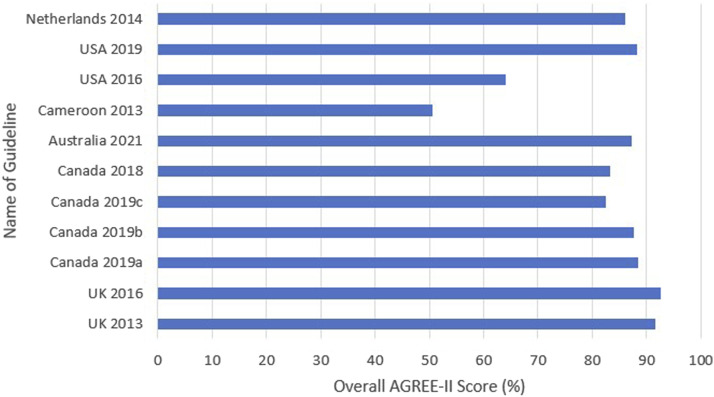
Method: Stroke guidelines were retrieved from a search of four databases and stroke association websites in July 2021. Four independent reviewers assessed their quality using the Appraisal of Guidelines Research and Evaluation 2nd Edition instrument. Self-management recommendations were extracted by hand, evaluated, synthesised and the evidence underpinning them appraised using the Canadian Stroke Best Practice Recommendations framework.
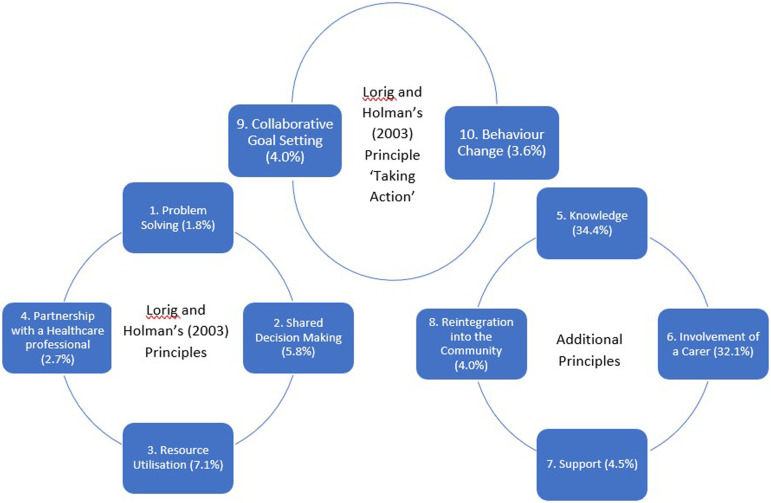
Results: Eleven guidelines were included in this systematic review, all of excellent methodological quality overall. One hundred and sixty-one recommendations were extracted from these guidelines and grouped into ten principles of self-management. A quarter of the recommendations were underpinned by level A evidence, 32% level B and 43% level C.
Conclusion: Although current stroke guidelines are of high methodological quality, there are considerable inconsistencies in self-management recommendations within and between these guidelines, with varying strengths of underpinning evidence. This article identifies a need for universal consensus regarding evidence-based self-management post-stroke.
Keywords: guideline; recommendation; self-management; stroke.
© The Author(s) 2022.
Conflict of interest statement
The author(s) declared no potential conflicts of interest with respect to the research, authorship, and/or publication of this article.
Figures
References
-
- ADAPTE Collaboration (2009) The ADAPTE Process: Resource Toolkit for Guideline Adaptation, Version 2. Guideline International Network: Perthshire, Scotland. Available at: http://www.g-i-n.net/ (accessed 23 Oct 2019).
-
- AGREE Next Steps Consortium (2009) The AGREE II instrument [online]. Available at: http://www.agreetrust.org/wp-content/uploads/2013/10/AGREE-II-Users-Manu... (accessed 7 April 2019).
-
- Almazrou Mazrou SH. (2013) Expected benefits of clinical practice guidelines: factors affecting their adherence and methods of implementation and dissemination. Journal of Health Specialities 3(1): 141–147.
-
- Atler KE, Van Puymbroeck M, Portz JD, et al. (2017) Participant-perceived outcomes of merging yoga and occupational therapy: self-management intervention for people post stroke. British Journal of Occupational Therapy 80(5): 294–301.
-
- Balshem H, Helfand M, Schunemann HJ, et al. (2011) GRADE guidelines: 3. Rating the quality of evidence. Journal of Clinical Epidemiology 64(4): 401–406. - PubMed
Publication types
LinkOut - more resources
Full Text Sources