


Impact of negative symptom reduction on employment and vocational activity outcomes following cognitive remediation therapy in schizophrenia: A 1-year follow-up study
- PMID: 40337462
- PMCID: PMC12056601
- DOI: 10.1002/pcn5.70117
Impact of negative symptom reduction on employment and vocational activity outcomes following cognitive remediation therapy in schizophrenia: A 1-year follow-up study
Abstract
Aim: Cognitive remediation therapy (CRT) improves cognitive function and enhances vocational outcomes in patients with schizophrenia. However, factors that facilitate employment or vocational activity transition following CRT remain unclear. This study aimed to identify such factors by evaluating the effects of CRT on psychiatric symptoms, cognitive function, divergent thinking, and daily living skills.
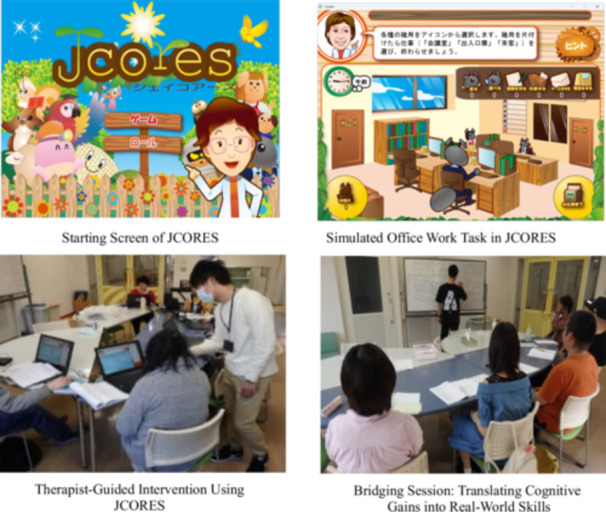
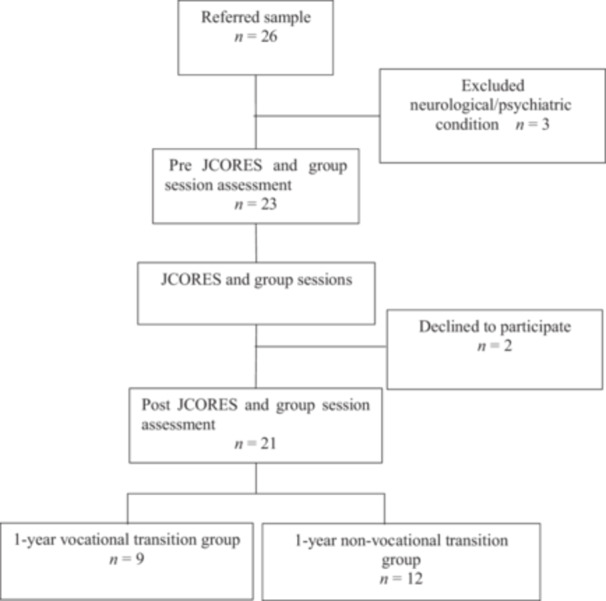
Methods: Twenty-one patients with schizophrenia underwent CRT using the Japanese Cognitive Rehabilitation Programme for Schizophrenia. The program included 24 sessions over 3 months, conducted twice weekly in small groups. Each session combined computerized cognitive training and a bridging session to support real-life application. Pre- and post-CRT assessments included the Global Assessment of Functioning (GAF), Positive and Negative Syndrome Scale (PANSS), Brief Assessment of Cognition in Schizophrenia (BACS), modified Tinkertoy Test (m-TTT), Idea Fluency Test (IFT), Design Fluency Test (DFT), and Life Skills Profile (LSP). One year after CRT, participants were classified as engaged in employment or vocational activity or not, and group comparisons identified factors linked to vocational transition.
Results: Pre- and postintervention comparisons showed significant improvements in GAF, PANSS, BACS, m-TTT, IFT, DFT, and LSP scores. In a between-group comparison, those who transitioned to employment or vocational activity (n = 9) exhibited significantly greater reductions in PANSS-negative symptoms than those who did not (n = 12, P = 0.03).
Conclusion: This study suggests an association between reduced negative symptoms and vocational engagement after CRT. Further research with larger samples is needed to clarify this relationship and enhance outcomes through targeted interventions.
Keywords: cognitive remediation therapy; employment transition; occupational outcomes; psychiatric daycare; schizophrenia.
© 2025 The Author(s). Psychiatry and Clinical Neurosciences Reports published by John Wiley & Sons Australia, Ltd on behalf of Japanese Society of Psychiatry and Neurology.
Conflict of interest statement
The last author (Masaru Mimura) is an Editorial Board member of Psychiatry and Clinical Neurosciences Reports and a co‐author of this article. To minimize bias, he was excluded from all editorial decision‐making related to the acceptance of this article for publication. Masaru Mimura declares no conflict of interest directly related to this work. The first author (Yasuhisa Nakamura) declares no conflicts of interest.
Figures
References
-
- Tandon R, Nasrallah HA, Keshavan MS. Schizophrenia, “just the facts” 4. Clinical features and conceptualization. Schizophr Res. 2009;110(1–3):1–23. - PubMed
-
- Harvey PD. Cognitive functioning and disability in schizophrenia. Curr Direct Psychol Sci. 2010;19(4):249–254.
-
- McGrath J, Saha S, Chant D, Welham J. Schizophrenia: a concise overview of incidence, prevalence, and mortality. Epidemiol Rev. 2008;30:67–76. - PubMed
-
- Green MF. Impact of cognitive and social cognitive impairment on functional outcomes in patients with schizophrenia. J Clin Psychiatry. 2016;77(Suppl 2):8–11. - PubMed
LinkOut - more resources
Full Text Sources
Research Materials