


Continuous glucose monitoring in type 2 diabetes: a systematic review of barriers and opportunities for care improvement
- PMID: 40338639
- PMCID: PMC12249211
- DOI: 10.1093/intqhc/mzaf046
Continuous glucose monitoring in type 2 diabetes: a systematic review of barriers and opportunities for care improvement
Abstract
Background: Diabetes mellitus, particularly type 2 diabetes (T2DM), is a chronic disease associated with serious complications, such as heart disease, kidney failure, and blindness. Continuous glucose monitoring (CGM) systems have emerged as a more effective alternative to traditional fingerstick testing, offering patients greater control over their condition. Despite their potential benefits, several barriers to CGM sensor use persist, limiting their widespread adoption among patients with T2DM. This review explores the barriers to CGM sensor use, particularly from the patient's perspective.
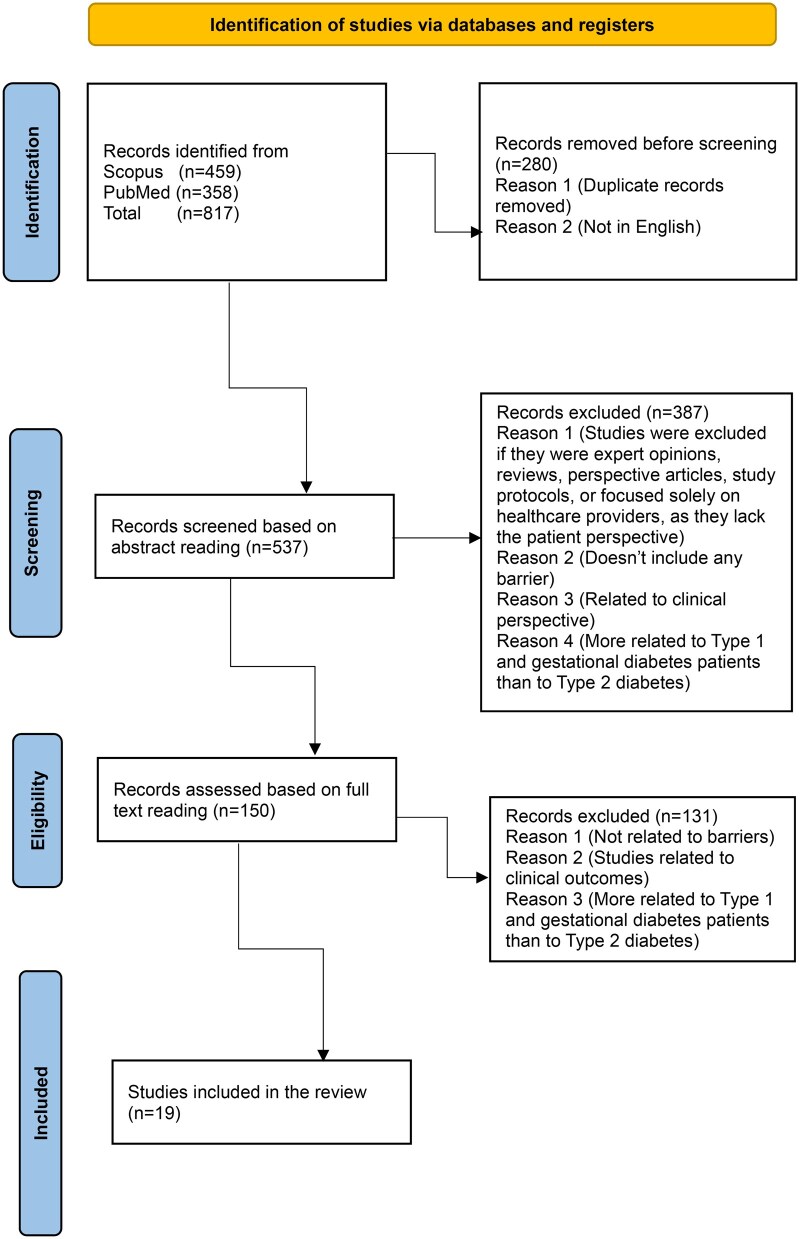
Methods: A systematic literature review is conducted following PRISMA guidelines. The search focuses on studies published between January 2018 and June 2024 and is performed in two primary databases, PubMed and Scopus, selected for their relevance to T2DM research. Studies are included if they explore challenges and barriers to CGM adoption, report patient perspectives, or provide insights into the usability and accessibility of technology. The data are analyzed using deductive content analysis, applying Wilson et al.'s thematic categories as a predefined framework to systematically classify and interpret barriers to CGM adoption. This approach ensures methodological consistency and alignment with existing research on eHealth adoption challenges.
Results: The review identifies several key barriers to CGM sensor use despite the benefits, such as improved glucose control and reduced hypoglycemic events. Major challenges include the high cost of sensors, wearability issues, discomfort from adhesive materials, and concerns about the visibility of the sensors. Additionally, patients report difficulties in interpreting the large volumes of data generated by CGM systems, as well as discomfort or fear related to sensor insertion. Lack of technological support, low health literacy, and insufficient social support are also identified as factors contributing to non-adoption.
Conclusions: Policymakers and healthcare providers are encouraged to address these barriers by developing patient-centered strategies that support the adoption of CGM sensors. Successfully overcoming these challenges can further support integrating CGM sensors with the Chronic Care Model and Automated Insulin Delivery systems. As an implication, this integration has the potential to enhance glycemic control and improve patient quality of life in the management of T2DM. Furthermore, addressing these barriers may drive advancements in sensor design, improve accessibility, and minimize the environmental impact of CGM sensor use.
Keywords: CGM sensors; barriers to adoption; patient perspective; self-management; type 2 diabetes mellitus (T2DM).
© The Author(s) 2025. Published by Oxford University Press on behalf of International Society for Quality in Health Care.
Conflict of interest statement
No known conflict of interest.
Figures
References
Publication types
MeSH terms
Substances
LinkOut - more resources
Full Text Sources
Medical
Research Materials
Miscellaneous
