


Prevalence of low birth weight and associated factors in Ethiopia: An umbrella review of systematic review and meta-analyses
- PMID: 40338902
- PMCID: PMC12061095
- DOI: 10.1371/journal.pgph.0004556
Prevalence of low birth weight and associated factors in Ethiopia: An umbrella review of systematic review and meta-analyses
Abstract
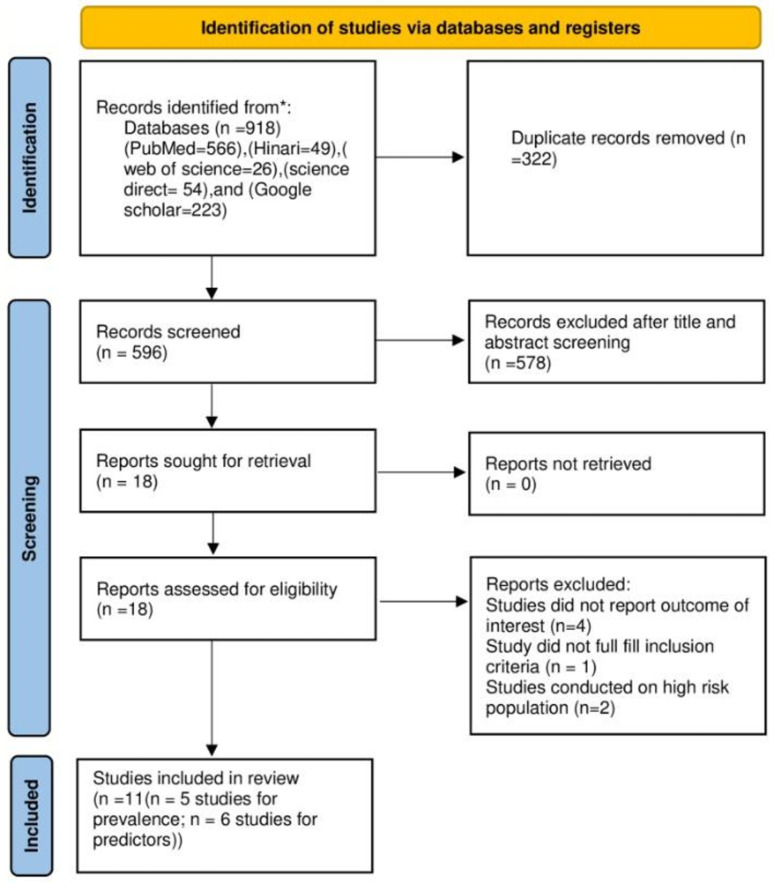
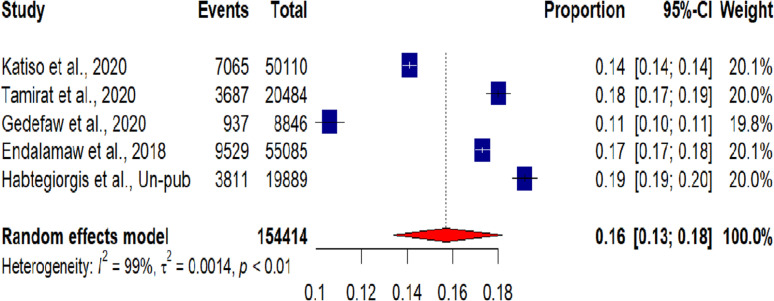
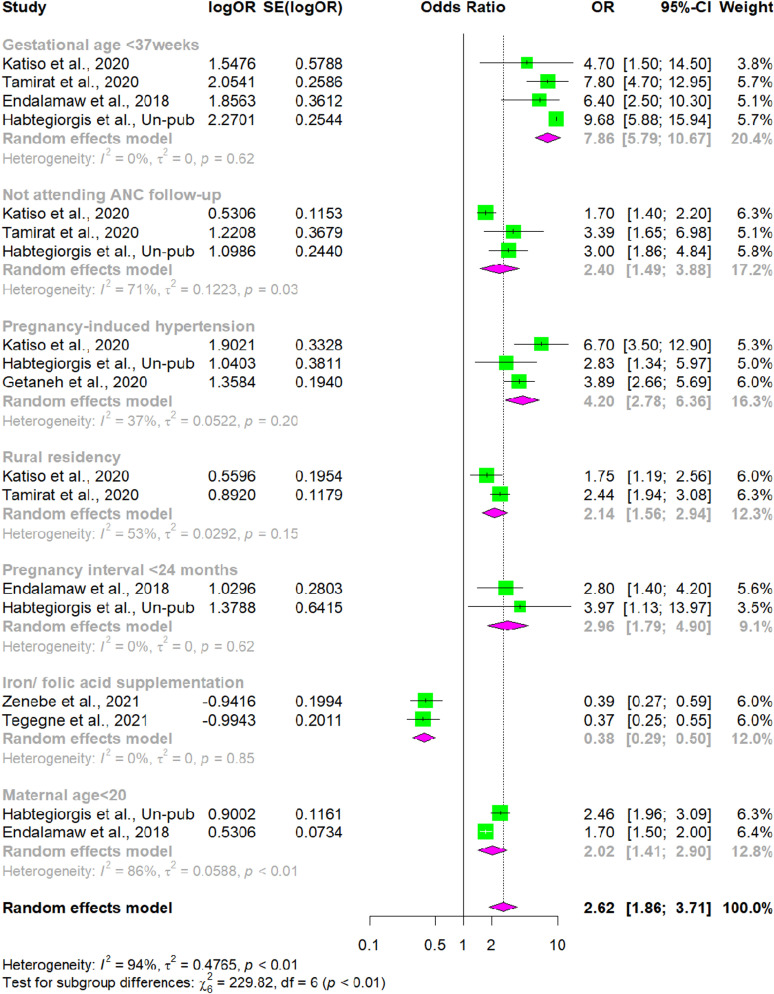
Low birth weight (LBW) is one of the major causes of neonatal mortality and morbidity in low and middle-income countries (LMICs). Despite the goal of reducing newborn morbidity and mortality by 2030, low-income countries, including Ethiopia, still confront major challenges. Although various systematic reviews and meta-analyses (SRMA) have been conducted on LBW in Ethiopia, there is notable variation among their findings. This umbrella review aimed to consolidate inconsistent findings into a single summary estimate, providing a robust synthesis of evidence from systematic reviews and meta-analyses to bolster health policy development and planning in Ethiopia.Articles were retrieved on PubMed/Medline, Science Direct, Web of Science, HINARI, and Google Scholar. Assessments of Multiple Systematic Reviews checklist scores were used to assess the quality of the included SRMA studies. A random-effects model was used to estimate the overall effect size.A total of eleven SRMA studies (5 prevalence and 6 predictors) involving 190,492 neonates with an outcome of interest were included in the analysis. The summary estimate for the prevalence of LBW was 16% (95% CI: 13, 18%). Being prematurity [POR: 7.86; 95% CI: 5.79, 10.67], not attending antenatal care (ANC) [POR: 2.4, 95% CI: 1.49, 3.88], having pregnancy-induced hypertension (PIH) [POR: 4.2; 95% CI: 2.78, 6.36], being a rural resident [POR: 2.14, 95% CI: 1.56, 2.94], having a pregnancy interval < 24 months [POR: 2.96; 95% CI: 1.79, 4.9], not having iron-folic acid supplementation (IFAS) [POR: 0.38; 95% CI: 0.29, 0.5], and being a maternal age < 20 [POR: 2.02, 95% CI: 1.41, 2.9] were significantly associated with LBW. This umbrella review revealed more than three out of twenty neonates experienced LBW in Ethiopia. Being premature, not attending antenatal care, having pregnancy-induced hypertension, being a rural resident, having a pregnancy interval < 24 months, not having iron-folic acid supplementation and being a maternal age < 20 were significant predictors of LBW. Therefore, timely diagnosis, proper treatment, and follow-up of women at risk might combat the incidence of LBW in Ethiopia.
Copyright: © 2025 Ejigu et al. This is an open access article distributed under the terms of the Creative Commons Attribution License, which permits unrestricted use, distribution, and reproduction in any medium, provided the original author and source are credited.
Conflict of interest statement
The authors have declared that no competing interests exist.
Figures
References
-
- Iqbal S, Tanveer A, Khan Z, Junai KM, Mushtaq N, Ali N. Risk factors of low birth weight in Pakistan. PJMHS. 2022;16(3):1163–5. doi: 10.53350/pjmhs221631163 - DOI
-
- Khan N, Council P, Mozumdar A, International C, Kaur S, Ministry C. Determinants of low birth weight in India: an investigation from the national family health survey. Am J Hum Biol. 2019;(November):e23355. - PubMed
LinkOut - more resources
Full Text Sources