


Systematic Engineering for Efficient Uric Acid-Degrading Activity in Probiotic Yeast Saccharomyces boulardii
- PMID: 40340401
- PMCID: PMC12186688
- DOI: 10.1021/acssynbio.4c00831
Systematic Engineering for Efficient Uric Acid-Degrading Activity in Probiotic Yeast Saccharomyces boulardii
Abstract
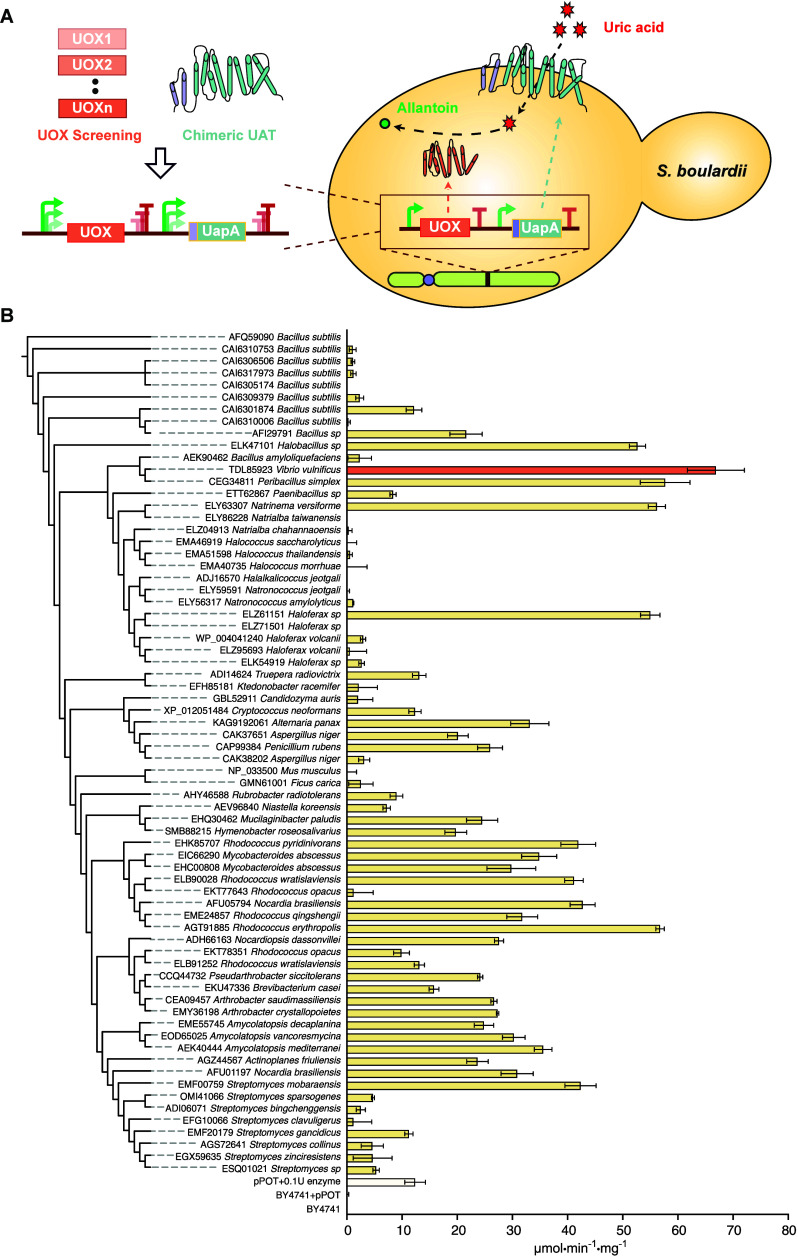
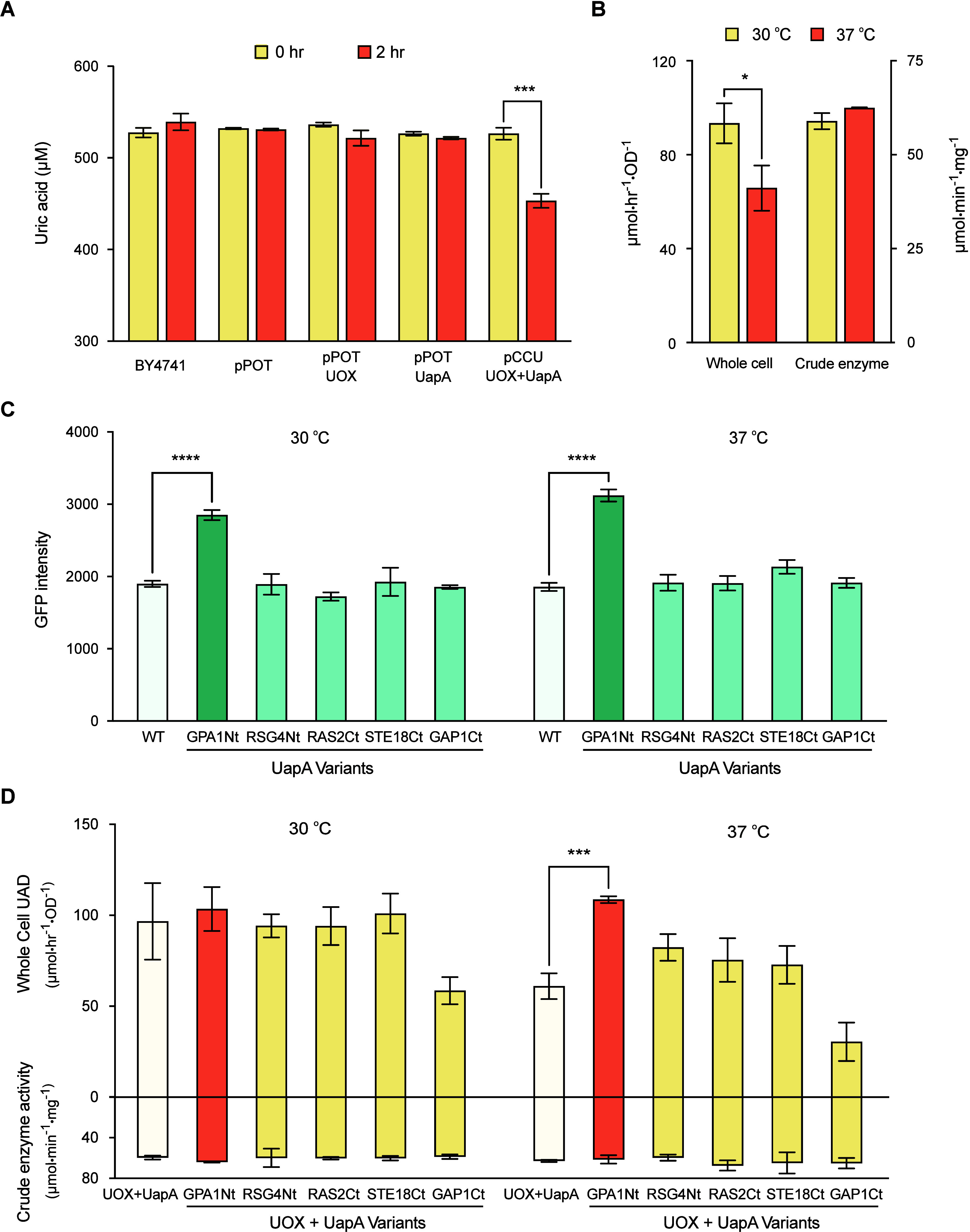
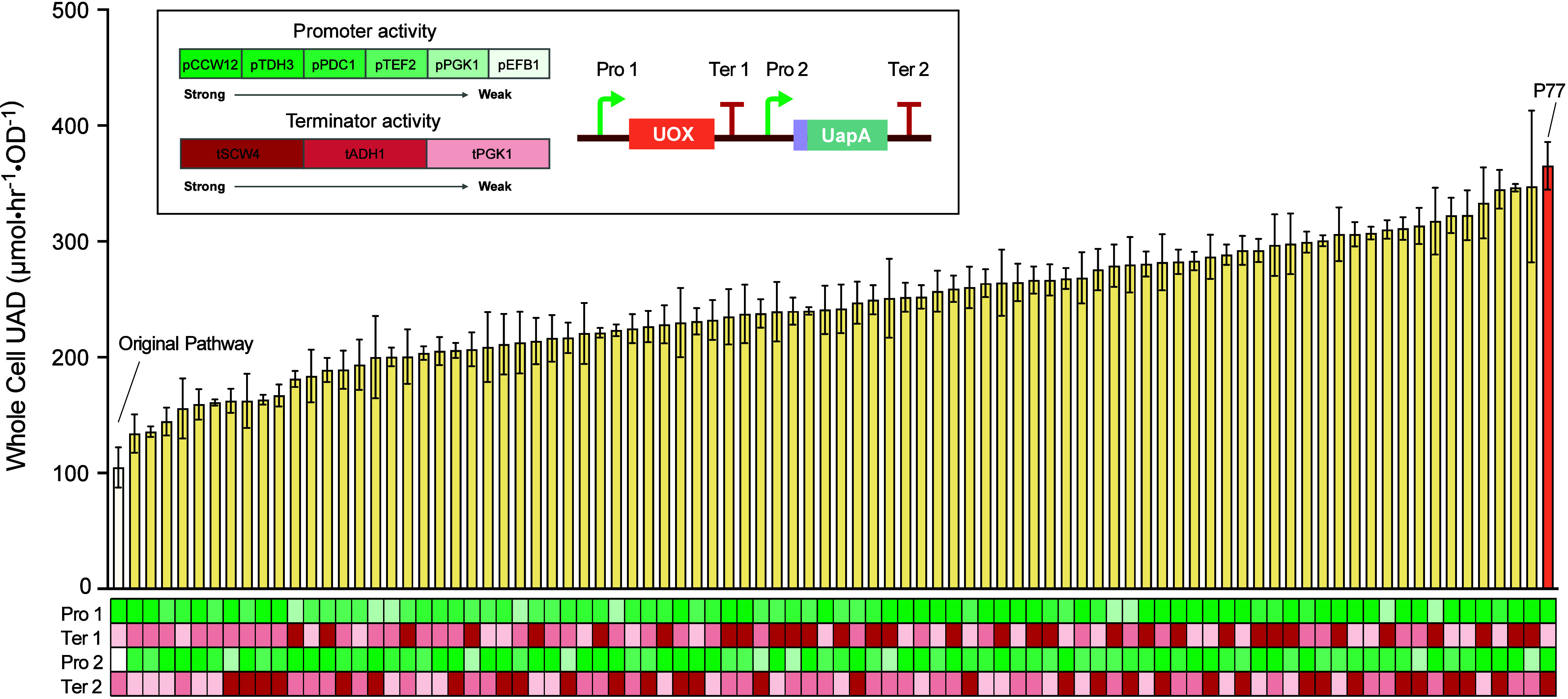
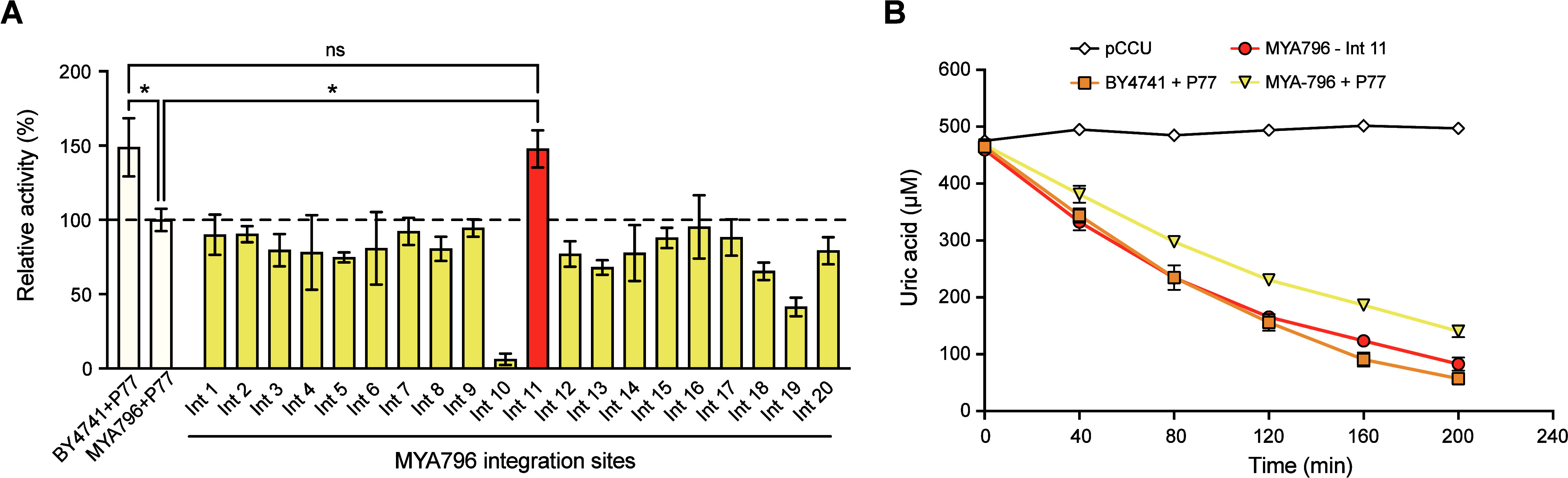
Hyperuricemia, caused by uric acid disequilibrium, is a prevalent metabolic disease that most commonly manifests as gout and is closely associated with a spectrum of other comorbidities such as renal disorders and cardiovascular diseases. While natural and engineered probiotics that promote catabolism of uric acid in the intestine have shown promise in relieving hyperuricemia, limitations in strain efficiency and the requirements for achieving high performance remain major hurdles in the practical application of probiotic-mediated prevention and management. Here, we employed a systematic strategy to engineer a high-efficiency uric acid catabolism pathway in S. cerevisiae. An uricase from Vibrio vulnificus, exhibiting high-level activity in S. cerevisiae, was identified as the uric acid-degrading component. The expression level and stability of urate transporter UapA were improved by constructing a chimera, enabling reliable uric acid import in S. cerevisiae. Additionally, constitutive promoters were selected and combinatorially assembled with the two functional components, creating a collection of pathways that confer varied levels of uric acid catabolic activity to S. cerevisiae. The best-performing pathway can express uric acid-degrading activity up to 365.32 ± 20.54 μmol/h/OD, requiring only simple cultivation steps. Eventually, we took advantage of the genetic similarity between model organism S. cerevisiae and probiotic S. boulardii and integrated the optimized pathway into identified high-expression integration loci in the S. boulardii genome. The activity can be stably maintained under high-density fermentation conditions. Overall, this study provided a high-potential hyperuricemia-managing yeast probiotic strain, demonstrating the capabilities of developing recombinant probiotics.
Keywords: Saccharomyces boulardii; engineered probiotic; hyperuricemia; urate transporter; uric acid degradation; uricase.
Figures
References
-
- Gill D., Cameron A. C., Burgess S., Li X., Doherty D. J., Karhunen V., Abdul-Rahim A. H., Taylor-Rowan M., Zuber V., Tsao P. S., Klarin D., Evangelou E., Elliott P., Damrauer S. M., Quinn T. J., Dehghan A., Theodoratou E., Dawson J., Tzoulaki I.. Blood Pressure, and Cardiovascular Disease: Evidence From Mendelian Randomization and Meta-Analysis of Clinical Trials. Hypertension. 2021;77(2):383–392. doi: 10.1161/HYPERTENSIONAHA.120.16547. - DOI - PMC - PubMed
-
- Li X., Meng X., Timofeeva M., Tzoulaki I., Tsilidis K. K., Ioannidis J. P., Campbell H., Theodoratou E.. Serum Uric Acid Levels and Multiple Health Outcomes: Umbrella Review of Evidence from Observational Studies, Randomised Controlled Trials, and Mendelian Randomisation Studies. BMJ. 2017;357:j2376. doi: 10.1136/bmj.j2376. - DOI - PMC - PubMed
-
- Tu C.-M., Wei T.-E., Tseng G.-S., Chen C.-C., Liu C.-W.. Serum Uric Acid Is Associated with Incident Metabolic Syndrome Independent of Body Shape Index and Body Roundness Index in Healthy Individuals. Nutr Metab Cardiovasc Dis. 2021;31(11):3142–3151. doi: 10.1016/j.numecd.2021.07.008. - DOI - PubMed
MeSH terms
Substances
LinkOut - more resources
Full Text Sources
