


Application of machine learning in identifying risk factors for low APGAR scores
- PMID: 40340577
- PMCID: PMC12060381
- DOI: 10.1186/s12884-025-07677-y
Application of machine learning in identifying risk factors for low APGAR scores
Abstract
Background: Identifying the risk factors for low APGAR scores at birth is critical for improving neonatal outcomes and guiding clinical interventions.
Methods: This study aimed to develop a machine-learning model that predicts low APGAR scores by incorporating maternal, fetal, and perinatal factors in Wad Medani, Sudan. Using a Random Forest Classifier, we performed hyper-parameter optimization through Grid Search cross-validation (CV) to identify the best-performing model configuration.
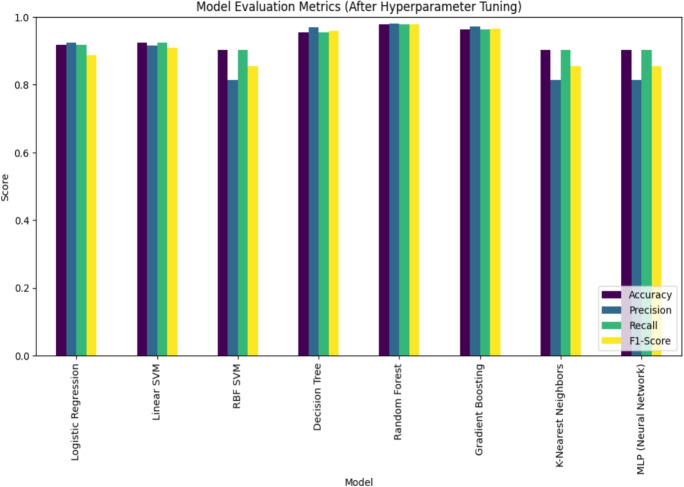
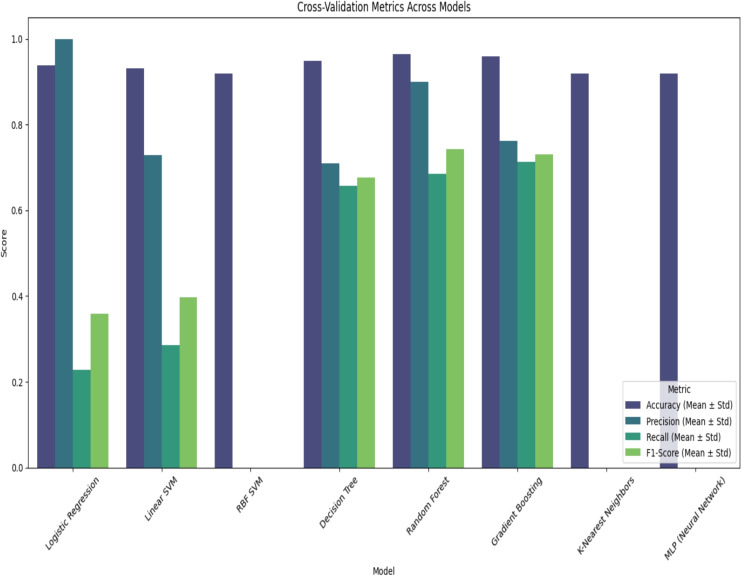
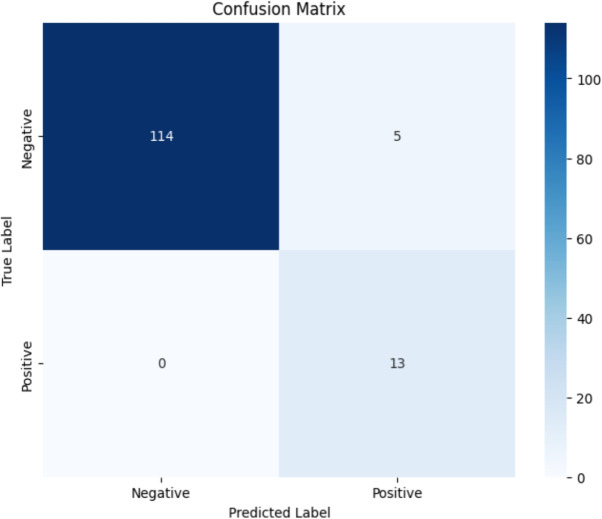
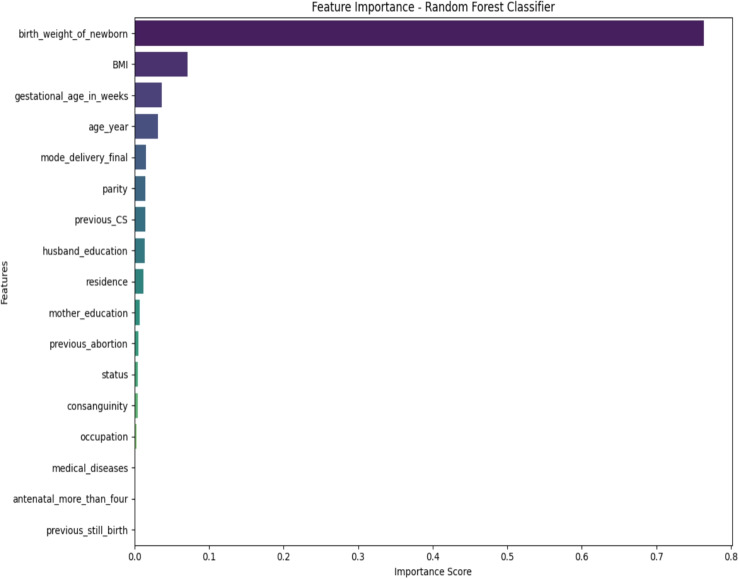
Results: The optimized model achieved excellent predictive performance, as evidenced by high F1 scores, accuracy, and balanced precision-recall metrics on the test set. In addition to prediction, feature importance analysis was conducted to identify the most influential risk factors contributing to low APGAR scores. Key predictors included gestational age, maternal BMI, mode of delivery, and history of previous complications such as stillbirth or abortion. Using 5-fold cross-validation (CV), the random forest model performance scored accuracy at 96%, precision at 98%, recall at 97%, and F1-score at 97% when classifying infants with APGAR score.
Conclusion: This study underscores the importance of incorporating machine learning approaches in obstetric care to understand better and mitigate the risk factors associated with adverse neonatal outcomes, particularly low APGAR scores. The results provide a foundation for developing targeted interventions and improving prenatal care practices.
Keywords: Artificial intelligence; Low APGAR score; Machine learning; Risk factors.
© 2025. The Author(s).
Conflict of interest statement
Declarations. Ethics approval and consent to participate: The study received ethical approval from the Research Board of the Faculty of Medicine, University of Gezira, Sudan (reference number 2023, #6). Written informed consent was obtained from all enrolled women in accordance with the Human Rights Declaration of Helsinki. Consent for publication: Not applicable. Competing interests: The authors declare no competing interests.
Figures


References
-
- American Academy of Pediatrics Committee on Fetus, Newborn and American College of Obstetricians, Gynecologists Committee on Obstetric Practice, Watterberg KL, Aucott S, et al. The apgar score. Pediatrics. 2015;136(4):819–22.
-
- Gr R, Lidegaard Ø, Pedersen LH, Andersen PK, Kessing LV, et al. Maternal depression, antidepressant use in pregnancy and Apgar scores in infants. Br J Psychiatr. 2013;202(5):347–51. - PubMed
-
-
Bouzada MCF, Nogueira Reis ZS, Brum NFF, Penido Machado MG, Rego MAS, Anchieta LM, et al. Perinatal risk factors and Apgar score
 3 in first minute of life in a referral tertiary obstetric and neonatal hospital. J Obstet Gynaecol. 2020;40(6):820–4.
-
PubMed
3 in first minute of life in a referral tertiary obstetric and neonatal hospital. J Obstet Gynaecol. 2020;40(6):820–4.
-
PubMed
-
Bouzada MCF, Nogueira Reis ZS, Brum NFF, Penido Machado MG, Rego MAS, Anchieta LM, et al. Perinatal risk factors and Apgar score
MeSH terms
Grants and funding
LinkOut - more resources
Full Text Sources
