


A pilot study of coughing into the shirt to disrupt respiratory pathogen transmission
- PMID: 40340637
- PMCID: PMC12060401
- DOI: 10.1186/s12245-025-00892-6
A pilot study of coughing into the shirt to disrupt respiratory pathogen transmission
Abstract
Background: Scientific evidence is lacking for the respiratory etiquette maneuver of coughing into the elbow. This pilot study introduces and evaluates a novel maneuver " coughing into the shirt" comparing effectiveness of containing respiratory plumes to existing respiratory etiquette strategies.
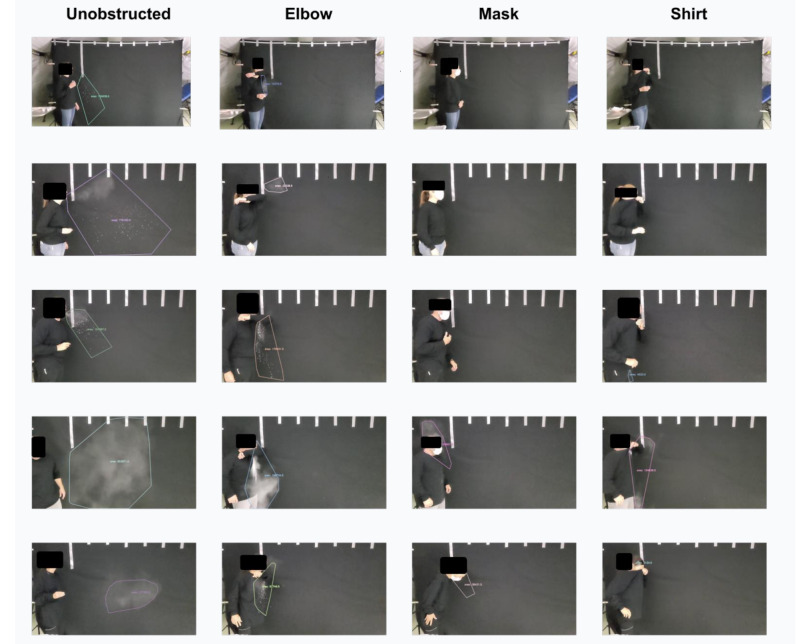
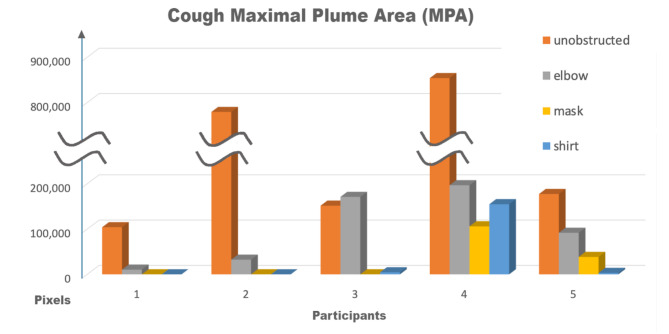
Methods: In this open-bench, observational respiratory etiquette pilot study, five healthcare workers performed four respiratory etiquette maneuvers including: unobstructed, into the elbow, into a mask, and into the shirt. Observational data for the cough maximal plume area, an area calculation, were collected using slow-motion video recording. The various respiratory plume areas of the participants were compared to the unobstructed maneuver, assessing the percent reduction of the maximal plume area.
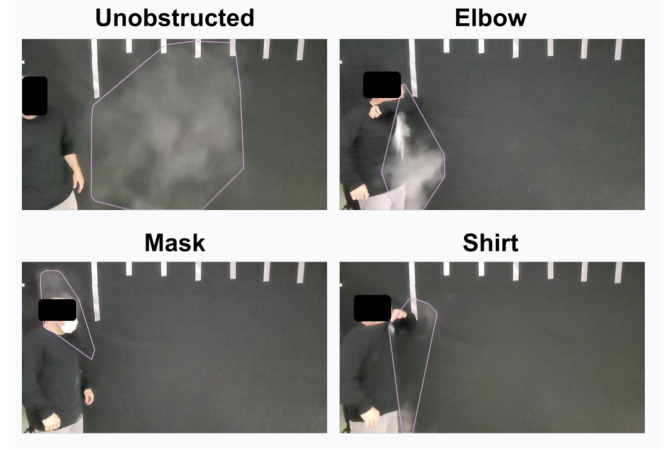
Results: All respiratory etiquette maneuvers significantly reduced the maximal plume area as compared to the unobstructed condition (F(3,12) = 18.56, P < 0.005). Comparing the maximal plume area of the unobstructed maneuver to the "into the shirt" maneuver, we found a 95.4% decrease for the "into the shirt" respiratory etiquette maneuver (P < 0.005). There was no statistically significant difference when comparing the obstructive maneuvers to each other. Additionally, the maximal plume area from the "into the shirt" maneuver was 35.75% less than the "into the elbow" maneuver (P = 0.15). Comparing the maximal plume area of the "into the shirt" maneuver to the "into the mask" maneuver, results were inconclusive, with an average difference of 2.24% (P = 0.66).
Conclusions: Coughing into the shirt may offer superior containment of the respiratory plume than coughing into the elbow. Larger studies are warranted to validate these findings and guide future public health recommendations.
Study design: Open bench, observational, cough etiquette pilot study comparing the into the shirt respiratory etiquette maneuver to other respiratory etiquette maneuvers.
© 2025. The Author(s).
Conflict of interest statement
Declarations. Ethics approval and consent to participate: Human Ethics and Consent to Participate declarations: This study was covered under the University of Utah, Assessment of Emergency Medicine Training Techniques for ED Personnel Exemption Umbrella. All participants signed an informed consent form prior to participating. IRB #00080204. Consent for publication: All the authors meet the following criteria for authorship: Drafting the work or revising it critically for important intellectual content; and Final approval of the version submitted for publication; and Agreement to be accountable for all aspects of the work in ensuring that questions related to the accuracy or integrity of any part of the work are appropriately investigated and resolved Competing interests: The authors declare no competing interests.
Figures
References
-
- Troeger C, Blacker B, Khalil IA, et al. Estimates of the global, regional, and National morbidity, mortality, and aetiologies of lower respiratory infections in 195 countries, 1990–2016: a systematic analysis for the global burden of disease study 2016. Lancet Infect Dis. 2018;18:1191–210. - PMC - PubMed
-
- Wardlaw TM, Johansson EW, Hodge M, World Health O. United nations children’s fund. Pneumonia: the forgotten killer of children. Geneva: World Health Organization 2006.
-
- The top 10 causes of death. World Health Organization. 2018. https://www.who.int/news-room/fact-sheets/detail/the-top-10-causes-of-death. Accessed September 10, 2020.
LinkOut - more resources
Full Text Sources
Miscellaneous
