


Pulse check accuracy in pediatrics during resuscitation: a systematic review
- PMID: 40342519
- PMCID: PMC12059343
- DOI: 10.1016/j.resplu.2025.100959
Pulse check accuracy in pediatrics during resuscitation: a systematic review
Abstract
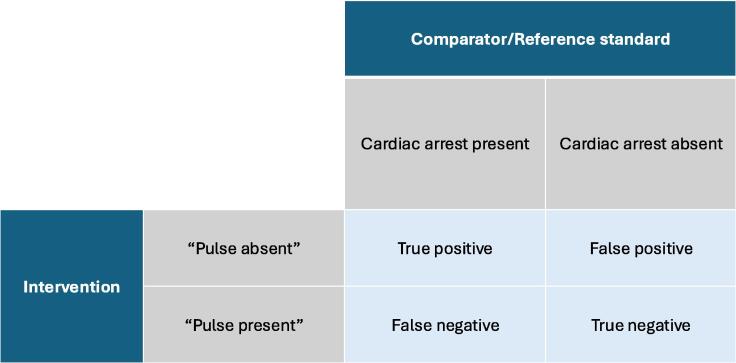
Aim of the study: Current guidelines advise rescuers to initiate cardiopulmonary resuscitation if a child is unresponsive, not breathing normally, and shows no signs of life. Manual pulse checks are considered unreliable and time-consuming. This systematic review evaluates the accuracy and duration of recommended pulse check methods during pediatric cardiac arrest and explores emerging diagnostic techniques.
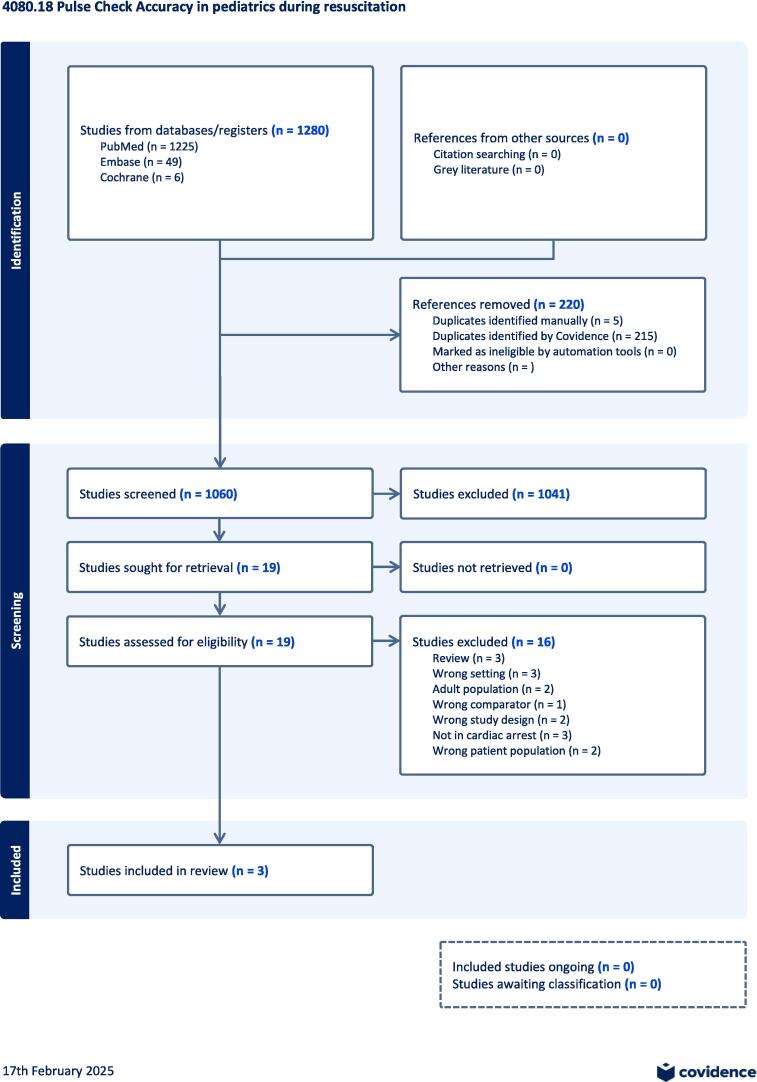
Methods: For this systematic review (PROSPERO ID CRD42024549535) three databases (PubMed, Embase, and Cochrane) were searched for articles published on this topic. An initial search was conducted on April 24, 2024, with an updated search using the same search strategy on February 16, 2025. Two authors independently screened the articles. One author extracted the data while a second author double-checked it. Quality and certainty of the evidence were evaluated using the QUADAS-2 and GRADE tools evaluated the evidence's quality and certainty. Studies were included if they compared manual pulse checks against alternative pulse check sites or other methods in pediatric patients. The data is presented descriptively.
Results: A total of three studies were included. These studies involved 39 pediatric patients and a total of 376 pulse checks. Out of the 47 infants and children included, only 14 were in cardiac arrest. The remaining 33 patients were on mechanical circulatory support with either VA-ECMO or LVAD. In total, 183 nurses and 181 physicians performed 376 pulse or ultrasound checks. Due to their specialty, 122 nurses and 89 doctors were classified as experienced. Sensitivity and specificity of manual pulse check ranged from 76 to 100% and 64-79%, respectively. When experienced providers conducted pulse checks, sensitivity and specificity were higher (76-100% and 62-82%, respectively) compared to inexperienced providers (67-82% and 44-95%).The mean duration of pulse checks was 20 s, with an accuracy of 85%.
Conclusion: Despite high heterogeneity among included studies, manual pulse checks only achieved moderate accuracy with a prolonged duration. This suggests that manual pulse checks are unreliable in children for determination cardiac arrest state and need for ongoing CPR.
Keywords: Cardiac arrest; Pediatric Life Support; Pulse check; Resuscitation; Systematic Review.
© 2025 The Author(s).
Conflict of interest statement
The authors declare that they have no known competing financial interests or personal relationships that could have appeared to influence the work reported in this paper.
Figures

References
-
- Phillips B., Zideman D., Garcia-Castrillo L., Felix M., Shwarz-Schwierin V. European resuscitation council guidelines 2000 for advanced paediatric life support - A statement from paediatric life support working group and approved by the executive committee of the european resuscitation coucil. Resuscitation. 2001;48:231–234. doi: 10.1016/S0300-9572(00)00381-6. - DOI - PubMed
Publication types
LinkOut - more resources
Full Text Sources
Miscellaneous
